Carbon fiber composite materials have become a practical choice for manufacturers who need components that are both lightweight and structurally strong. The material’s performance characteristics make it well-suited for applications where conventional metals would add unnecessary weight or fail to meet specific mechanical requirements.
However, working with carbon fiber requires more than simply selecting the material. The machining process itself plays a significant role in determining whether a finished component meets design intent. Choosing the right approach — from tool selection and cutting strategy to dust management and surface treatment — directly affects part quality, consistency, and service life.
This article focuses on how carbon fiber CNC machining is applied across different industries, what process decisions matter most, and how Gran.my approaches carbon fiber work as part of its precision manufacturing services.
Why Carbon Fiber Behaves Differently from Metals
Carbon fiber reinforced polymer (CFRP) is a composite material, not a homogeneous metal. It consists of carbon fiber layers bound together with resin, which gives it an anisotropic structure. This means its mechanical properties — strength, stiffness, and resistance — vary depending on the direction in which force is applied and how the fiber layers are oriented.
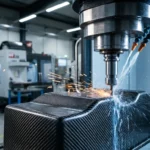
This structural characteristic has direct implications for CNC machining. Cutting carbon fiber requires different tooling strategies than cutting aluminum or stainless steel. Inappropriate tool paths or excessive heat can cause delamination, where the resin bond between fiber layers breaks down, resulting in surface damage or internal structural failure that may not be immediately visible.
Understanding this behavior helps manufacturers plan processes that protect material integrity from the first cut through to the finished part.
Key Machining Considerations for Carbon Fiber
Tool Selection
Carbide-tipped and diamond-coated tools are preferred for carbon fiber machining. Standard high-speed steel tools wear quickly against carbon fiber’s abrasive nature, leading to degraded cut quality and inconsistent part dimensions over time.
For routing and trimming operations, compression spiral router bits are effective because they apply opposing forces from both directions, reducing delamination at the top and bottom surfaces. For drilling, brad-point or step-drill geometries help prevent fiber tear-out at entry and exit points.
Tool condition matters throughout a production run. Worn tools generate more heat and apply higher cutting forces, both of which increase the risk of material damage.
Cutting Parameters
Unlike metals, carbon fiber does not benefit from slower cutting speeds to control heat. Instead, higher spindle speeds combined with moderate feed rates help the cutting tool clear the material before heat builds up in the cutting zone.
Depth of cut is typically kept shallow to minimize cutting forces and reduce the chance of fiber separation. Multi-pass strategies allow gradual material removal while maintaining better control over part geometry.
Dust and Chip Management
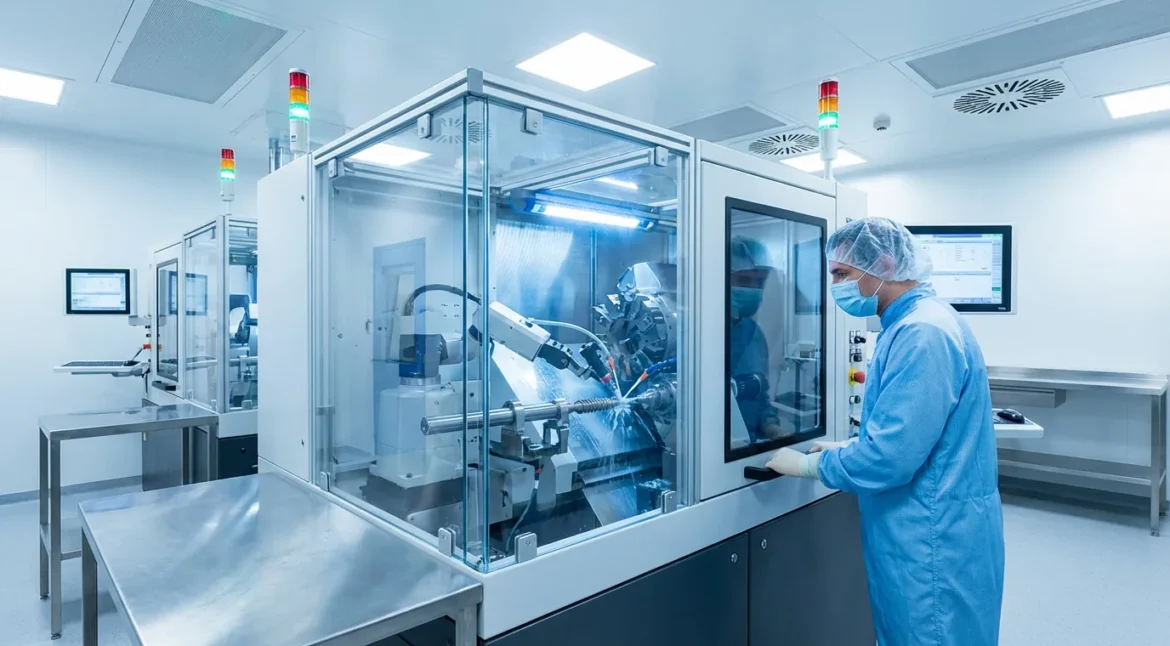
Carbon fiber machining generates fine particulate that requires controlled extraction. Carbon dust is electrically conductive and can cause damage to machine electronics if not managed properly. It also presents occupational health concerns for operators, making proper dust collection and workshop ventilation essential parts of a compliant and responsible machining process.
At Gran.my, dust extraction is treated as a standard part of the carbon fiber machining setup rather than an optional addition.
Industry Applications of Carbon Fiber CNC Machining
Sporting and Recreational Equipment
Carbon fiber is widely used in high-performance sporting goods, including bicycle frames, paddle shafts, hockey sticks, and racket components. CNC machining allows manufacturers to produce precisely shaped parts that match aerodynamic or ergonomic design requirements.
For recreational equipment, carbon fiber components need to be both lightweight and able to withstand repeated stress cycles. Consistent machining quality is important because dimensional variation between parts can affect assembly fit and product performance.
Automotive and Motorsport Components
Motorsport applications have long used carbon fiber for body panels, splitters, diffusers, and interior structural components. In passenger vehicle production, carbon fiber parts help reduce vehicle weight, contributing to improved fuel efficiency and handling.
CNC machining supports these applications by enabling production of complex shapes with tight edge tolerances. Consistent trimming of molded parts ensures that panels align correctly during assembly and maintain the aesthetic standards expected in automotive applications.
Aerospace Structural Components
Aerospace is one of the most established application areas for carbon fiber composite materials. Structural panels, brackets, fairings, and interior components are produced from carbon fiber because the material offers strength comparable to steel at a fraction of the weight.
In aerospace applications, dimensional accuracy is non-negotiable. Even small deviations from design specifications can affect assembly relationships and structural performance. CNC machining provides the controlled accuracy required to meet aerospace-grade manufacturing standards.
Industrial Machinery and Equipment
Beyond high-profile industries, carbon fiber CNC machining also serves industrial applications where weight reduction matters for machinery performance. Robot arms, end-effectors, equipment frames, and precision motion system components benefit from carbon fiber’s combination of light weight and rigidity.
For industrial machinery, the dimensional repeatability of CNC machining is particularly important because components must interface reliably with other machine elements over extended operating periods.
Custom OEM Parts
Many OEM suppliers rely on carbon fiber CNC machining to produce application-specific components that cannot be sourced from standard material catalogs. Custom parts for specialized equipment, transportation systems, and industrial applications often require both unique geometries and specific material performance.
CNC machining gives manufacturers the flexibility to produce small quantities of highly customized components without the tooling investment required by molding processes, while still maintaining the precision needed for reliable part performance.
Surface Finishing for Carbon Fiber Components
After machining, carbon fiber parts often require additional surface treatment depending on the application.
Edge sealing protects cut edges from moisture ingress and fiber fraying. Exposed cut edges leave the carbon fiber matrix open, which can affect long-term durability if not addressed.
Painting and coating may be required for parts used in visible locations or environments where UV resistance is needed. Proper surface preparation, including light sanding and cleaning, ensures coating adhesion.
Dimensional inspection after any surface treatment confirms that the final part remains within tolerance before delivery.
Quality Verification in Carbon Fiber CNC Machining
Carbon fiber components are verified using a combination of dimensional and visual inspection methods. Given the composite nature of the material, surface inspection includes checking for delamination, fiber pull-out, and edge quality in addition to standard dimensional measurements.
For complex geometries, coordinate measuring machine (CMM) inspection provides a complete dimensional record that can be reviewed against design specifications. This documentation supports traceability requirements in regulated industries such as aerospace and medical device manufacturing.
Inspection is most effective when it is integrated into the production workflow rather than applied only at the final stage. Checking critical dimensions at intermediate steps allows correction before downstream operations are affected.
How Gran.my Approaches Carbon Fiber CNC Machining
At Gran.my, 炭素繊維加工 is part of our broader suite of precision manufacturing capabilities. Our facility in Malaysia handles carbon fiber CNC machining alongside metal machining, cold forging, sheet metal fabrication, and stamping work, which allows us to support multi-material projects within a single production environment.
Our approach to carbon fiber work prioritizes material integrity at every stage. Tool selection, cutting parameters, and dust management are planned for each project based on part geometry, required tolerances, and the application the component is intended for.
We work with customers from prototype development through production runs, supporting both early-stage validation and consistent repeat manufacturing. Whether a project calls for a small number of custom parts or a structured production batch, our team applies the same level of process control throughout.
結論
Carbon fiber CNC machining delivers meaningful advantages for applications where weight, strength, and dimensional accuracy are all important. However, the material’s composite structure requires a process-aware approach that accounts for its unique behavior during cutting.
Choosing a manufacturing partner who understands these requirements — from tooling and cutting strategy to dust management and quality inspection — helps ensure that carbon fiber components perform as intended in their final application.
For companies sourcing carbon fiber components, precise machining combined with structured quality control provides a reliable foundation for both prototype development and production work.
Ready to discuss your carbon fiber component requirements? Contact Gran.my to share your drawings or specifications, and our team will respond with a precise quotation.
Related Pages for Carbon Fiber Projects
These internal links connect carbon fiber process selection with quotation support, service scope, and wider manufacturing planning.