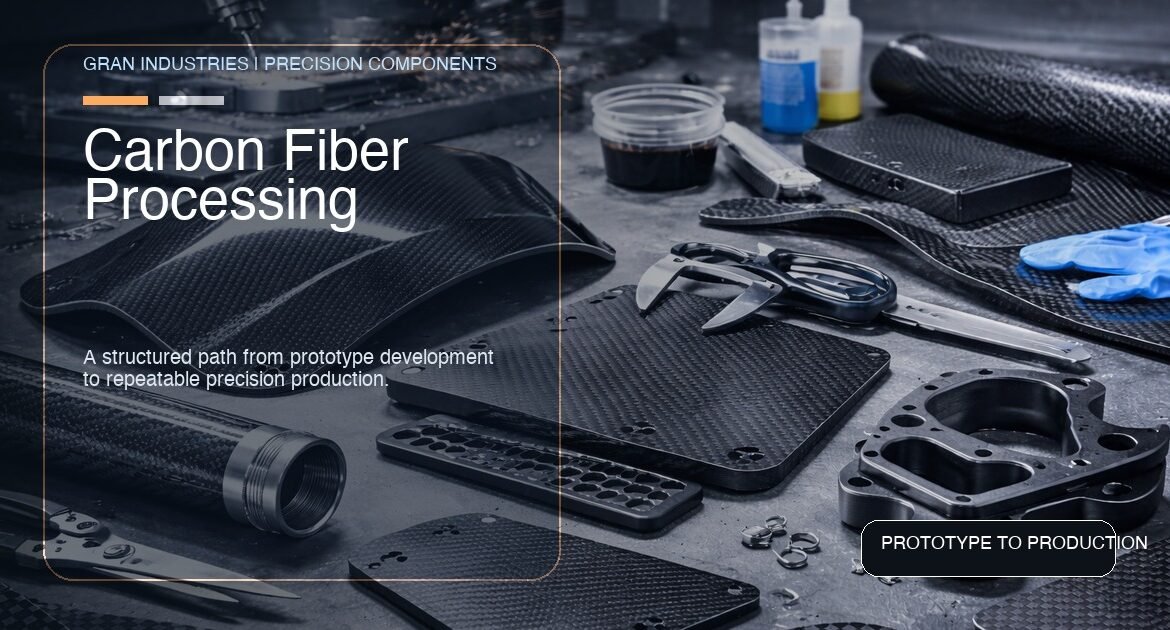
Carbon fiber processing is an important part of manufacturing precision components for projects that require lightweight construction, structural strength, and controlled production quality. For manufacturers and buyers alike, the value of carbon fiber is not limited to raw material performance. It also depends on how well the material can move through a reliable production workflow, from early prototypes to finished parts.
When carbon fiber processing is approached with the right level of control, it can support consistent results across different project stages. This is especially important in precision manufacturing, where part quality depends on both material behavior and manufacturing accuracy.
Why Prototype Work Matters in Carbon Fiber Projects
Prototype development helps confirm whether a part design can be produced effectively before larger quantities are made. In carbon fiber projects, this stage is valuable because it gives manufacturers the opportunity to review geometry, tolerances, and material suitability before moving forward. Prototyping also helps identify whether any part features need adjustment to improve manufacturability.
For precision components, early validation is important because even small design or process issues can affect final part performance. A structured prototype stage helps reduce uncertainty and provides a stronger foundation for repeat production later in the process.
How Carbon Fiber Processing Supports Precision Manufacturing
Precision components require more than strong material properties. They also require reliable process control. Carbon fiber processing supports this by combining machining accuracy, material handling discipline, and quality verification. Together, these steps help manufacturers maintain better dimensional consistency and cleaner finished parts.
In practice, this means that carbon fiber processing is part of a broader manufacturing system rather than a single isolated operation. Material preparation, machining, inspection, and finishing all contribute to the final result. When each step is managed carefully, the outcome is more predictable and better suited to demanding applications.
Moving from Prototype to Production with Greater Confidence
One of the main goals in custom manufacturing is to move from a successful prototype to stable production without losing quality. Carbon fiber processing helps support that transition when manufacturers apply consistent methods and maintain close control over part requirements. This reduces the risk of variation between early development work and later production batches.
For customers, this continuity matters because it improves confidence in part performance and production reliability. A prototype that performs well is only valuable if that standard can be carried into repeat manufacturing. Carbon fiber processing plays a central role in making that possible.
Quality and Repeatability in Carbon Fiber Component Production
Repeatability is essential for precision components. Whether a project involves a small batch of custom parts or a more structured production run, manufacturers need a process that can deliver consistent outcomes. Carbon fiber processing supports repeatability by using controlled workflows and inspection practices to confirm that finished components remain aligned with design intent.
Inspection is especially important when carbon fiber components must fit into larger assemblies or meet strict dimensional expectations. Quality checks help identify variation early and support a more dependable final product.
Why Controlled Processing Adds Value to Advanced Materials
Advanced materials only deliver full value when they are processed correctly. Carbon fiber is no exception. Its advantages become more meaningful when manufacturers can convert raw material into finished precision components with stable quality and repeatable machining outcomes.
This is why processing expertise matters so much in carbon fiber manufacturing. It supports better part consistency, cleaner production handoff between stages, and more reliable project execution from start to finish.
A Stronger Path for Precision Component Manufacturing
For businesses developing precision components, carbon fiber processing offers a practical way to support both prototype flexibility and production consistency. It helps align advanced material performance with structured manufacturing control, which is essential for quality-focused custom fabrication.
From initial prototype work to repeat production, carbon fiber processing remains an important capability for manufacturers producing lightweight, high-value precision parts.