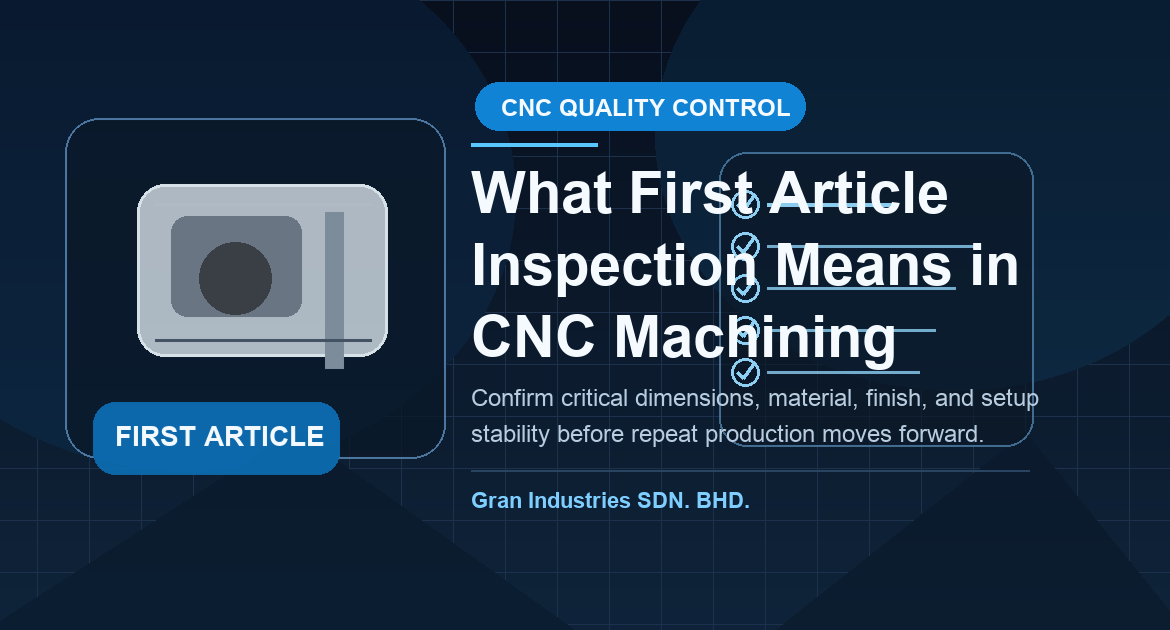
First article inspection is one of the most practical checkpoints in CNC machining quality control. Before a production run moves forward, the first completed part gives both the manufacturer and the customer a chance to confirm that the machining process is aligned with the drawing, material requirement, and inspection plan. It is not only about checking dimensions after cutting. It is about verifying that the manufacturing process is ready to produce parts consistently.
For custom parts, especially new designs or revised drawings, that early confirmation can prevent repeated errors later in the order. If a critical feature is out of tolerance, if a finish requirement was interpreted incorrectly, or if fixturing creates inconsistency, those issues are easier to correct on the first part than after a larger batch has already been machined.
What first article inspection means in CNC machining
First article inspection, often shortened to FAI, is the structured review of the first part produced from a manufacturing setup. In CNC machining, this inspection is used to confirm that the part matches the approved drawing and that the process can continue with confidence.
The inspection scope usually depends on the project, but it often includes:
- Material verification against the specified grade
- Dimensional checks on critical and general features
- Hole sizes, thread quality, and positional accuracy
- Surface finish and edge condition review
- Checks on any secondary process requirements
- Confirmation that the chosen setup and tooling are stable
In practice, first article inspection acts as a bridge between setup and repeat production. It helps confirm that the machining route, workholding method, tool selection, and inspection approach are working together as expected.
Why first article inspection matters before repeat production
A CNC program may be correct on paper, but production stability depends on more than code alone. Material behavior, cutter access, clamping pressure, burr formation, and feature accessibility can all influence the final result. First article inspection gives the team a controlled point to confirm those variables before the order moves forward.
This is especially useful when the part includes:
- Tight tolerances on selected dimensions
- Features that require multiple setups
- Thin walls, deep pockets, or difficult drilling conditions
- Assemblies where fit and alignment matter
- Prototype parts expected to move into repeat orders
- Customer-defined inspection or documentation requirements
Without that checkpoint, a process issue may only become visible after several parts have already been produced. First article inspection helps reduce that risk by making the initial part part of the control plan rather than just the start of output.
What quality teams usually check on the first machined part
The first article does not always require every dimension to be treated the same way. In most CNC machining projects, the inspection focus is based on drawing intent and part function. Critical dimensions, mating features, and characteristics linked to fit or safety usually receive closer attention.
1. Critical tolerances
Dimensions tied to assembly fit, sealing surfaces, bearing locations, or datum relationships often receive priority. These features influence whether the part will perform as intended in the final application.
2. Material and traceability details
If the part requires a specific alloy, engineering plastic, or composite-related material input, the first article stage is a practical time to confirm that the correct material has entered the process and matches the job documentation.
3. Surface condition and finishing readiness
Machined finish, edge break condition, and allowance for coating or anodizing can all affect final acceptance. Reviewing these points on the first part helps avoid finishing surprises later.
4. Process repeatability indicators
Inspectors and machinists also look for signs that the setup is stable. If the first part requires unusual adjustment or shows inconsistent feature quality across the same setup, the team may need to refine the process before release.
How first article inspection supports better CNC process control
First article inspection is not separate from process control. It supports process control by giving the production team a documented decision point. If the first part passes review, the same setup can move forward with stronger confidence. If the inspection finds a problem, corrections can be made before more material, machine time, and inspection effort are consumed.
That makes FAI useful in several ways:
- It confirms whether the drawing has been interpreted correctly on the shop floor
- It validates fixturing and setup logic before full production continues
- It helps determine whether tool wear or deflection may become an issue
- It improves communication between machining, quality, and customer teams
- It supports more stable output in later batches or repeat jobs
For that reason, first article inspection connects naturally with earlier planning steps such as drawing review before quotation and production. A stronger drawing package makes the inspection stage more useful because the team already knows which dimensions, finishes, and notes require special attention.
When first article inspection is especially valuable
Not every order has the same level of inspection risk, but first article inspection becomes more important when the job includes process uncertainty or customer-critical requirements.
Common examples include:
- New part introductions with no production history
- Design revisions that change dimensions or tolerances
- Low-volume custom parts with little room for scrap
- Orders that will scale from prototype to batch production
- Parts with multiple machined faces or orientation-sensitive features
- Projects that require inspection records before release
In these situations, the first article creates an early feedback loop that helps avoid preventable rework later in the order.
How customers can help first article inspection run smoothly
Inspection quality depends on the information provided at the start of the project. Customers can support a smoother first article process by sharing a complete technical package before machining begins.
Helpful inputs often include:
- A clear PDF drawing with revision status
- 3D model data when available
- Critical dimension notes or fit requirements
- Material grade and finish requirements
- Any dimensions that require documented reporting
- Information about how the part fits into the larger assembly
These details help the supplier build an inspection plan that matches the real functional priorities of the part. They also reduce the chance that a general dimension is treated like a critical characteristic, or that an important tolerance is missed because it was not identified clearly.
First article inspection as part of reliable custom manufacturing
In CNC machining, quality control works best when it starts early and stays close to the production process. First article inspection is one of the clearest ways to do that. It helps confirm that the first machined part reflects the drawing, the material, and the process intent before production continues at a larger scale.
For companies sourcing custom machined parts, that means fewer surprises, better communication, and stronger alignment between design requirements and actual manufacturing output. It also strengthens the broader quality system discussed in our article on why quality control matters in CNC machining for precision parts.
If your project includes custom components, prototype builds, or repeat production planning, first article inspection can provide a practical checkpoint before the order moves forward. To review your machining requirements in more detail, you can also read our overview of CNC machining services in precision manufacturing or contact Gran Industries for project discussion.