CNC Milling Copper: Complete Guide to Machining Techniques and Best Practices for Optimal Results
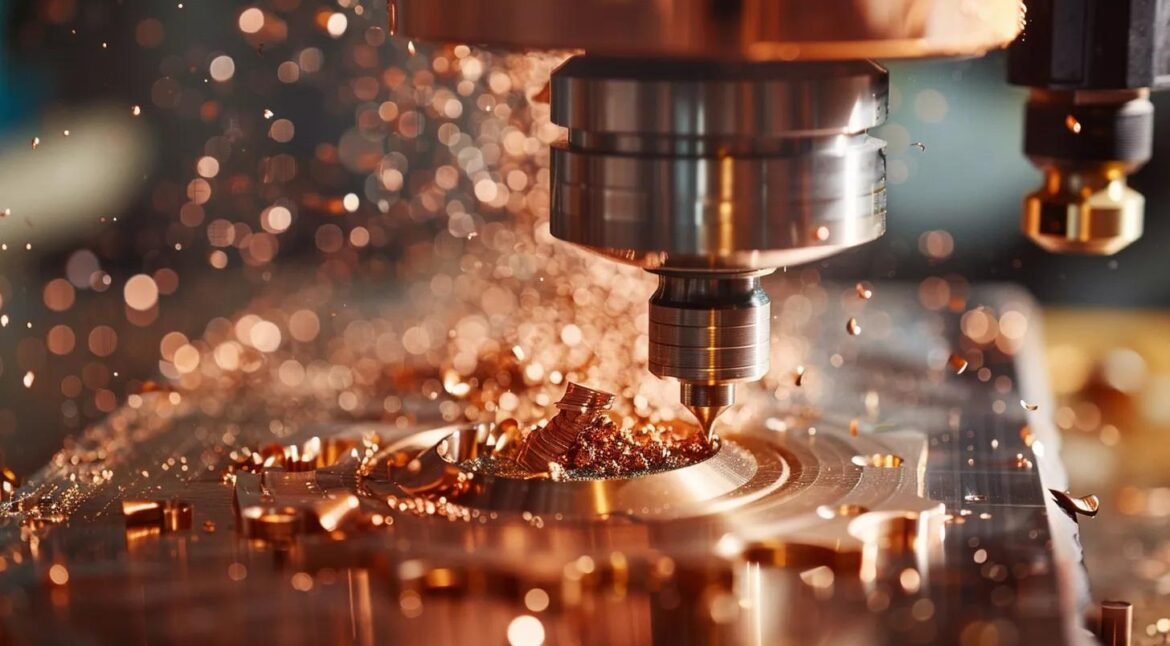
CNC milling of copper is a specialized process that requires an understanding of the unique properties of copper and the challenges associated with machining this versatile metal. In this comprehensive guide, we will explore the key properties of copper that affect its machinability, common challenges faced during CNC milling, and the best practices to optimize the machining process. Readers will learn about the tools and techniques that enhance the efficiency and quality of copper components, as well as the applications and industry trends driving the demand for CNC machined copper parts. This article will provide valuable insights for manufacturers and engineers looking to improve their copper machining processes.
What Are the Key Properties of Copper Affecting CNC Milling?
Copper is renowned for its excellent thermal and electrical conductivity, making it a preferred material in various applications. Its unique properties significantly influence the CNC milling process, affecting tool selection, machining speed, and overall efficiency. Understanding these properties is crucial for achieving optimal results in copper machining.
How Do Copper’s Thermal and Electrical Conductivity Influence Machining?
Copper’s high thermal conductivity allows for efficient heat dissipation during machining, which is essential for maintaining tool integrity and preventing overheating. This property influences the choice of cutting tools, as materials that can withstand high temperatures, such as carbide, are often preferred. Additionally, the electrical conductivity of copper necessitates careful consideration of machining parameters to avoid excessive heat generation, which can lead to tool wear and reduced surface quality.
Which Copper Grades and Alloys Are Best Suited for CNC Milling?
Different grades of copper exhibit varying machinability characteristics. For instance, C10100, known for its high purity, offers excellent machinability, while C11000 provides a balance between conductivity and workability. The following table compares the properties of these copper grades:
| Copper Grade | Conductivity | Machinability | Applications |
|---|---|---|---|
| C10100 | 100% IACS | Excellent | Electrical components |
| C11000 | 97% IACS | Good | Plumbing fittings |
| C26000 | 60% IACS | Fair | Architectural applications |
Understanding the suitability of each grade for specific applications helps manufacturers select the right material for their CNC milling projects.
What Are the Common Challenges in CNC Machining Copper and How to Overcome Them?
CNC machining of copper presents several challenges, including burr formation, tool wear, and chip control. Addressing these issues is vital for maintaining machining efficiency and product quality.
How Does Burr Formation and Tool Wear Impact Copper Milling?
Burr formation is a common issue in copper milling that can adversely affect surface finish and dimensional accuracy. The soft nature of copper makes it prone to burrs, which can lead to increased tool wear and reduced tool life. Implementing preventive measures, such as optimizing cutting speeds and using appropriate tool geometries, can mitigate these effects and enhance machining performance.
A comprehensive review further elaborates on the mechanisms of burr formation and various strategies to minimize them across different machining processes.
Minimizing Burrs in Milling: Techniques & Parameter Optimization
Burrs, being one of the most undesired obstructions generated during machining, affects work piece quality negatively in many aspects. Although deburring removes burrs, this extra process is time consuming, costly and might affect dimensional accuracy. This study investigates mechanisms, effects and variations on burr formation in most common machining processes such as drilling, milling, turning and grinding based on the information available in literature. The problems related to burrs as well as ways and methods to remove burr and control or minimize burr formation has critically discussed. Burrs can be minimised by selecting proper tool geometry, tool materials, coolant, machining parameters, work piece material, process planning and tool path design. As there is no method that can eliminate burr formation, thus deburring is essential to eliminate burrs after machining.
Burr formation and its treatments—a review, A Pramanik, 2020
What Strategies Improve Chip Control and Manage Work Hardening?
Effective chip control is essential in copper machining to prevent work hardening, which can complicate the milling process. Strategies to improve chip control include:
- Using appropriate feeds and speeds: Adjusting these parameters can help manage chip formation and reduce the risk of work hardening.
- Implementing chip-breaking techniques: These techniques can help create smaller chips that are easier to manage and remove from the cutting area.
- Utilizing effective cooling strategies: Proper cooling can help maintain tool temperature and prevent work hardening during machining.
By adopting these strategies, manufacturers can enhance the efficiency of their copper milling operations.
Research specifically highlights how optimizing spindle speeds, feed rates, and depths of cut can significantly improve surface quality and control burr formation in copper micro-milling.
Optimizing Copper Micro-Milling: Burr & Surface Roughness Control
In this study, micro-milling process of rectangular copper microchannels was conducted by a two-flute tungsten carbide micro-end mill. Burr formation mechanism was studied via 3D finite element simulation together with experiment observations. Surface quality of microchannels, i.e., burr size and surface roughness, was studied in different spindle speeds, feed rates, and depths of cut. High spindle speed, small depth of cut, and moderate feed rate close to the tool cutting edge radius seem to be favorable to improve surface quality of micro-milled microchannels.
Burr formation and surface roughness characteristics in micro-milling of microchannels, L Chen, 2020
Which Tools and Cutting Parameters Optimize CNC Milling of Copper?
Selecting the right tools and cutting parameters is crucial for optimizing the CNC milling process for copper. The choice of tool material, geometry, and machining parameters can significantly impact the quality and efficiency of the machining operation.
What Are the Best Tool Materials and Geometries for Copper Machining?
Carbide tools are often recommended for CNC milling of copper due to their hardness and wear resistance. Additionally, tools with specific geometries, such as those designed for high-speed machining, can improve cutting efficiency and surface finish. The following table summarizes the effectiveness of different tool materials and geometries:
| Tool Material | Geometry Type | Effectiveness | Application |
|---|---|---|---|
| Carbide | High-speed | Excellent | General copper milling |
| HSS | Standard | Good | Low-speed applications |
| Coated Tools | Specialized | Very Good | High-performance machining |
How to Determine Ideal Speeds, Feeds, and Depths of Cut for Copper?
Determining the ideal speeds, feeds, and depths of cut is critical for optimizing the CNC milling process. Recommended parameters vary based on the specific copper grade and tooling used. For example, a common starting point for cutting speeds is around 200-300 SFM (surface feet per minute) for carbide tools. Feed rates should be adjusted based on the tool diameter and the desired surface finish. The following table provides general guidelines for speeds and feeds:
| Tool Diameter | Cutting Speed (SFM) | Feed Rate (IPM) | Depth of Cut (inches) |
|---|---|---|---|
| 0.5 | 250 | 10 | 0.05 |
| 1.0 | 300 | 15 | 0.1 |
| 2.0 | 350 | 20 | 0.15 |
These parameters can be fine-tuned based on specific machining conditions and desired outcomes.
Studies further emphasize that these cutting parameters are crucial for achieving the desired dimensional accuracy and overall quality of CNC milled parts.
CNC Milling Accuracy: Impact of Parameters on Copper Part Quality
Several factors affect the accuracy and quality of manufactured parts when machined using circular pocket cycles on CNC machining centers. Such accuracy depends to a great extent on work-piece material, the cutting conditions; namely spindle speed, feed rate, depth of cut and the structure of the fixed cycle. The accuracy of dimensional and geometrical form plays a vital function on the required tolerance and fit of manufactured parts to be assembled.This paper studies the influence of those parameters on the accuracy and quality of milled pocket diameter with its roundness. Several specimens m
Dimensional and geometrical form accuracy of circular pockets manufactured for aluminum, copper and steel materials on
CNC milling machine using CMM, SHR Ali, 2015
How to Use Coolants and Lubrication Effectively in CNC Copper Machining?
The use of coolants and lubrication is essential in CNC copper machining to enhance tool life and improve surface finish. Proper application of these substances can significantly impact the overall efficiency of the machining process.
What Types of Coolants Are Recommended for Copper Milling?
Water-soluble coolants are commonly used in copper milling due to their ability to provide effective cooling and lubrication. Synthetic coolants can also be beneficial, offering improved cooling efficiency and reduced residue. The choice of coolant should consider factors such as compatibility with copper and the specific machining conditions.
How Do Coolants Enhance Tool Life and Surface Finish?
Coolants play a vital role in extending tool life by reducing friction and heat generation during machining. This reduction in temperature helps maintain tool integrity and prevents premature wear. Additionally, effective cooling can improve surface finish by minimizing thermal distortion and ensuring consistent machining conditions.
What Advanced Techniques and Best Practices Enhance CNC Milling of Complex Copper Parts?
As the demand for complex copper components increases, advanced techniques and best practices become essential for manufacturers. These methods can enhance the efficiency and quality of CNC milling operations.
How Does Multi-Axis Machining Improve Complex Copper Geometries?
Multi-axis machining allows for greater flexibility in producing complex geometries, enabling manufacturers to create intricate designs that would be challenging with traditional machining methods. This technique enhances design possibilities and reduces the need for multiple setups, leading to increased efficiency and reduced lead times.
What Post-Processing and Quality Control Measures Ensure Superior Copper Components?
Post-processing techniques, such as surface finishing and inspection, are critical for ensuring the quality of CNC machined copper parts. Implementing rigorous quality control measures, including dimensional inspections and surface roughness assessments, helps maintain high standards and meet customer specifications.
What Are the Key Applications and Industry Trends Driving CNC Copper Machining?
CNC machined copper parts are utilized across various industries, driven by the material’s unique properties and versatility. Understanding these applications and trends is essential for manufacturers looking to capitalize on market opportunities.
Which Industries Rely on CNC Machined Copper Parts and Why?
Several industries rely heavily on CNC machined copper components, including:
- Electronics: Copper’s excellent conductivity makes it ideal for electrical connectors and circuit boards.
- Aerospace: Copper alloys with good strength and thermal properties are used in various aerospace applications.
- Automotive: Copper components are essential for electrical systems and heat exchangers in vehicles.
These industries benefit from copper’s unique properties, driving demand for high-quality machined parts.
How Are Technological Advances Shaping the Future of Copper CNC Machining?
Technological advancements, such as automation and improved machining techniques, are shaping the future of CNC copper machining. Innovations in tool materials and coatings, as well as the integration of AI and machine learning in manufacturing processes, are enhancing efficiency and precision. As these technologies continue to evolve, they will further optimize the machining of copper components, meeting the growing demands of various industries.
1 Comment
Malaysia CNC Machining & Precision Manufacturing Company | gran.my
[…] Complete Guide to Machining Copper with CNC Milling […]