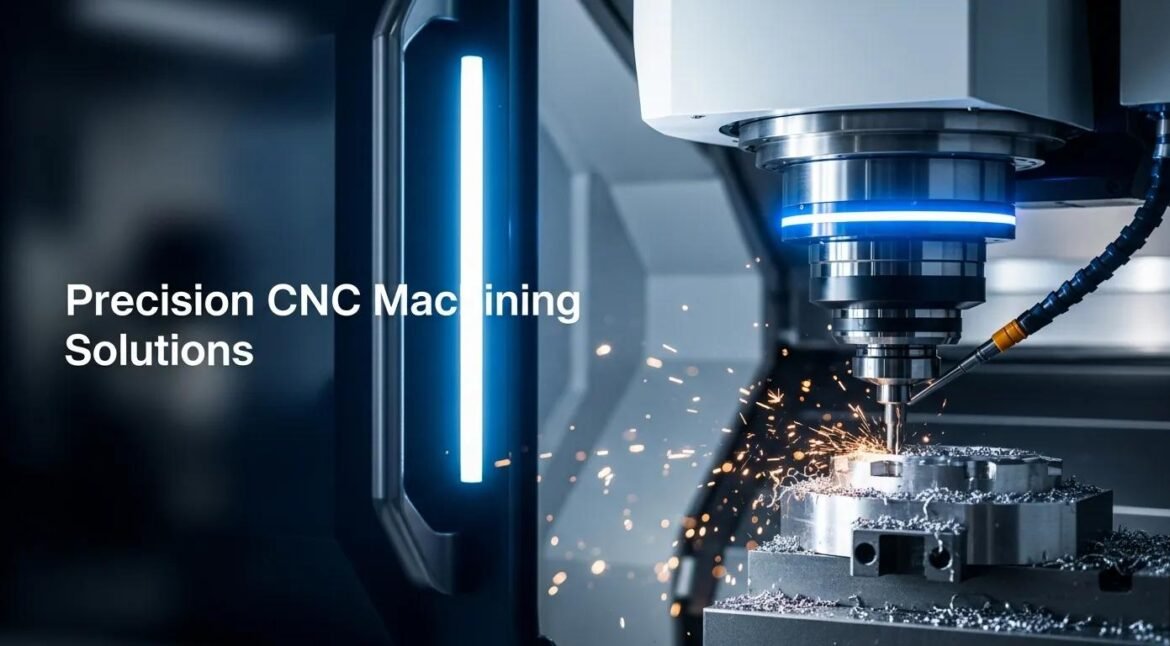
Precision CNC Machining Solutions
Custom CNC machining services play a crucial role in the manufacturing of precision industrial parts, utilizing advanced Computer Numerical Control (CNC) technology to create bespoke components with high accuracy and repeatability. This article will explore the various aspects of custom CNC machining, including its benefits, processes, suitable materials, and the industries that rely on these services. Readers will gain insights into how CNC machining can address specific manufacturing challenges and enhance production efficiency. As industries increasingly demand precision and complexity in their components, understanding CNC machining services becomes essential for manufacturers looking to stay competitive. We will delve into the intricacies of CNC machining processes, the materials used, and the quality standards that ensure reliability in production.
What Are Custom CNC Machining Services and Their Benefits for Precision Industrial Parts?
Custom CNC machining services refer to the use of CNC technology to fabricate precision parts tailored to specific requirements. These services offer numerous benefits, including enhanced accuracy, repeatability, and the ability to produce complex geometries that traditional machining methods may struggle to achieve. The precision achieved through CNC machining is vital for industries that require tight tolerances and high-quality components.
The advantages of custom CNC machining services include:
- High Precision: CNC machines can achieve tolerances as tight as
0.0001 inches (
2.54 microns) in some cases, ensuring that parts fit perfectly in their intended applications. - Repeatability: Once programmed, CNC machines can produce identical parts consistently, reducing variability in production.
- Complex Geometries: CNC machining allows for the creation of intricate designs that would be difficult or impossible to achieve with manual machining.
How Does CNC Machining Ensure High Accuracy and Repeatability?
CNC machining ensures high accuracy and repeatability through its automated processes, which minimize human error. The machines are programmed with precise specifications, allowing them to execute complex cuts and shapes with exacting detail. Advanced technologies, such as feedback systems and high-resolution encoders, further enhance the accuracy of CNC operations. This level of precision is crucial for industries such as aerospace and medical manufacturing, where even minor deviations can lead to significant issues.
The importance of precise measurement, particularly at the micron level, is further emphasized in the context of quality control in modern manufacturing.
Micron Measurement & Quality Control in Industry 4.0
Micron measurement of the manufactured part is an integral part of production process. This decides qualification of the manufactured part’s acceptance or rejection. In the advent of Industry 4.0 in the digital revolution era of manufacturing, an electronic measurement of various dimensional parameters is gaining prominence.
Electronic Gauge for Micron Measurement and its Relevance to Industry 4.0, BA Prathima, 2021
Which CNC Machining Processes Are Used for Complex and Precision Parts?
Several CNC machining processes are employed to create complex and precision parts, each with its unique capabilities and applications. Understanding these processes helps manufacturers choose the right method for their specific needs.
- CNC Milling: This process involves rotating a cutting tool to remove material from a workpiece. It is ideal for creating flat surfaces, slots, and complex shapes.
- CNC Turning: In this process, the workpiece is rotated while a stationary cutting tool removes material. It is commonly used for producing cylindrical parts.
- Multi-Axis Machining: This advanced technique allows for machining on multiple axes simultaneously, enabling the creation of intricate geometries and complex features.
What Are the Differences Between CNC Milling, Turning, and Multi-Axis Machining?
| Process | Description | Ideal For |
|---|---|---|
| CNC Milling | Rotating tool removes material from a stationary workpiece | Flat surfaces and complex shapes |
| CNC Turning | Rotating workpiece with a stationary tool | Cylindrical parts |
| Multi-Axis Machining | Simultaneous machining on multiple axes | Intricate geometries |
How Do Advanced Techniques Like 5-Axis Machining and EDM Enhance Part Complexity?
Advanced techniques such as 5-axis machining and Electrical Discharge Machining (EDM) significantly enhance the complexity of parts that can be produced.
- 5-Axis Machining: This technique allows for machining on five different axes simultaneously, enabling the creation of highly complex shapes and reducing the need for multiple setups.
- EDM: This process uses electrical discharges to remove material, making it ideal for hard materials and intricate designs that require high precision.
What Materials Are Suitable for Custom CNC Machining of Industrial Parts?
The choice of materials for CNC machining is critical, as it affects the machinability, performance, and application of the final product. Common materials used in CNC machining include metals and engineering plastics, each offering unique properties.
- Metals: Aluminum, steel, and titanium are popular choices due to their strength and durability. Each metal has specific machinability characteristics that influence the machining process.
- Engineering Plastics: Materials like polycarbonate and nylon are favored for their lightweight and corrosion-resistant properties, making them suitable for various applications.
How Do Metal Alloys and Engineering Plastics Affect Machinability and Application?
Different materials impact the machinability and application of CNC machined parts. For instance:
| Material | Machinability | Common Applications |
|---|---|---|
| Aluminum | Excellent | Aerospace, automotive |
| Steel | Good | Structural components |
| Titanium | Moderate | Medical implants, aerospace |
| Polycarbonate | Good | Consumer products |
| Nylon | Good | Gears, bearings |
Understanding the properties of these materials helps manufacturers select the right material for their specific applications, ensuring optimal performance and longevity.
What Surface Finishing Options Improve Part Performance and Aesthetics?
Surface finishing plays a vital role in enhancing the performance and aesthetics of CNC machined parts. Common finishing options include:
- Anodizing: This process enhances corrosion resistance and can add color to aluminum parts.
- Powder Coating: A durable finish that provides a protective layer and can be applied to various materials.
- Polishing: This technique improves the surface smoothness and appearance of parts, making them more visually appealing.
These finishing options not only improve the look of the parts but also enhance their functionality, making them suitable for demanding environments.
Which Industries Rely on Precision CNC Machining for Custom Industrial Parts?
Precision CNC machining is essential across various industries, each with unique requirements for custom parts. Key industries that benefit from CNC machining include:
- Aerospace: Requires high-precision components that meet strict safety standards.
- Medical: Demands parts that are both precise and biocompatible for devices and implants.
- Automotive: Utilizes CNC machining for producing complex engine components and assemblies.
How Does CNC Machining Support Aerospace, Medical, and Automotive Manufacturing?
CNC machining supports these industries by providing:
- Aerospace: Lightweight, high-strength components that meet rigorous safety regulations.
- Medical: Custom implants and surgical instruments that require high precision and reliability.
- Automotive: Efficient production of complex parts that enhance vehicle performance and safety.
What Are the Unique Challenges and Solutions in Oil, Gas, and Robotics Sectors?
The oil, gas, and robotics sectors face unique challenges that CNC machining can address:
- Oil and Gas: Requires parts that can withstand extreme conditions, necessitating the use of specialized materials and coatings.
- Robotics: Demands precision components that can operate reliably in dynamic environments.
Solutions include utilizing advanced materials and machining techniques to ensure that parts meet the specific demands of these challenging applications.
How Do Quality Certifications and Standards Ensure Reliability in CNC Machining?
Quality certifications and standards are crucial in ensuring the reliability of CNC machining services. They provide a framework for maintaining high-quality production processes and outcomes.
- ISO 9001: A standard that outlines quality management principles, ensuring consistent quality in products and services.
- AS9100D: A quality management standard specifically for the aerospace industry, focusing on safety and reliability.
- ITAR Compliance: Ensures that manufacturing processes meet U.S. government regulations for defense and military applications.
What Is the Role of ISO 9001, AS9100D, and ITAR Compliance in Precision Manufacturing?
These certifications play a significant role in establishing trust and reliability in CNC machining services. They ensure that manufacturers adhere to strict quality control processes, which is essential for industries where safety and precision are paramount.
How Are Quality Control Processes Implemented in Custom CNC Machining Services?
Quality control processes in CNC machining involve several key steps:
- Incoming Material Inspection: Ensuring that raw materials meet specified standards before production begins.
- In-Process Monitoring: Regular checks during machining to identify any deviations from specifications.
- Final Inspection: Comprehensive evaluation of finished parts to ensure they meet all quality standards.
Implementing these processes helps maintain high-quality output and reduces the risk of defects in the final products.
How Can Rapid Prototyping and High-Volume CNC Manufacturing Meet Diverse Production Needs?
Rapid prototyping and high-volume CNC manufacturing are essential for meeting the diverse production needs of various industries. These approaches allow manufacturers to quickly develop and produce parts that meet specific requirements.
- Rapid Prototyping: Enables the quick creation of prototypes for testing and validation, reducing time to market.
- High-Volume Production: Allows for the efficient manufacturing of large quantities of parts, ensuring consistency and cost-effectiveness.
What Are the Advantages of Quick-Turn Prototyping for Product Development?
Quick-turn prototyping offers several advantages:
- Speed: Reduces the time required to move from design to production, allowing for faster product development cycles.
- Cost-Effectiveness: Minimizes costs associated with traditional prototyping methods by streamlining the process.
- Flexibility: Allows for rapid adjustments to designs based on testing and feedback.
These benefits make quick-turn prototyping an invaluable tool for manufacturers looking to innovate and respond to market demands swiftly.
How Is Scalability Achieved from Low to High-Volume CNC Production Runs?
Scalability in CNC manufacturing is achieved through:
- Flexible Manufacturing Systems: Allowing for quick adjustments in production setups to accommodate varying order sizes.
- Automation: Implementing automated processes to increase efficiency and reduce labor costs.
- Standardization: Developing standardized processes and components that can be easily replicated across different production runs.
These strategies enable manufacturers to efficiently scale their operations to meet fluctuating demand while maintaining quality and precision.
1 Comment
Malaysia CNC Machining & Precision Manufacturing Company | gran.my
[…] Custom CNC Machining Services for Unmatched Precision […]