Precision CNC Machining for Shooting and Firearm Components: Expert Services and Custom Solutions
Precision CNC machining plays a crucial role in the manufacturing of shooting and firearm components, ensuring that each part meets stringent quality and performance standards. This article delves into the intricacies of precision CNC machining services tailored for the firearm industry, highlighting how these advanced techniques enhance accuracy and reliability. Readers will gain insights into the specific components that benefit from CNC machining, the advanced capabilities that support firearm manufacturing, and the materials used in the process. Additionally, we will explore the importance of quality assurance and compliance in this highly regulated field, as well as the advantages of custom components and rapid prototyping.
Understanding the nuances of precision CNC machining can significantly impact the performance and safety of firearms, making it essential for manufacturers and enthusiasts alike. This guide will cover the various aspects of CNC machining services, including the types of components manufactured, the materials used, and the compliance standards that govern the industry.
What Are Precision CNC Machining Services for Firearm Components?
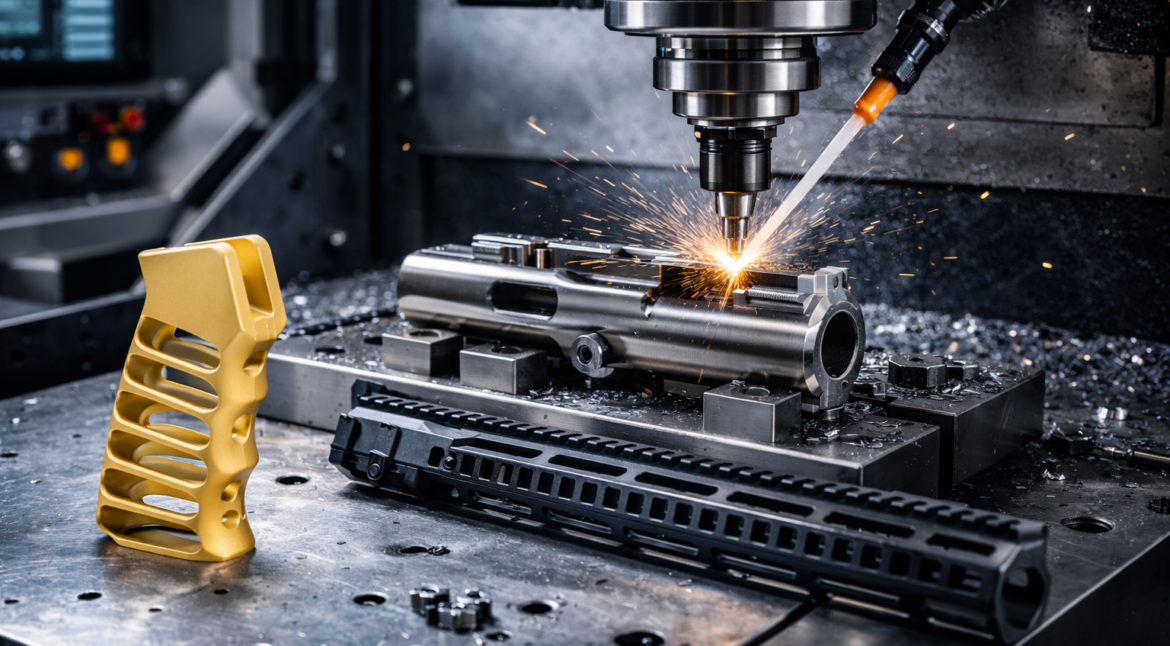
Precision CNC machining services for firearm components involve the use of computer-controlled machinery to create highly accurate and complex parts. This process enhances the manufacturing of firearm components by ensuring tight tolerances and consistent quality. The benefits of precision machining include improved part accuracy, enhanced performance, and the ability to produce intricate designs that would be challenging to achieve with traditional manufacturing methods.
CNC machining is particularly valuable in the firearm industry, where precision is paramount. By utilizing advanced technology, manufacturers can produce components that not only meet but often exceed industry standards. This capability is essential for ensuring the reliability and safety of firearms, which are subject to rigorous testing and regulations.
How Does CNC Machining Enhance Firearm Part Accuracy and Performance?
CNC machining enhances firearm part accuracy by utilizing computer algorithms to control the machining process, resulting in minimal human error. This technology allows for the production of parts with tolerances as tight as a few ten-thousandths of an inch (0.0001 inch), which is critical for components such as barrels and receivers. The precision achieved through CNC machining translates to improved performance, as each part fits together seamlessly, reducing the likelihood of malfunctions.
Moreover, CNC machining enables the creation of complex geometries that can optimize the performance of firearm components. For instance, intricate designs in barrel ports can enhance gas flow, improving the overall efficiency of the firearm. This level of precision and customization is a significant advantage for manufacturers looking to differentiate their products in a competitive market.
Which Firearm Components Benefit Most from Precision CNC Machining?
Several firearm components benefit significantly from precision CNC machining, including:
- CNC Machined Receivers: These are the core components of firearms, housing critical parts and ensuring structural integrity.
- Precision Barrels: Barrels require exact dimensions to ensure accuracy and consistency in shooting performance.
- Trigger Assemblies: The precision of trigger components directly affects the firearm’s responsiveness and user experience.
Indeed, the precision required for components like barrels is often achieved through advanced CNC techniques.
CNC Machining for Firearm Barrels & Rifling
Nowadays, the production of barrels is principally done with a CNC machine. Currently, the different rifling forms are a conventional rifling with lands and grooves or square or polygonal
Manufacturing of firearms parts: Relevant sources of information and contribution in a forensic context, D Rhumorbarbe, 2021
By focusing on these key components, manufacturers can leverage CNC machining to enhance the overall quality and performance of their firearms.
Which Firearm Components Do We Manufacture with Precision CNC Machining?
Our manufacturing capabilities encompass a wide range of firearm components, each designed with precision and quality in mind. The following sections detail the specific components we produce using advanced CNC machining techniques.
What Are the Key Features of CNC Machined Receivers and Barrels?
CNC machined receivers and barrels are characterized by their exceptional accuracy and durability. Key features include:
- Tight Tolerances: Ensures a perfect fit for all internal components, enhancing overall firearm performance.
- Material Integrity: High-quality materials are used to withstand the stresses of firing, ensuring longevity and reliability.
- Custom Designs: CNC machining allows for unique designs that can improve functionality and aesthetics.
These features make CNC machined receivers and barrels essential for high-performance firearms.
How Are Triggers, Muzzle Devices, and Optics Mounts Precisely Manufactured?
The manufacturing process for triggers, muzzle devices, and optics mounts involves several advanced techniques: our process
- Multi-Axis Machining: This allows for the creation of complex shapes and features that enhance the functionality of these components.
- Precision Tooling: Specialized tools are used to achieve the exact specifications required for optimal performance.
- Quality Control: Each component undergoes rigorous testing to ensure it meets safety and performance standards.
These manufacturing processes ensure that each part functions reliably and effectively within the firearm system.
What Advanced CNC Machining Capabilities Support Firearm Manufacturing?
Advanced CNC machining capabilities are essential for meeting the demands of modern firearm manufacturing. These capabilities include multi-axis machining, which allows for greater complexity in part design and production.
How Do Multi-Axis CNC Milling and Turning Improve Component Complexity?
Multi-axis CNC milling and turning significantly enhance the complexity of components that can be produced. This technology enables manufacturers to create intricate designs that would be impossible with traditional machining methods. The benefits include:
- Increased Design Flexibility: Manufacturers can produce parts with complex geometries that optimize performance.
- Reduced Setup Time: Fewer setups are required, leading to increased efficiency in the manufacturing process.
- Improved Surface Finish: Multi-axis machining often results in superior surface finishes, reducing the need for additional processing.
These advantages make multi-axis machining a critical component of modern firearm manufacturing.
What Are the Benefits of Swiss Machining and Wire EDM for Small Firearm Parts?
Swiss machining and wire EDM (Electrical Discharge Machining) are specialized techniques that offer unique benefits for small firearm parts:
- Precision: Both methods provide exceptional accuracy, making them ideal for small, intricate components.
- Efficiency: These techniques can produce parts quickly, reducing lead times for manufacturers.
- Versatility: Swiss machining is particularly effective for producing long, slender parts, while wire EDM excels in creating complex shapes.
Utilizing these advanced machining techniques allows manufacturers to meet the specific needs of the firearm industry effectively.
Which Materials Are Used in Precision CNC Machining of Gun Parts?
The choice of materials in precision CNC machining is critical for ensuring the performance and durability of firearm components. Common materials include stainless steel, aluminum alloys, and titanium, each offering distinct advantages.
Why Are Stainless Steel, Aluminum Alloys, and Titanium Preferred for Firearm Components?
Stainless steel, aluminum alloys, and titanium are preferred materials due to their unique properties:
- Stainless Steel: Known for its strength and corrosion resistance, making it ideal for components exposed to harsh conditions.
- Aluminum Alloys: Lightweight yet strong, aluminum alloys are often used in components where weight savings are crucial.
- Titanium: Offers exceptional strength-to-weight ratios and corrosion resistance, making it suitable for high-performance applications.
These materials ensure that firearm components can withstand the rigors of use while maintaining performance.
How Does Material Selection Affect Firearm Part Durability and Weight?
Material selection directly impacts the durability and weight of firearm parts. For instance, using lightweight materials like aluminum can reduce the overall weight of the firearm, enhancing maneuverability. Conversely, selecting high-strength materials like stainless steel can improve durability, ensuring that components can withstand repeated use without failure.
Balancing these factors is essential for manufacturers aiming to produce firearms that are both lightweight and robust.
Further emphasizing the importance of material science and manufacturing techniques, research highlights various methods for enhancing firearm component properties.
Firearm Component Manufacturing & Property Enhancement
of firearms and heat treatments and surface treatments for enhancing the properties of firearm components. A review of the main conventional and unconventional manufacturing processes used for the production of firearm components is made.
Designing Small Weapons, J Herrera-Ramirez, 2022
How Do Quality Assurance and Compliance Impact Firearm CNC Machining?
Quality assurance and compliance are paramount in the firearm industry, where safety and reliability are non-negotiable. Manufacturers must adhere to strict standards to ensure that every component meets regulatory requirements.
What Is the Role of ITAR, ISO 9001, AS9100, and FFL Certifications?
Certifications such as ITAR (International Traffic in Arms Regulations), ISO 9001, AS9100, and FFL (Federal Firearms License) play a crucial role in ensuring compliance and quality in firearm manufacturing. These certifications indicate that a manufacturer adheres to rigorous standards for quality management and safety.
- ITAR: Regulates the export and import of defense-related articles and services, ensuring compliance with U.S. national security.
- ISO 9001: Focuses on quality management systems, ensuring consistent quality in products and services.
- AS9100: Specifically tailored for the aerospace industry, this standard emphasizes quality and safety in manufacturing processes; while not firearm-specific, it is sometimes adopted by manufacturers seeking high-quality standards.
- FFL: Required for manufacturers and dealers of firearms, ensuring compliance with federal regulations.
These certifications help build trust with consumers and regulatory bodies, ensuring that products are safe and reliable.
How Do Compliance Standards Ensure Safety and Reliability in Firearm Parts?
Compliance standards ensure that firearm parts are manufactured to the highest safety and reliability standards. By adhering to these regulations, manufacturers can minimize the risk of defects and malfunctions, which is critical in the firearm industry. Regular audits and inspections help maintain compliance, ensuring that all processes meet established guidelines.
This commitment to quality and safety not only protects consumers but also enhances the reputation of manufacturers in a competitive market.
How Can Custom Firearm Components and Rapid Prototyping Accelerate Production?
Custom firearm components and rapid prototyping are essential for manufacturers looking to innovate and respond quickly to market demands. These approaches allow for greater flexibility in design and production.
What Are the Advantages of Custom CNC Machining for Shooting Parts?
- Tailored Solutions: Manufacturers can create components that meet specific performance requirements.
- Faster Turnaround: Rapid prototyping allows for quicker production cycles, enabling manufacturers to bring products to market faster.
- Enhanced Innovation: Custom designs can lead to innovative features that differentiate products in a crowded marketplace.
These benefits make custom CNC machining a valuable tool for manufacturers aiming to stay ahead of the competition.
How Does Rapid Prototyping Support Innovation and High-Volume Manufacturing?
Rapid prototyping supports innovation by allowing manufacturers to test and refine designs quickly. This process enables the identification of potential issues before full-scale production begins, reducing waste and improving efficiency. Additionally, rapid prototyping facilitates high-volume manufacturing by streamlining the production process, ensuring that manufacturers can meet demand without sacrificing quality.
By leveraging these techniques, manufacturers can enhance their product offerings and respond effectively to changing market needs.