Introduction to CNC Machining for Copper Materials
CNC machining, or computer numerical control machining, has revolutionized the manufacturing industry by enabling highly precise and efficient machining of various materials, including metals. When it comes to copper and its alloys, CNC machining plays a critical role due to the unique properties of these conductive materials. Copper is well-regarded for its excellent electrical conductivity, corrosion resistance, and malleability, making it an optimal choice for a range of applications from electrical components to plumbing systems.
The sophistication of modern CNC technology allows for intricate design and manufacturing processes that were previously unattainable. With CNC machining for copper, manufacturers can achieve tight tolerances, ensuring high-quality finished products. This precision is particularly advantageous when dealing with the conductive nature of copper, where even minor imperfections can lead to significant performance issues in electrical applications. Advanced CNC systems utilize digital models and automation, which enhance production speed while maintaining consistent quality throughout the machining process.
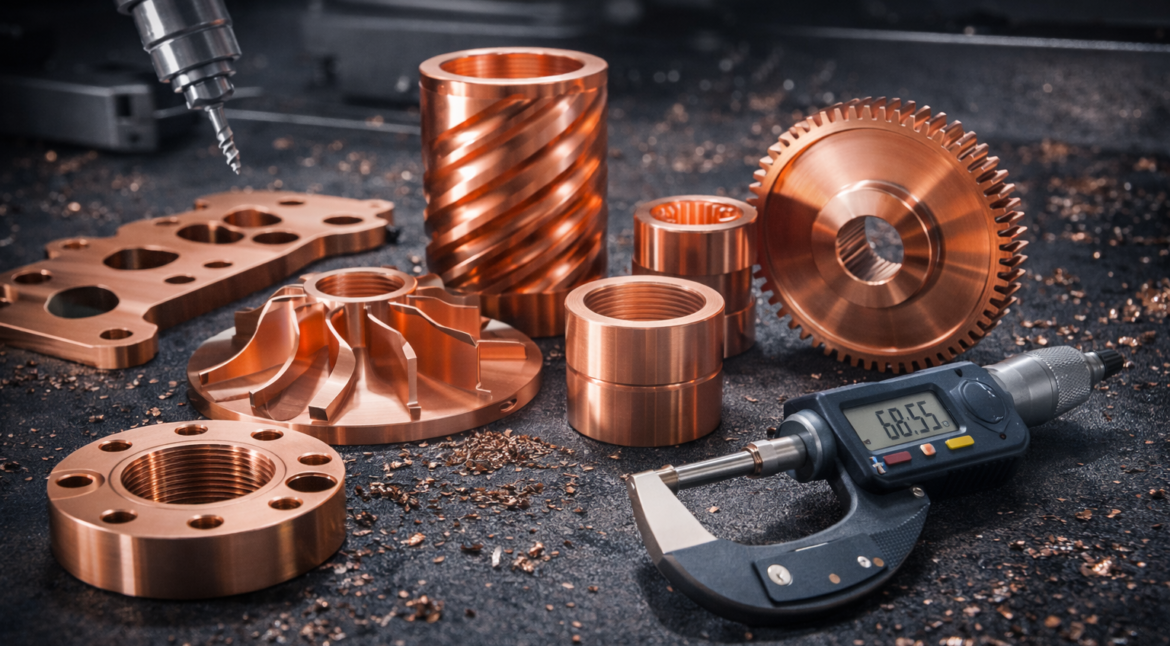
Moreover, CNC machining techniques, such as milling, turning, and drilling, can be effectively applied to copper and its alloys, allowing for diverse shapes and sizes. The ability to customize the machining process based on specific requirements makes CNC an invaluable tool in the fabrication of copper materials. As the demand for precision components continues to rise, understanding the techniques and technologies behind copper CNC machining becomes increasingly important for manufacturers and engineers alike.
In summary, CNC machining for copper materials represents a significant advancement in manufacturing precision and efficiency. The unique properties of copper, combined with modern machining capabilities, ensure that a wide variety of high-performance components can be produced to meet the evolving demands of various industries.
The Precision CNC Machining Process Explained
CNC machining for copper and copper-alloy materials is an intricate process that transforms complex computer-aided design (CAD) files into physically precise components. The initial step involves the creation of a detailed CAD model, which acts as the blueprint for the final product. Engineers meticulously design this model to encapsulate the required specifications, ensuring that every detail aligns with the final application of the component.
Once the CAD design is complete, the next phase involves the selection of appropriate materials. Copper, valued for its excellent thermal and electrical conductivity, and copper alloys such as brass and bronze, are commonly utilized in a variety of industrial applications. After deciding on the material, it is then fed into a CNC machine, which utilizes programmed commands to perform the required machining operations.
The CNC machining process employs a range of equipment, including lathes, mills, and routers, each tailored to achieve specific geometries and tolerances. As the CNC machine operates, it removes material through different methods, such as milling and turning, transforming the raw copper into the desired component while maintaining tight tolerances. Precision is critical in this stage, as even the slightest deviation can lead to functional failures in the final application.
Throughout the machining process, rigorous quality control measures are implemented. These ensure that the copper machining remains faithful to the original CAD specifications and that each part adheres to industry standards. By maintaining precision in both the design and machining stages, manufacturers can ensure the longevity and reliability of products made from copper and its alloys. This commitment to precision is what sets CNC machining apart, particularly when dealing with materials that require careful handling to realize their full potential.
Benefits of Machining Copper and Its Alloys
Copper and its alloys are widely recognized for their superior machining properties, which make them essential in various industrial applications. One of the main advantages of copper machining is its excellent electrical conductivity. This property allows copper components to efficiently transmit electricity, making them ideal for applications in the electronics and electrical industries. The high conductivity ensures minimal energy loss in electrical systems, thereby improving overall performance.
Another significant benefit of copper machining lies in its thermal conductivity. Copper has the capability to quickly absorb and evenly distribute heat, which is essential in applications such as heat exchangers and cooling systems. This characteristic not only enhances the efficiency of thermal processes but also extends the lifespan of components by preventing overheating.
Corrosion resistance is yet another advantage that makes copper a favored choice in manufacturing. Copper and its alloys are known to withstand corrosive environments, including those found in marine applications and chemical processing. This resistance reduces maintenance needs and contributes to a lower total cost of ownership for businesses utilizing copper CNC machining. Additionally, the natural patina that forms on copper surfaces serves as a protective layer, further enhancing their durability.
Malleability is an important aspect of copper, enabling it to be easily shaped and formed without breaking. This characteristic allows for intricate designs and complex geometries during the CNC machining processes, which is crucial in industries such as aerospace and automotive. The ability to manipulate copper and its alloys into precise shapes ensures that components meet stringent specifications and performance standards.
In summary, the unique properties of copper and its alloys, including excellent electrical and thermal conductivity, corrosion resistance, and malleability, make them highly advantageous for CNC machining applications. These features contribute to improved performance and reliability across various sectors, further solidifying copper’s position as a top material choice in precision machining.
Common Applications of Copper Machined Parts
Copper CNC machining plays a pivotal role in various industries due to the material’s excellent electrical and thermal conductivity, corrosion resistance, and machinability. The electronics industry heavily relies on machined copper components, particularly in the production of printed circuit boards (PCBs). Copper traces in PCBs ensure efficient electrical flow, making them essential for everything from consumer electronics to complex computing systems.
In telecommunications, copper machined parts are utilized in connectors and cables, including those used in telephone systems and networking equipment. The high conductivity of copper ensures minimal signal loss, contributing to the reliability and performance of communication systems. For instance, twisted pair cables, which often utilize copper terminals, are foundational in local area networks and are prevalent in residential and commercial installations.
The automotive industry also benefits greatly from copper CNC machining. Copper components are used in electric vehicles, hybrid engines, and traditional combustion engines, particularly in wiring and conductive pathways. Products such as battery terminals, braking systems, and wiring harnesses illustrate the demand for precision-engineered copper parts. These components ensure optimal performance and safety, directly supporting the industry’s shift toward more electrified and efficient solutions.
Aerospace applications further showcase the versatility of copper machined parts. Lightweight and robust, copper alloys are used in critical components such as heat exchangers and electrical connectors in aircraft systems. These applications not only require precision but also adherence to stringent safety standards, making copper CNC machining an ideal choice for the aerospace sector.
In summary, copper CNC machining supports a wide array of industries, enabling the production of high-performance components essential for modern technology. As these industries continue to evolve, the role of copper machined parts will likely expand, offering innovative solutions to meet emerging challenges.
Customized CNC Solutions for High Accuracy and Quality
Gran.my specializes in providing tailored CNC machining services specifically designed to work with copper and its alloys. This focus on customization allows the company to effectively meet the unique requirements of various industries, ensuring that every project is approached with precision and expertise. The process begins with a detailed consultation, where engineers collaborate with clients to fully understand their specific needs and technical drawings. This comprehensive approach allows Gran.my to develop machining solutions that align with each client’s expectations.
The use of advanced facilities and technology in copper CNC machining equips Gran.my’s technicians to achieve high levels of accuracy and repeatability. Utilizing Computer Numerical Control (CNC) machines, combined with state-of-the-art software, ensures that even the most intricate designs are executed flawlessly. Throughout the production process, stringent quality control measures are implemented to verify that every component meets the specified tolerances and standards. This dedication to quality results in products that not only meet but often exceed customer expectations.
Furthermore, Gran.my is committed to continuous improvement and innovation in their copper CNC machining processes. They actively seek feedback from clients, which plays a crucial role in refining their services and troubleshooting any potential challenges that arise during production. This customer-centric approach is a hallmark of Gran.my’s business model, emphasizing collaboration throughout every stage of the machining process. By prioritizing customer satisfaction and high-quality output, Gran.my has established itself as a trusted partner for businesses looking for reliable CNC solutions in the copper market.
Quality Control Measures in Copper CNC Machining
CNC machining of copper and its alloys necessitates rigorous quality control measures to maintain the precision and reliability demanded by various industries. Quality assurance begins with the selection of high-grade copper materials that meet established industry standards. Throughout the machining process, several inspection techniques are implemented to verify the integrity of the manufactured parts. This is particularly crucial due to copper’s unique properties, including its high conductivity and malleability, which can affect machining accuracy.
One common inspection technique involves dimensional inspection, where precise measurements of the machined components are taken to ensure they meet specified tolerances. Automated measurement systems, such as coordinate measuring machines (CMM), are often employed to enhance measurement accuracy and efficiency. Additionally, the use of optical comparators allows for the visual inspection of complex geometries, ensuring that the fine details of the copper components are correctly formed.
Another critical aspect of quality control in copper CNC machining is the implementation of non-destructive testing (NDT) methods. These techniques, which include ultrasonic testing and dye penetrant inspection, are essential for detecting any internal imperfections or surface flaws that might compromise the strength and performance of the copper parts. Furthermore, adherence to international standards such as ISO 9001 is crucial, as these benchmarks provide a framework that guides manufacturers in establishing adequate quality management systems.
In addition to routine inspections, statistical process control (SPC) is utilized to monitor the machining process in real-time. By collecting data on key parameters and analyzing trends, manufacturers can identify variations that may indicate potential quality issues, allowing for timely corrective actions. Collectively, these quality control measures significantly enhance the reliability and performance of copper CNC machined products, ensuring they meet stringent customer requirements and industry regulations.
Comparison with Other Machining Materials
Copper CNC machining holds distinct advantages when compared to other commonly used materials such as aluminum and stainless steel. One of the primary factors that influence the choice of material in machining applications is machinability. Copper is known for its excellent machinability, allowing for higher cutting speeds and reduced tool wear. This characteristic enables manufacturers to achieve intricate designs with greater precision, which is often more challenging with aluminum and stainless steel. The thermal and electrical conductivity of copper also enhances its desirability for applications where heat and electricity transfer are critical.
In terms of cost, while copper can be more expensive than aluminum, the durability and longevity offered through copper CNC machining often justify the investment. The unique properties of copper, including its high corrosion resistance and superior thermal conductivity, can lead to lower maintenance expenses and extended product lifespans. In contrast, while aluminum is lighter and generally more affordable, it lacks the thermal conductivity of copper, which may limit its application in high-temperature environments.
Moreover, comparing the mechanical properties, copper’s inherent strength and toughness give it a competitive edge, particularly in applications requiring high strength-to-weight ratios. Stainless steel, while being highly resilient and resistant to corrosion, can be more challenging to machine as it tends to work-harden. This can result in increased production costs and longer lead times. Therefore, choosing copper CNC machining over alternatives like aluminum or stainless steel not only provides unique benefits regarding performance but also optimizes production efficiency and material utilization.
These comparative insights highlight that while aluminum and stainless steel have their own merits in specific applications, the unparalleled properties of copper and its suitability for precision machining applications substantiate the ongoing preference for copper and copper alloys in various industries.
Case Studies: Successful Projects and Customer Satisfaction
Gran.my has established a notable reputation in the manufacturing sector, particularly for its copper CNC machining capabilities. This section highlights several case studies that showcase the effectiveness of Gran.my’s expertise in delivering high-quality solutions to meet the demands of diverse industries.
One significant project involved a leading electronics manufacturer that required precision components for a new product line. The challenge centered around the complex geometry and tight tolerances needed for the copper parts, which are critical for optimal electrical conductivity. Gran.my’s team utilized advanced CNC machining techniques, including custom tooling and real-time quality monitoring, to produce parts that exceeded client expectations. The customer reported a 30% improvement in production efficiency linked directly to the superior quality of the machined components.
In another instance, Gran.my collaborated with an automotive supplier facing difficulties in sourcing durable components due to inconsistent suppliers. By leveraging its extensive experience in copper CNC machining, Gran.my was able to create a series of high-strength copper alloy components tailored to the client’s specific requirements. Throughout the project, the supplier praised Gran.my’s responsiveness and commitment to quality, noting that their rigorous quality assurance processes ensured that every batch met or surpassed industry standards.
Customer satisfaction is a cornerstone of Gran.my’s operation. Feedback from various clients underscores how personalized solutions and adaptability in project execution contribute to their overall satisfaction. One customer stated that Gran.my not only addressed their immediate machining needs but also helped streamline their design process, leading to better overall project outcomes.
These examples demonstrate Gran.my’s commitment to excellence in copper CNC machining. Through collaboration, innovation, and an unwavering focus on quality, the company continues to achieve successful results that enhance customer satisfaction.
Conclusion: The Future of CNC Machining for Copper
The discourse surrounding copper CNC machining underscores its critical role in modern manufacturing, particularly in industries requiring high precision and reliability. As detailed throughout this article, the superior thermal and electrical conductivity of copper, alongside its malleability, makes it an ideal candidate for various precision machining applications. The ongoing evolution of CNC machining technology promises to further enhance the capabilities of manufacturers handling copper and its alloys.
Looking ahead, several technological advancements are poised to influence the landscape of copper CNC machining. Innovations such as advanced tool materials, which improve cutting efficiencies, are likely to emerge, allowing for faster production rates while maintaining precision. Additionally, the rising adoption of automation and artificial intelligence in machining processes is set to minimize human error and optimize workflow efficiencies. The integration of these technologies within CNC machining environments may further streamline operations, resulting in reduced lead times and cost-effective solutions for clients.
Moreover, the demand for copper components in sectors like renewable energy, electrical vehicles, and aerospace is expected to rise sharply. This trend signifies that CNC machining services will need to adapt, developing specialized processes tailored to meet the stricter tolerances and quality standards demanded by these industries. Hence, manufacturers focusing on copper and copper-alloy components must remain agile, continuously evolving their methodologies and embracing cutting-edge technologies.
In summary, as the future unfolds, the copper CNC machining industry stands at a pivotal juncture. The combination of ongoing technological advancements and increasing market demands will undoubtedly shape the operational strategies of machining providers, ensuring that they remain competitive and capable of delivering high-quality copper components in a dynamic manufacturing environment.