Introduction to CNC Machining Services
Gran.my is a recognized leader in the field of CNC machining services, specializing in high-quality solutions for aluminum alloy machining. The company has built a strong reputation over the years, thanks to its commitment to precision, quality, and customer satisfaction. At Gran.my, the focus on aluminum alloys is a testament to the material’s versatility and critical role in various industries, including aerospace, automotive, and electronics, where weight-to-strength ratios are paramount.
CNC machining, or Computer Numerical Control machining, is a process that utilizes computerized controls to operate machinery for manufacturing parts and components. This technology is essential for producing complex designs with impressive accuracy and repeatability. By leveraging advanced CNC machines, Gran.my is equipped to handle intricate aluminum alloy machining projects, which require a high degree of precision and consistency.
The role of CNC machining in creating high-precision components cannot be overstated. It allows manufacturers to produce detailed parts efficiently, tailored to specific requirements. With the evolving demands of industries, CNC machining has become a critical part of the manufacturing landscape, especially when working with aluminum alloys, which can be both adaptable and lightweight. Gran.my’s expertise in this process not only emphasizes the importance of accuracy but also highlights its ability to innovate within the machining sphere.
As industries continue to grow and require more sophisticated components, the importance of trusted CNC machining services like those offered by Gran.my becomes increasingly significant. The combination of skilled professionals, state-of-the-art technology, and a focus on aluminum alloy CNC processing positions Gran.my as a premier choice for precision engineering needs.
Understanding Aluminum Alloys
Aluminum alloys are metal mixtures primarily composed of aluminum, often combined with other elements such as copper, magnesium, manganese, silicon, and zinc. These additional elements enhance specific properties of aluminum, allowing for a wide range of grades and characteristics. Based on their composition, aluminum alloys are classified into two primary categories: wrought and cast. Wrought alloys are formed through mechanical processes like rolling or extrusion, while cast alloys are produced by pouring molten metal into molds.
The strength-to-weight ratio is one of the most notable advantages of aluminum alloys, making them an ideal choice in industries where weight reduction is crucial. This quality is of particular importance in sectors such as aerospace and automotive, where every ounce counts. Furthermore, aluminum exhibits excellent corrosion resistance due to a naturally forming oxide layer that protects it from environmental degradation. As a result, components made from aluminum alloys can maintain their integrity and performance over extended periods, even in harsh environments.
Another significant attribute of aluminum alloys is their excellent machinability, which is why they are commonly used in aluminum alloy CNC processing. The ease of shaping and cutting these alloys allows for intricate designs and precise tolerances, making them suitable for various applications ranging from structural components to intricate parts in electronics. Recognizing the specific alloy grades and their respective properties is crucial, as some grades excel in strength while others are more suitable for corrosion resistance.
In summary, aluminum alloys are invaluable in modern manufacturing and machining due to their unique composition, lightweight nature, and superior resistance to corrosion. Their versatility makes them a preferred material choice in a myriad of applications across different industries, promoting efficiency and innovation in product development.
Advanced CNC Machining Processes at Gran.my
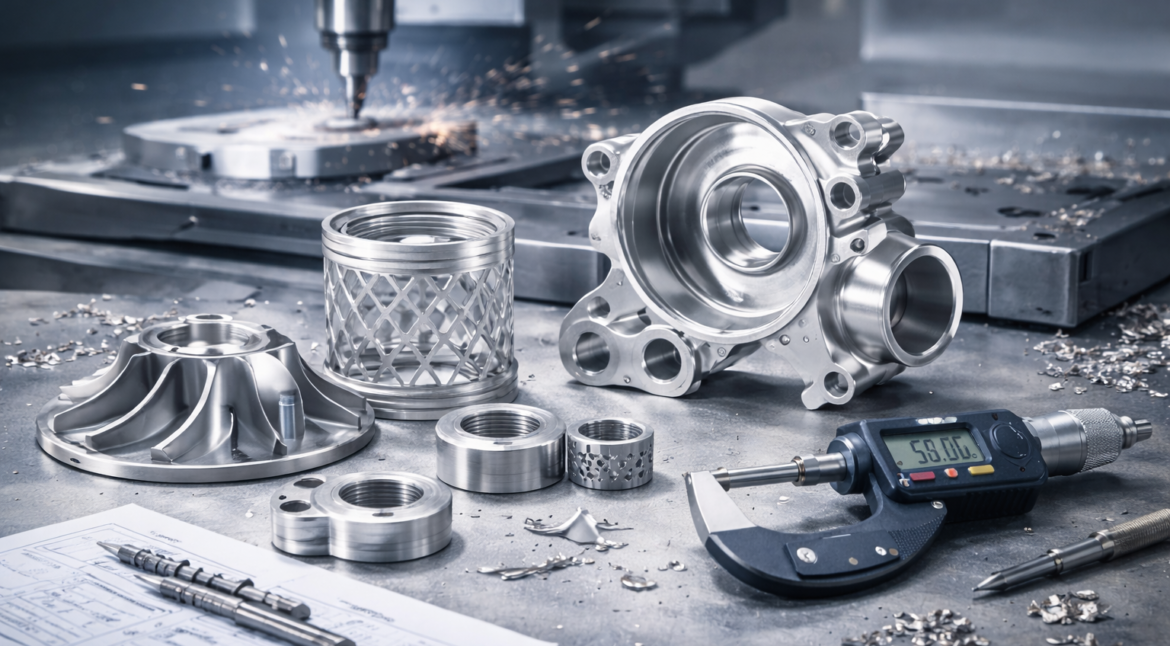
Gran.my employs a range of advanced CNC machining processes to ensure the utmost precision in manufacturing aluminum alloy components. Among these processes, milling, turning, and drilling are the most prominent techniques utilized. Each of these methods offers unique advantages that contribute to the quality and accuracy of the final products.
Milling is one of the primary processes used in aluminum alloy CNC machining at Gran.my. This technique involves the use of rotary cutters to remove material from a workpiece, creating complex geometries and smooth surfaces. The advanced CNC milling machines are equipped with high-speed spindles and precise control systems, allowing for intricate designs and tight tolerances. This is particularly beneficial for industries requiring detailed specifications, such as aerospace and automotive.
Turning is another key process employed in the CNC machining of aluminum alloys. In this procedure, the workpiece rotates while a cutting tool is moved along its length to shape it. Gran.my utilizes state-of-the-art CNC turning machines that can accommodate a variety of part sizes and shapes. The ability to create cylindrical components with high precision makes this technique ideal for producing shafts, fittings, and other parts that require a perfect finish.
Drilling is equally crucial in the fabrication of aluminum parts at Gran.my. This process enables the creation of precise holes, which are essential for assembling components. Gran.my’s advanced drilling machines are capable of executing complex hole patterns while ensuring minimal deviation from specifications. The combination of these advanced CNC machining processes places Gran.my at the forefront of aluminum alloy CNC processing, capable of meeting diverse customer needs with precision and efficiency.
Benefits of Using Aluminum Alloys in Machining
Aluminum alloys have gained prominence in the field of CNC machining services due to their remarkable properties that offer numerous advantages over other materials. One of the key benefits of utilizing aluminum alloys in aluminum alloy CNC processing is weight reduction. Aluminum is significantly lighter than many traditional metals such as steel or titanium, making it an ideal choice for applications where reducing weight is crucial, such as in automotive and aerospace industries. This attribute enables manufacturers to produce components that maintain structural integrity while lowering transportation and overall operational costs.
Additionally, aluminum alloys are known for their improved durability. These materials exhibit excellent strength-to-weight ratios, providing the necessary toughness required in demanding applications. The incorporation of various alloying elements enhances their resistance to corrosion and wear, which extends the lifespan of machined parts. Consequently, users can expect increased reliability and fewer maintenance requirements, thus optimizing their operations.
Another significant advantage of aluminum alloys is superior machinability. Compared to other metals, aluminum alloys are easier to cut and shape, which allows for precise CNC machining with high-speed tools. This characteristic reduces production timelines and lowers machining costs, resulting in greater overall efficiency. The seamless integration of aluminum alloy CNC machining into production processes enhances productivity while maintaining high-quality output.
In the realm of cost-effectiveness, the combined benefits of reduced weight, enhanced durability, and improved machinability reinforce the argument for using aluminum alloys. Engaging in aluminum alloy CNC processing not only contributes to less resource consumption and lower energy costs, but it also delivers exceptional performance and value in finished products.
Applications of Aluminum Parts Across Industries
Aluminum parts, produced through advanced aluminum alloy CNC processing, are integral to numerous industries owing to their lightweight, corrosion resistance, and excellent mechanical properties. Notably, the automotive sector makes extensive use of these aluminum components. For instance, manufacturers utilize aluminum alloy components in vehicle frames, engines, and wheels to enhance fuel efficiency while maintaining structural integrity. The use of CNC machining allows for precise fabrication, which is essential in meeting the stringent safety and performance regulations of modern automobiles.
Similarly, the aerospace industry heavily relies on aluminum parts due to their low density and high strength-to-weight ratio. Aircraft components, including fuselage structures, wing ribs, and engine mounts, often employ customized aluminum alloy solutions supplied through CNC processing. This not only contributes to significant weight reductions, which in turn improves fuel consumption but also ensures that the parts can withstand extreme environmental conditions. The precision achieved through CNC machining is vital in achieving the necessary tolerances and surface finishes required for high-performance aerospace applications.
Furthermore, the electronics sector benefits from aluminum parts in various applications, including heat sinks, casings, and structural components for devices. Aluminum’s thermal conductivity properties allow for efficient heat dissipation, making them ideal for keeping electronic devices cool during operation. The sophisticated capabilities of aluminum alloy CNC machining facilitate the creation of intricate designs that meet the evolving needs of consumer electronics, from smartphones to computer hardware.
Overall, the versatility and adaptability of aluminum parts manufactured using advanced CNC techniques serve as a testament to their critical role across diverse industries like automotive, aerospace, and electronics. Companies like Gran.my skillfully leverage these capabilities, providing tailored aluminum alloy solutions that meet the specific demands of their clients.
Technical Capabilities: Tight Tolerance Control
In the realm of manufacturing, especially concerning aluminum alloy CNC processing, the precision of the produced components plays a crucial role in overall functionality and performance. Gran.my understands the significance of tight tolerance control as it directly correlates with the quality and reliability of the end products. By adhering to stringent standards, Gran.my ensures that all machined parts meet the exact specifications set forth by clients, thus reinforcing their commitment to excellence in machining services.
Gran.my employs advanced technology and state-of-the-art CNC equipment that allows for the meticulous manipulation of aluminum alloys, ensuring precision in every cut and contour. The coupling of high-quality machinery with skilled technicians enables Gran.my to achieve tolerances that consistently fall within industry standards, thereby delivering components that work seamlessly within larger assemblies.
Precision in aluminum alloy CNC machining involves not only the physical attributes of the product but also the ability to replicate those attributes across multiple production runs. Gran.my places a significant emphasis on calibration processes and routine maintenance of their machinery. Such practices minimize variability and optimize the machining process, thereby guaranteeing that customers receive parts that are not only accurate but also reliable over time.
Moreover, Gran.my’s commitment to quality assurance is reflected in their rigorous testing procedures. Using metrology equipment, they assess each finished part against specified tolerances, documenting compliance at every stage. This dedication to consistent quality control not only meets but often exceeds customer expectations, solidifying Gran.my’s reputation in the competitive landscape of aluminum machining services.
By maintaining such high standards in tight tolerance control, Gran.my makes it possible for clients to confidently integrate their machined parts into diverse applications, knowing they are receiving product excellence.
Customizable Production: Tailored Solutions for Customers
In the realm of precision engineering, customizability stands as a cornerstone of effective service delivery. Gran.my’s aluminum alloy CNC processing services exemplify this principle by providing tailored solutions that meet the unique needs of each client. Through strategic collaboration and a customer-centric approach, Gran.my specializes in transforming individual specifications into high-quality machined components.
The customization process begins with detailed customer drawings, which serve as the blueprint for each project. Clients can present their specific design requirements, dimensions, and functionality criteria, allowing Gran.my to translate these elements into precise machining specifications. By leveraging advanced CNC technology, the company ensures that even the most intricate designs can be realized with exactitude. This level of customization is particularly beneficial in industries where precision and performance are critical.
Moreover, Gran.my actively fosters a collaborative environment in which clients are encouraged to engage throughout the production process. This enables immediate feedback and adjustments, ensuring that the final product aligns perfectly with the original vision. The commitment to innovation and flexibility means that even unexpected challenges can be addressed promptly, maintaining project timelines and quality standards. The strength of Gran.my’s aluminum alloy CNC processing capabilities lies not only in their technology but also in their adaptable approach to fulfilling customer requirements.
Ultimately, the focus on customization fosters long-lasting relationships between Gran.my and its clients. By prioritizing tailored solutions, the company enhances customer satisfaction and paves the way for future collaborations. Through a combination of state-of-the-art technology, detailed attention to client needs, and a commitment to excellence, Gran.my emerges as a leading choice for those seeking bespoke aluminum alloy CNC machining services.
Quality Assurance in CNC Machining
In the manufacturing sector, the quality of machined components directly impacts the performance and reliability of the final products. At Gran.my, exceptional quality assurance mechanisms are implemented throughout the aluminum alloy CNC processing journey to ensure that each product adheres to the established specifications and standards. The company employs a systematic approach to quality control, integrating various techniques and measures that fortify the integrity of the machining process.
Every CNC machined part undergoes rigorous inspections at multiple stages of production. Initially, incoming materials are scrutinized for dimensional accuracy and alloy composition. These measures are essential to confirm that the aluminum alloys utilized meet industry standards before they undergo the machining process. Gran.my also emphasizes precision in its CNC programming and machining operations to reduce the likelihood of defects arising during production.
Supporting these practices, advanced testing methodologies are employed post-production to further validate the quality of the machined parts. This includes non-destructive testing and meticulous dimensional inspections using high-accuracy instruments, ensuring that each component meets precise tolerances. Certifications such as ISO 9001 are maintained, signifying Gran.my’s commitment to quality and customer satisfaction.
Moreover, effective traceability practices are in place. Each part produced can be traced back through its manufacturing history, guaranteeing accountability and enabling swift corrective actions when needed. This level of quality control not only boosts trust with clients but also reinforces the durability and performance of the aluminum alloy CNC processed parts, reflecting in their operational efficiency within final products.
Quality assurance in CNC machining at Gran.my goes beyond mere compliance; it embodies a continuous improvement ethos, fostering innovation and advancement in their aluminum alloy processing capabilities.
Conclusion and Call to Action
In conclusion, the exploration of Gran.my’s aluminum alloy CNC machining services reveals their commitment to precision, quality, and customer satisfaction. Throughout this post, we have highlighted the various aspects of aluminum alloy CNC processing, from its benefits to its applications across different industries. Gran.my stands out for its expertise in utilizing advanced machinery and innovative techniques, ensuring that clients receive tailored solutions that meet their specific needs.
By integrating cutting-edge technology with skilled craftsmanship, Gran.my successfully navigates the complexities of aluminum alloy CNC machining, allowing for the production of components that exhibit outstanding strength and durability. The ability to work with diverse aluminum alloy grades further enhances their service offerings, making Gran.my a reliable partner for various manufacturing requirements.
As the industry evolves, Gran.my continues to stay ahead by adopting best practices and maintaining a strong focus on quality control. This ensures that every project, no matter the size or complexity, adheres to strict quality standards. Therefore, those looking for expertise in aluminum alloy CNC processing can trust Gran.my to deliver exceptional results.
If you are interested in learning more about how Gran.my can assist with your aluminum alloy CNC machining needs, we encourage you to reach out for inquiries or visit our website. Let us help you transform your ideas into reality with precision-engineered solutions. Your next project could benefit from the proficiency and reliability of Gran.my’s services, so don’t hesitate to contact us today.