CNC machined carbon fiber parts are usually specified when an OEM project needs low weight, controlled stiffness, clean edges, and reliable dimensional repeatability. These parts may include panels, plates, covers, brackets, lightweight housings, drone components, and custom structural details where a metal part would add unnecessary weight.
For buyers, the key point is that carbon fiber machining is not the same as aluminum or stainless steel machining. Carbon fiber reinforced polymer is layered, abrasive, and sensitive to cutting pressure. A good result depends on the laminate direction, part thickness, hole details, edge quality, tooling choice, dust control, and inspection plan.
This OEM buyer guide explains how CNC machined carbon fiber parts should be reviewed before quotation, what information helps the supplier choose the right process, and how to reduce avoidable revisions before prototype or repeat production.
Why OEM buyers choose CNC machined carbon fiber parts
Carbon fiber is often selected when the project requires a combination of weight reduction, stiffness, and clean external geometry. In practical manufacturing work, the value usually comes from using carbon fiber in the right type of component rather than treating it as a direct replacement for every metal part.
Common CNC machined carbon fiber part requests include:
- Flat panels, plates, covers, and mounting surfaces
- Lightweight brackets, support members, and equipment frames
- Drone, robotics, automation, and inspection equipment components
- Custom OEM parts where low weight and controlled geometry matter
- Prototype parts that need to be reviewed before repeat production
The quotation should confirm whether the project is mainly a routed profile, a drilled panel, a countersunk plate, or a mixed-feature component. That decision affects tooling, fixture planning, edge finishing, and inspection effort.
What makes carbon fiber different from metal machining
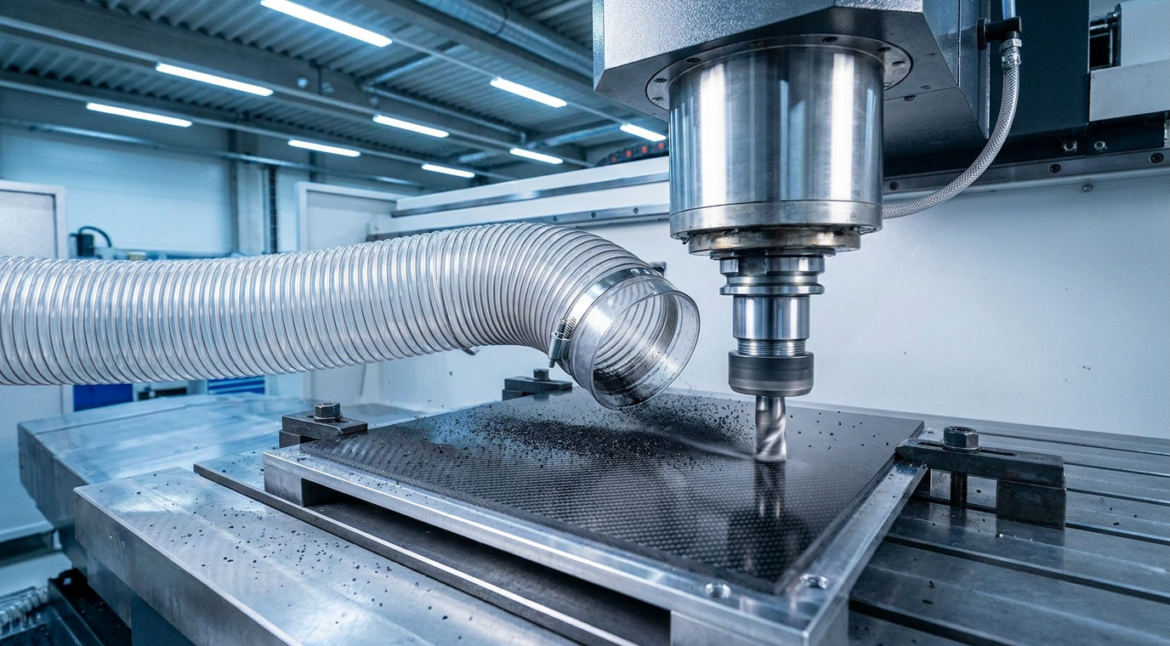
Carbon fiber reinforced polymer is a composite material. Its fibers and resin layers behave differently from a solid metal block, so cutting forces, tool wear, and heat control need to be handled carefully. If the process is too aggressive, the part may show fiber pullout, rough edges, delamination, or inconsistent hole quality.
Important process risks include:
- Delamination around holes, slots, countersinks, and outside edges
- Rapid tool wear caused by the abrasive carbon fiber structure
- Edge fraying or fiber breakout when support and cutting direction are not controlled
- Dust management requirements during routing, drilling, and trimming
- Different behavior between thin sheets, thicker plates, and laminated assemblies
This is why the RFQ should explain not only the outside shape, but also the laminate thickness, edge expectations, and which features are critical to assembly.
Carbon fiber machining processes for OEM components
The most common operations for CNC machined carbon fiber parts include routing, profile cutting, drilling, slot machining, countersinking, chamfering, and edge trimming. The best route depends on part thickness, hole pattern, cosmetic requirement, and whether the job is prototype validation or repeat production.
When Gran Industries reviews a carbon fiber project, the process discussion normally covers drawing clarity, part function, quantity, laminate or sheet details, and the amount of finishing required after machining. This follows the same practical approach used in our CNC machining process from drawing review to delivery.
Tolerance, edge quality, and inspection priorities
Not every carbon fiber feature needs the same level of control. A simple outside profile may only need stable routing and clean deburring, while a hole pattern, locating slot, bearing area, or countersunk fastener location may need closer inspection. Separating these requirements before quotation helps avoid unnecessary cost and reduces production uncertainty.
Useful inspection and quality points include:
- Critical dimensions and hole positions that control assembly fit
- Acceptable edge condition, chamfer, or radius expectations
- Whether countersinks must be cosmetic, functional, or both
- Any face, slot, or hole that needs stronger dimensional control
- Quantity expectations for prototype samples versus repeat production
If appearance and edge consistency matter, it is also useful to define the expected surface finish for CNC machined parts before production starts.
What to include before requesting a carbon fiber machining quote
A stronger RFQ helps the supplier quote faster and choose a more reliable production path. Before requesting a quote, buyers should send drawings or CAD files, target quantity, material or laminate details, part thickness, critical features, edge expectations, and any inspection notes.
For a more detailed checklist, see our guide on what to include in a carbon fiber machining RFQ. If your project is ready for review, you can send drawings for carbon fiber project quotation and we will evaluate manufacturability, process fit, and production requirements.