Custom Manufacturing Solutions: How to Get Precision, Prototype, and Low-Volume Production Tailored to Your Needs
Custom manufacturing is a vital component of modern production, allowing businesses to create tailored solutions that meet specific needs. This article will explore the intricacies of custom manufacturing, including its definition, benefits, and the various services available. Readers will gain insights into how custom manufacturing differs from mass production and why it is essential for businesses seeking precision and flexibility. Many companies struggle with the limitations of mass production, which often fails to meet unique specifications. Custom manufacturing offers a solution by providing bespoke production capabilities that enhance efficiency and product quality. We will delve into the benefits of custom manufacturing, the services available, the process from design to delivery, and the industries that benefit most from these solutions.
What Is Custom Manufacturing and How Does It Differ from Mass Production?
Custom manufacturing refers to the process of creating products tailored to specific requirements, often involving unique designs and specifications. This approach contrasts sharply with mass production, which focuses on producing large quantities of standardized products. Custom manufacturing allows for greater flexibility and adaptability, enabling businesses to respond to market demands and individual customer needs effectively.
Defining Custom Product Manufacturing and Bespoke Industrial Solutions
Custom product manufacturing encompasses a range of processes designed to create unique products that meet specific client requirements. This includes bespoke industrial solutions that cater to specialized applications across various sectors. For instance, a company may require a specific component that cannot be sourced from standard suppliers, necessitating a custom manufacturing approach. This flexibility is a hallmark of custom manufacturing, allowing for innovation and creativity in product design.
Key Differences Between Custom Manufacturing and Mass Production
The primary differences between custom manufacturing and mass production lie in flexibility, cost, and production volume. Custom manufacturing is characterized by its ability to produce small quantities of tailored products, which can lead to higher costs per unit compared to mass production. However, the benefits of customization, such as meeting specific client needs and enhancing product quality, often outweigh these costs. Mass production, on the other hand, focuses on efficiency and cost reduction through large-scale production, which can limit the ability to adapt to unique customer requirements.
What Are the Benefits of Custom Manufacturing for Your Business?
Custom manufacturing offers numerous advantages that can significantly enhance a business’s operational efficiency and product quality. By leveraging tailored production services, companies can achieve greater flexibility, cost efficiency, and speed in their manufacturing processes.
Flexibility and Precision in On-Demand Fabrication Services
One of the most significant benefits of custom manufacturing is its flexibility. Businesses can adapt their production processes to meet changing market demands or specific customer requests. This adaptability allows for precision in on-demand fabrication services, ensuring that products are manufactured to exact specifications. For example, a company may require a unique part for a machine that is not available off-the-shelf, and custom manufacturing can provide that solution quickly and efficiently.
Cost Efficiency and Speed in Prototype and Low-Volume Production
Custom manufacturing can also lead to cost savings, particularly in prototype and low-volume production. By focusing on specific needs, businesses can avoid the costs associated with overproduction and excess inventory. Rapid prototyping services enable companies to test and refine their designs before committing to full-scale production, reducing the risk of costly errors. This approach not only saves money but also accelerates the time to market for new products.
Which Custom Manufacturing Services Are Available and How Do They Work?
Various custom manufacturing services are available, each designed to meet specific production needs. Understanding these services can help businesses choose the right approach for their projects.
Precision Custom Machining: CNC Machining and Sheet Metal Fabrication Explained
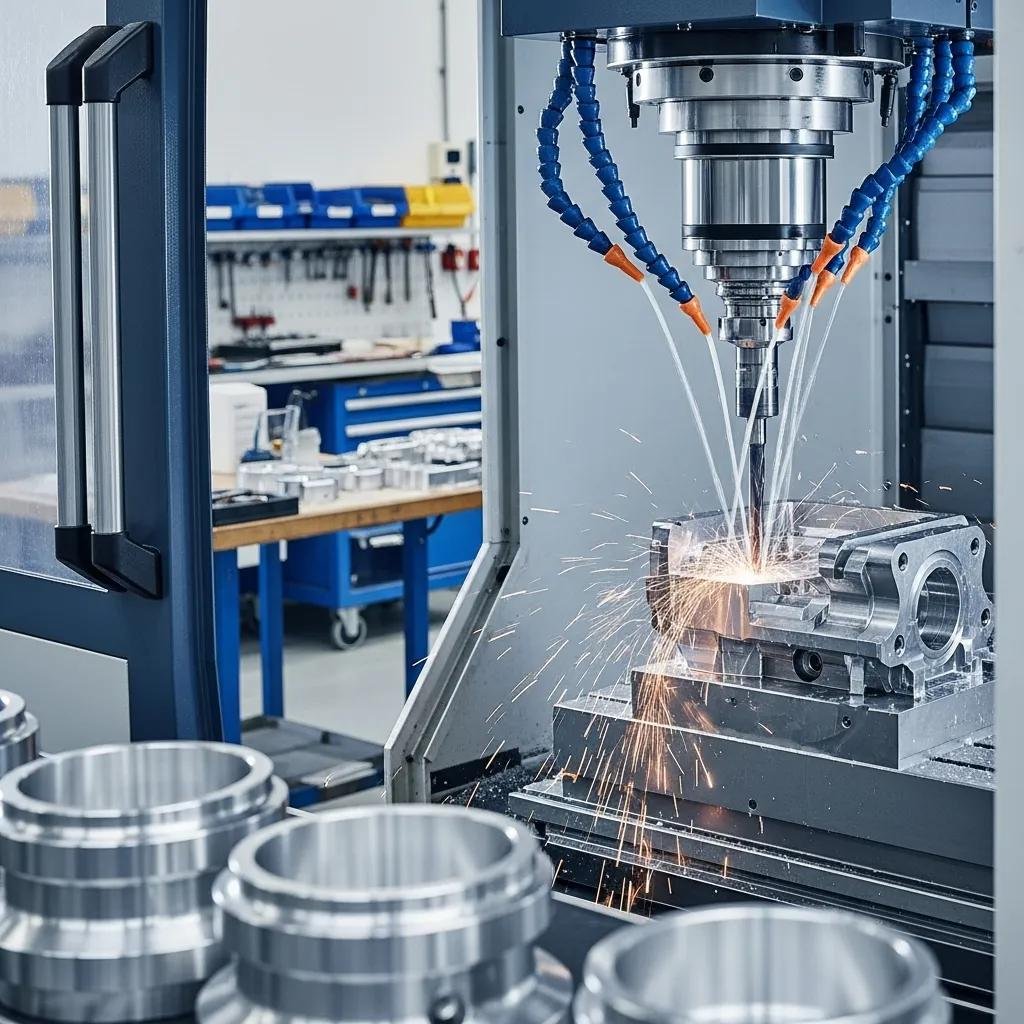
Precision custom machining involves the use of advanced machinery to create components with high accuracy. CNC (Computer Numerical Control) machining is a popular method that allows for intricate designs and tight tolerances. Sheet metal fabrication is another essential service, enabling the production of complex shapes and structures from metal sheets. Both methods are crucial for industries requiring high-quality components, such as aerospace and automotive.
Additive Manufacturing: Custom 3D Printing and Rapid Prototyping Services
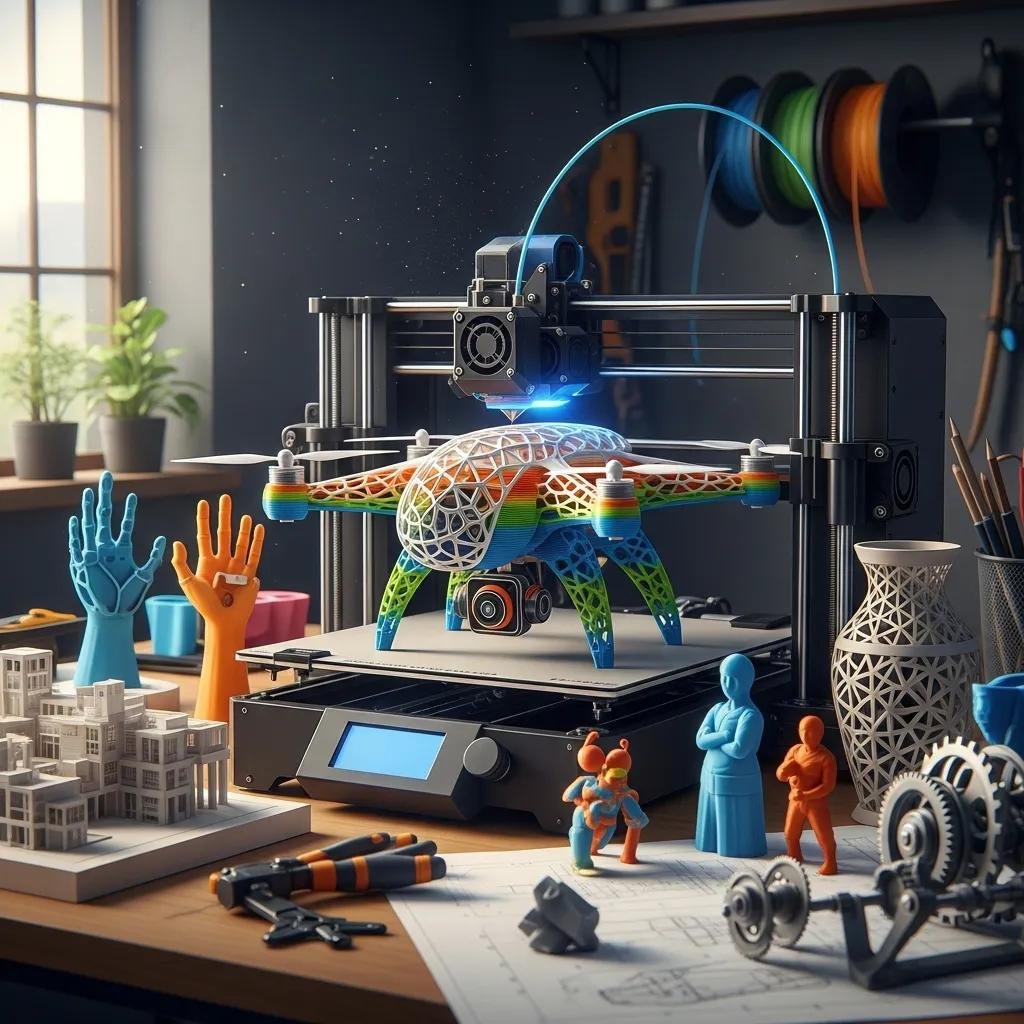
Additive manufacturing, commonly known as 3D printing, is revolutionizing the custom manufacturing landscape. This technology allows for the creation of complex geometries that would be difficult or impossible to achieve with traditional methods. Rapid prototyping services using 3D printing enable businesses to quickly produce prototypes for testing and validation, significantly speeding up the product development process. This flexibility is particularly beneficial for startups and companies looking to innovate rapidly.
| Service Type | Description | Applications |
|---|---|---|
| CNC Machining | Computer-controlled cutting and shaping of materials | Aerospace, automotive, medical devices |
| Sheet Metal Fabrication | Process of forming and assembling metal sheets | HVAC systems, enclosures, brackets |
| 3D Printing | Layer-by-layer additive manufacturing | Prototyping, custom parts, complex designs |
How Does the Custom Manufacturing Process Work from Design to Delivery?
The custom manufacturing process involves several critical steps, from initial design to final delivery. Understanding this process can help businesses navigate their manufacturing needs more effectively.
Product Design and Engineering for Custom Manufacturing
The first step in the custom manufacturing process is product design and engineering. This phase involves collaborating with clients to understand their specific requirements and translating those needs into detailed designs. Engineers use advanced software to create prototypes and simulations, ensuring that the final product meets all specifications before production begins.
Quality Control and Supply Chain Management in Custom Production
Quality control is a vital aspect of custom manufacturing. Throughout the production process, various quality assurance measures are implemented to ensure that the final product meets the required standards. Supply chain management also plays a crucial role, as sourcing high-quality materials and components is essential for successful custom manufacturing. Effective supply chain strategies help minimize delays and ensure timely delivery of products to clients.
Further research highlights the critical role of advanced metrology in maintaining high standards of manufacturing accuracy and precision.
Enhancing Manufacturing Precision & Quality Control
With the increasing complexity of machining processes and greater requirements for accuracy and precision, the demand for advanced methods for process optimization has also increased. To meet this demand, process quality management (QM) requires an expansion of manufacturing metrology to include comprehensive closed-loop control of the machining process.
In-process and on-machine measurement of machining accuracy for process and product quality management: A review, 2014
Which Industries Benefit Most from Custom Manufacturing Solutions?
Custom manufacturing solutions are beneficial across a wide range of industries, each with unique requirements and challenges.
Custom Manufacturing Applications in Aerospace and Medical Devices
The aerospace and medical device industries are prime examples of sectors that rely heavily on custom manufacturing. In aerospace, components must meet stringent safety and performance standards, making custom solutions essential. Similarly, medical devices often require tailored designs to meet specific regulatory requirements and patient needs. Custom manufacturing allows these industries to innovate while ensuring compliance and safety.
Automotive and Industrial Sectors Using Bespoke Fabrication Services
The automotive and industrial sectors also benefit significantly from custom manufacturing. In automotive production, bespoke fabrication services enable manufacturers to create specialized parts that enhance vehicle performance and safety. Industrial applications often require custom solutions for machinery and equipment, allowing businesses to optimize their operations and improve efficiency.
What Are the Latest Technologies and Sustainability Trends in Custom Manufacturing?
The landscape of custom manufacturing is continually evolving, with new technologies and sustainability practices shaping the industry.
Industry 4.0, Agentic AI, and Digital Twins in Custom Manufacturing
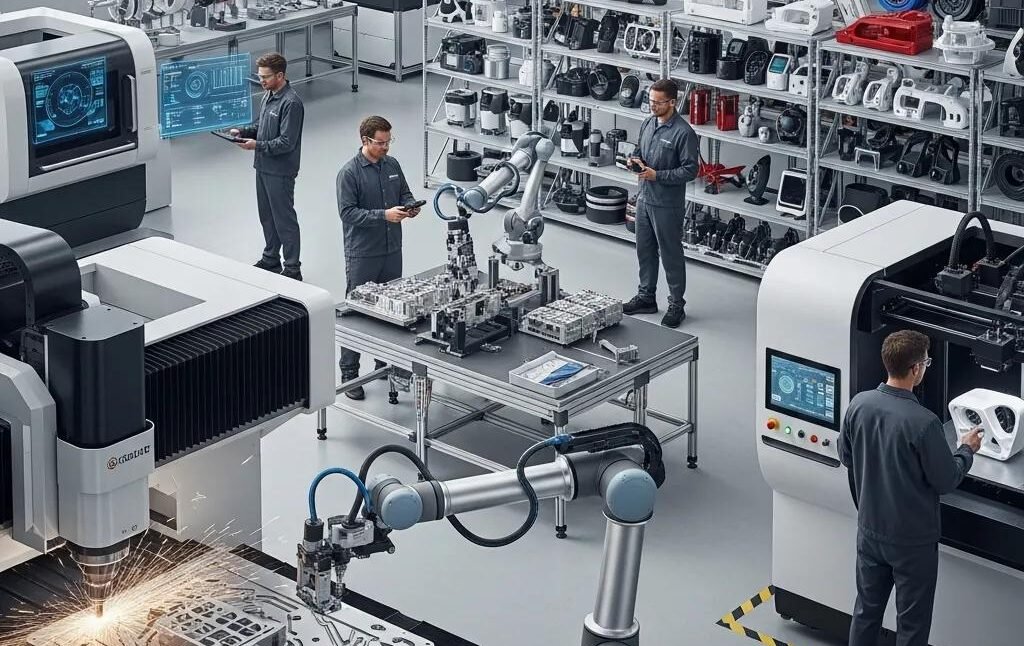
Industry 4.0 represents a significant shift in manufacturing, characterized by the integration of digital technologies and automation. AI plays a crucial role in optimizing production processes, while digital twins allow manufacturers to create virtual replicas of their products and processes for testing and analysis. These advancements enhance efficiency and reduce waste, contributing to more sustainable manufacturing practices.
The application of digital twins extends beyond mere replication, offering predictive capabilities for product development.
Digital Twins for Precision Product Design & Prototyping
allow early estimations even before the actual ramp-up of the product. The future use of digital twins in the entire product development process, which requires the integration of product.
Challenges and potentials of digital twins and industry 4.0 in product design and production for high performance products, B Schleich, 2019
Sustainable Manufacturing Practices and Circular Economy in Custom Production
Sustainability is becoming increasingly important in custom manufacturing. Companies are adopting sustainable practices, such as using eco-friendly materials and implementing energy-efficient processes. The circular economy model encourages manufacturers to design products with their entire lifecycle in mind, promoting recycling and reducing waste. This approach not only benefits the environment but also enhances brand reputation and customer loyalty.
The imperative for sustainable practices is particularly pronounced in the context of mass customized manufacturing, where diverse product lines demand careful resource management.
Sustainable Practices in Mass Customized Manufacturing
highvolume production processes to manufacture or assemble a large variety of products. Thus, it becomes imperative that sustainable manufacturing practices be used through the life.
Sustainability issues in mass customized manufacturing, AN Nambiar, 2017
| Technology | Description | Impact |
|---|---|---|
| Industry 4.0 | Integration of digital technologies in manufacturing | Increased efficiency, reduced waste |
| AI | AI-driven optimization of production processes | Enhanced decision-making, cost savings |
| Digital Twins | Virtual replicas for testing and analysis | Improved product development, risk reduction |