
As global supply chains continue to recalibrate away from single-source dependency, Southeast Asia is quietly emerging as a serious contender in precision manufacturing. Malaysia, in particular, sits at an interesting intersection — English-proficient workforce, established industrial infrastructure, and proximity to both Chinese production capacity and international markets.
One company navigating this shift is Gran Industries Sdn. Bhd., a CNC machining and precision parts manufacturer that traces its roots to Shenzhen in 2008, built additional production depth in Sichuan, and launched its Malaysia-based international service arm in 2025. We sat down with Wei Ming Tan, CNC Manufacturing Engineer at Gran, to understand what the move means for buyers, engineers, and OEM teams sourcing custom parts in today’s market.
Please tell us about your background and what Gran Industries does.
I’m a CNC manufacturing engineer based in Johor Bahru, just across the causeway from Singapore. I’ve spent most of my career around machine tools — programming, setting up, troubleshooting — the stuff that happens on the floor, not in a PowerPoint.
Gran Industries started in Shenzhen back in 2008, doing CNC machining and cold heading for export. In 2020, we added a production base in Sichuan to expand capacity. Then in 2025, we set up Gran Industries Sdn. Bhd. here in Malaysia. The idea was simple: a lot of our international customers wanted an English-speaking engineering team they could talk to directly — someone who reads their drawings, understands the specs in English, and replies the same working day instead of a translated email that shows up 48 hours later. Being in JB, right next to Singapore’s logistics hub, doesn’t hurt either.
We do precision CNC across metals — stainless steel, aluminum, titanium — plus carbon fiber composites and engineering plastics. Tolerances down to ±0.005mm on the right setups. We also handle forging, stamping, and sheet metal in-house, which means less outsourcing for the customer.
Why Malaysia? Plenty of manufacturers stay in China or move to Vietnam. What made Malaysia the right choice?
A few reasons, honestly. First, the language thing is real. Malaysia has a strong English-speaking engineering workforce. When a buyer from Germany or the US sends a drawing with notes in English, our team here can read it, question it if something doesn’t add up, and reply the same day. That sounds basic, but anyone who’s sourced parts overseas knows it’s not always the case.
Second, our location in Johor Bahru is strategic. We’re 20 minutes from Singapore, which gives us access to one of the world’s most efficient logistics hubs. Parts ship fast. Customers who want to visit the factory can fly into Changi and be at our floor in under an hour. Try doing that from an inland factory in China.
Third — and this matters for customers — Malaysia isn’t caught up in the trade friction that’s been reshaping supply chains. Goods move in and out with fewer headaches. Combined with our production capacity still running in China, it gives buyers real sourcing flexibility.
You mentioned drawing review before quotation. Why is that step so important?
Because a bad quote based on an unread drawing is worse than no quote at all.
We’ve all seen it — a buyer sends an RFQ with a STEP file, three shops quote the same price within 5%, and six weeks later the parts show up wrong. Somebody didn’t read the note about the threaded hole needing a specific fit class. Somebody assumed “stainless steel” meant 304 when the application needed 316L.
Our process is: we review the drawing first, check material specs, tolerances, surface finish, quantity breaks, and whether the part geometry actually makes sense for CNC versus another process. Then we quote. Sometimes we come back with questions before we even give a number. Some customers find that annoying at first. The ones who stick around tend to appreciate it later.
Gran handles metals, carbon fiber, and plastics under one roof. Is that unusual for a shop your size?
It is, and it’s intentional.
Most CNC shops specialize — you’ll find a metal shop, a plastic shop, a composites shop. That’s fine if you’re ordering one type of part. But a lot of the projects we see today are mixed. An OEM might need aluminum housings, PEEK insulators, and carbon fiber brackets all for the same assembly. If those go to three different vendors, you’re managing three lead times, three quality standards, three shipping arrangements.
By keeping multi-process capability in-house — CNC machining, forging, stamping, sheet metal, and composite processing — we reduce that coordination burden. The customer gets one point of contact and consistent quality across materials. It doesn’t mean we do everything perfectly for every material, but we know where our limits are and we’re upfront about them.
The airsoft and rifle accessories segment is a specific niche you serve. What does precision machining look like in that space?
Airsoft and AR-platform parts are deceptively demanding. A magwell or a trigger housing isn’t just “a hunk of aluminum.” You’re dealing with tight fitment tolerances, cosmetic surface finish requirements, and sometimes hard anodizing specs.
We’ve done magwells, gas blocks, triggers, slide plates — parts where a few microns off means the thing doesn’t fit or the action feels wrong. It’s a niche where customers care a lot about quality because their own reputation depends on it. We’ve built a decent amount of repeat business in that segment — see our airsoft & rifle accessory machining page for the full scope — because once someone finds a shop that gets the tolerances right consistently, they don’t shop around much.
What’s the most common mistake you see buyers make when sourcing CNC parts internationally?
Going with the lowest quote without checking what’s behind it.
Price shopping is normal. But in CNC machining, a price that’s 40% below everyone else usually means one of three things: the shop didn’t read the drawing properly, they’re cutting corners on material or inspection, or they’re going to hit you with change orders later.
The second mistake is not sharing enough information upfront. Buyers sometimes drip-feed details — here’s the 3D model, wait three days, here’s the material spec, wait another three days, oh and we need a C of C with that. We can’t plan production properly if the full picture comes in pieces. The projects that run smoothest are the ones where the buyer shares everything at the start: drawing, material, quantity, tolerance requirements, finish, delivery expectations. Then we can give an honest quote and realistic lead time.
How do you handle quality control for parts going to international customers?
Inspection is not a final step — it’s built into the process. First article inspection on every new production run. In-process checks at defined intervals depending on batch size. Final inspection with CMM where the tolerance demands it.
We’re not ISO 9001 certified yet — that’s on the roadmap — but we follow the framework. The production discipline comes from 15-plus years of export manufacturing. When you’ve shipped parts to customers in Europe, North America, and the Middle East, you learn what “acceptable” means in different markets, and you build systems around that.
For critical dimensions, we provide inspection reports. If the customer wants third-party inspection, we facilitate it. Transparency is the point — we’d rather a customer ask for more documentation than assume everything is fine and find out later it’s not.
Carbon fiber is a different animal from metal machining. What does Gran’s composites capability look like?
Carbon fiber processing requires a different mindset from metal. You’re dealing with delamination risk, dust control, tool wear that behaves differently, and parts that don’t forgive mistakes the way aluminum does.
Our carbon fiber work is mostly for industrial applications — brackets, structural components, parts where weight matters and the budget supports the material cost. We don’t do cosmetic carbon fiber for consumer products. The focus is on functional parts where the strength-to-weight ratio justifies the material.
We’ve found that customers who come to us for metal parts often didn’t realize we also do composites until they had a project that needed both. That’s where the multi-process capability starts to pay off for them.
Where do you see precision manufacturing in Southeast Asia heading over the next five years?
The trend is clear: more buyers are looking for “China plus one” or “China plus several” sourcing strategies. Southeast Asia benefits from that. Malaysia, Vietnam, Thailand — they’re all getting more sophisticated.
But I think the winners won’t be the shops that just compete on price. The winners will be the ones that combine manufacturing capability with genuine engineering communication. The customer doesn’t just want parts — they want a partner who reads the drawing, asks the right questions, and helps them avoid problems before they become expensive.
Gran is positioning for that. The China factories give us cost-competitive production at scale. The Johor Bahru operation — next door to Singapore’s logistics network — gives us faster, clearer customer interaction with none of the language friction. If we can keep building on both — technical depth and service quality — I think we’ll be in a good place.
Any final thoughts for engineers and buyers evaluating new manufacturing partners?
Start small. Send a drawing for a part you’ve already made before — something where you know the right price and the right result. See how the shop handles it. Do they ask smart questions? Do they deliver on time? Is the quality consistent batch to batch?
A good manufacturing partner isn’t the one with the flashiest website or the lowest quote. It’s the one that makes your project run smoother than it did before. That’s the standard we try to hold ourselves to.
Learn more about Gran Industries at gran.my
Topics: Manufacturing, CNC Machining, Supply Chain, Southeast Asia
Tags: precision manufacturing, CNC machining Malaysia, custom parts, supply chain diversification, Gran Industries

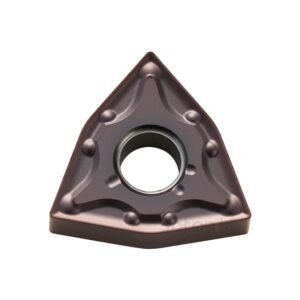 80° Carbide Insert, WNMG Insert, Negative, MAL
 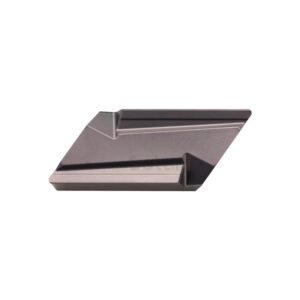 55° Carbide Insert, KNUX Insert, Positve