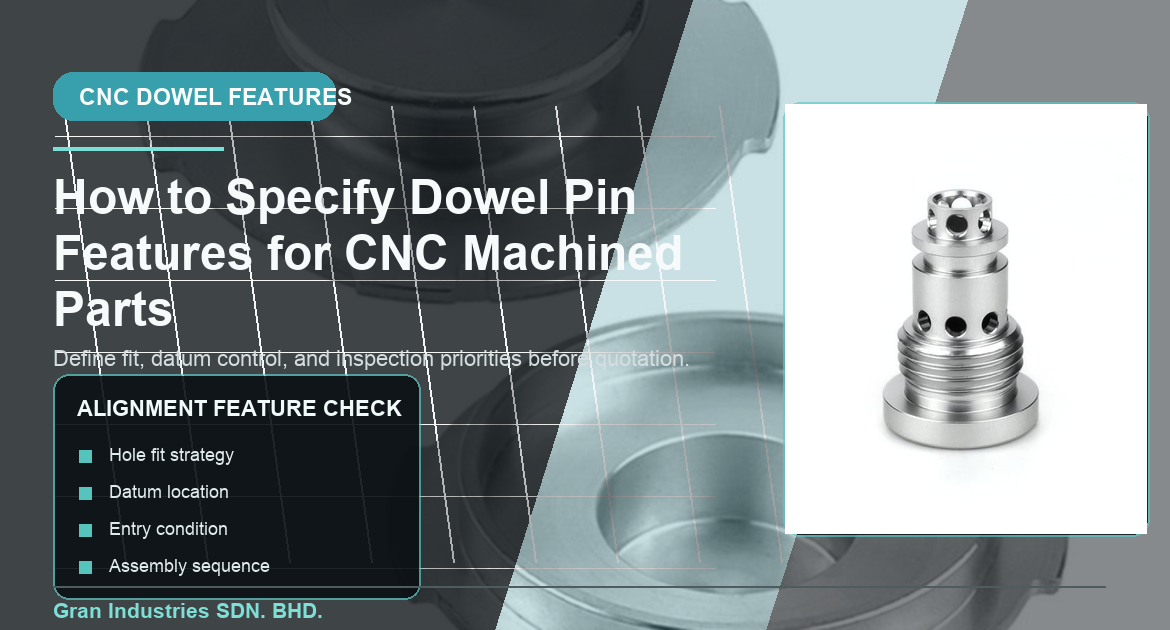
Passstifte sind kleine Bauteile, spielen aber in vielen bearbeiteten Baugruppen eine entscheidende Rolle: die wiederholgenaue Positionierung. Sie dienen häufig der Ausrichtung von Bauteilen, der Kontrolle der Baugruppenorientierung, der Unterstützung der Vorrichtungspositionierung oder der Verhinderung von Verschiebungen zwischen Bauteilen unter Befestigungslast. Sind die Eigenschaften der Passstifte nicht klar definiert, kann das Ergebnis ein Bauteil sein, das zwar maßlich den Sollwerten entspricht, sich aber dennoch ungenau montieren lässt oder in der Fertigung schlecht positioniert wird.
Das Hauptproblem besteht darin, dass die Merkmale von Passstiften nicht allein durch den Lochdurchmesser definiert werden. Sie hängen von der Passung zwischen Stift und Loch, dem Verhältnis zwischen Löchern und Bezugspunkten, der Montagereihenfolge und der Art der vorgesehenen Verbindung der Bauteile ab. Eine Zeichnung, die lediglich “Stiftloch” zeigt, ohne zu erläutern, welche Passung als Gleitpassung, welche als Haltepassung ausgeführt ist und welche Bezugspunkte die Position bestimmen, lässt zu viel Interpretationsspielraum.
Bei Gran Industries ist die Überprüfung der Passstifte Teil des umfassenderen Zeichnungsprüfungsprozesses für kundenspezifische CNC-gefertigte Teile. Das praktische Ziel ist es, die Positionierung des Stifts in der Baugruppe festzulegen, bevor Angebotserstellung und Prozessplanung beginnen.
Beginnen wir mit der Aufgabe, die der Dübelstift erfüllen muss.
Nicht jeder Passstift erfüllt denselben Zweck. Manche Stifte sorgen für die präzise Ausrichtung zweier bearbeiteter Platten. Andere fixieren Abdeckungen, Gehäuse oder Werkzeugaufnahmen. Einige Stifte dienen als permanente Referenzelemente, während andere bei Wartungs- oder Instandhaltungsarbeiten entfernt werden. Die Passstrategie und der Fokus der Prüfung sollten sich an der jeweiligen Funktion orientieren und nicht jedes Passloch als Standard-Präzisionsloch ohne Montagebezug behandeln.
Vor der Zitation ist es hilfreich, Folgendes zu klären:
- Ob der Stift zur dauerhaften Ausrichtung oder zur abnehmbaren Montageposition dient
- Welches Teil ist dafür vorgesehen, den Stift fester zu halten?
- Welches Teil benötigt eine einfachere Montage oder Servicepassung?
- Ob der Stift Scherkräften, Drehkräften, Positionsverschiebungen oder all diesen Belastungen widersteht
- Ob die Stiftposition die nachfolgende Bearbeitung, Inspektion oder Feldmontage steuert
Durch diese Information wird das Merkmal zu einer konkreten Montageanforderung und nicht nur zu einem runden Loch in der Zeichnung.
Warum die Eigenschaften von Passstiften die Kosten für die CNC-Bearbeitung beeinflussen
Passbohrungen unterliegen in der Regel strengeren Anforderungen als allgemeine Durchgangsbohrungen, da sie häufig die Ausrichtung steuern und nicht nur die Montage von Bauteilen ermöglichen. Dies kann Auswirkungen auf Werkzeuge, Prüfzeiten, Rüstplanung und die Interpretation von Bezugspunkten durch den Lieferanten haben. Wenn die Angebotsanfrage nicht erläutert, welche Bohrung als Positionierungselement dient und wie sie mit dem Gegenstück interagiert, spiegelt das Angebot möglicherweise nicht die tatsächlich erforderlichen Toleranzen und den notwendigen Prüfaufwand wider.
Deshalb sollten die Pin-Funktionen währenddessen überprüft werden. Zeichnungsprüfung vor der CNC-Bearbeitung Angebote und Produktion. Ein Lieferant muss wissen, ob das Merkmal nur nominell präzise ist oder ob es die endgültige Montagereferenz für mehrere Komponenten festlegt.
Die Eigenschaften von Dübeln verdienen in der Regel eine genauere Betrachtung, wenn das Bauteil Folgendes umfasst:
- Mehrere ausgerichtete Platten oder Gehäuse
- Zweiloch-Stiftmuster, die ein Gegenstück benötigen
- Gemischte Befestigungselemente und Dübellochkonstruktionen
- Dünne Ränder um das Positionierungsloch
- Stifte in der Nähe von Schlitzen, Taschen oder Dichtungselementen
- Befestigungslöcher, die auch die nachgelagerte Inspektion beeinflussen
Die Lochgröße ist nur ein Teil der Passungsanforderung
Die Passstiftkonstruktion hängt von mehreren Durchmessern ab. Ein Bauteil benötigt möglicherweise eine Press- oder leichte Haltepassung, während das Gegenstück eine Gleitpassung für die Montage erfordert. Wenn die Zeichnung nur die Nenngröße des Stifts angibt, ohne zu spezifizieren, welches Bauteil den Stift halten und welches um ihn herum montiert werden soll, ist dem Lieferanten die geplante Passungsstrategie möglicherweise nicht bekannt.
Eine präzisere Spezifikation verdeutlicht in der Regel Folgendes:
- Welches Teil ist das primäre Positionierungsteil?
- Welcher Teil sollte den Stift fester halten?
- Ob es sich bei der Gegenbohrung um eine Gleitpassung, eine enge Passung oder eine Übergangspassung handelt
- Ob der Stift vor der Endmontage oder nach der Ausrichtung der beiden Teile eingesetzt wird, ist dabei zu beachten.
- Ob die Passung an einen bekannten Dübelstandard oder ein internes Montageziel gebunden ist
Dadurch bleibt das Bearbeitungsziel an den Montageprozess gekoppelt und nicht nur an den gekauften Stiftdurchmesser.
Die Positionskontrolle ist oft wichtiger als das Loch selbst.
Passstifte werden üblicherweise verwendet, weil die Position der Bohrung entscheidend ist. Selbst eine korrekt dimensionierte Bohrung kann ihre Funktion verfehlen, wenn sie nicht korrekt zu den Bezugspunkten des Bauteils, der zweiten Passbohrung oder dem umgebenden Befestigungsmuster positioniert ist. Bei vielen Baugruppen ist die entscheidende Frage nicht nur “Passt der Stift?”, sondern auch “Positioniert der Stift das Gegenstück an der richtigen Stelle?”
Dies ist besonders wichtig, wenn Dübellöcher mit … interagieren Anforderungen an Präzisionsbohrungen, Die Zeichnung sollte klarstellen, ob die Positionsbeziehung Teil der Abnahmekriterien ist, z. B. Schnittstellen, Schraubenmuster, Dichtflächen oder Befestigungspunkte.
Hilfreiche Klarstellungspunkte sind unter anderem:
- Welche Bezugsstruktur bestimmt die Position des Dübellochs?
- Ob ein Loch die primäre Position und ein anderes die Rotation festlegt
- Ob das Lochmuster mit einem Gegenstück oder einer Vorrichtung übereinstimmen muss
- Ob die Bolzenlöcher nur als Spielraum dienen, während die Dübel die tatsächliche Position angeben
- Ob der Standort wichtiger ist als die allgemeine Toleranz der Lochgröße
Das Materialverhalten kann die Passgenauigkeit und die Langzeitstabilität beeinflussen.
Eine nominelle Stiftpassung verhält sich nicht in jedem Material identisch. Aluminiumgehäuse können anders reagieren als Edelstahlteile. Bei technischen Kunststoffen ist besondere Vorsicht hinsichtlich lokaler Verformung oder Kriechen geboten. Kohlefaserstrukturen erfordern gesonderte Betrachtungen zur Kantenbeschaffenheit und -abstützung. Eine Passung, die in einer Zeichnung sinnvoll erscheint, kann je nach Materialkombination und Wandstärke zu eng oder zu locker sein.
Deshalb sollte die Planung von Dübelverbindungen eng mit der Materialwahl verknüpft bleiben. Projekte mit CNC-Bearbeitung von Aluminiumlegierungen, CNC-Bearbeitung von Edelstahl, Bearbeitung von technischen Kunststoffen, oder Kohlefaserverarbeitung Man sollte nicht davon ausgehen, dass dieselbe Passungsregel in jeder Materialfamilie zum gleichen Ergebnis führt.
Einlaufbereiche und Randbedingungen beeinflussen weiterhin den Montageerfolg
Dübellöcher mögen präzise sein, benötigen aber dennoch geeignete Montagebedingungen. Grate, abgebrochene Kanten, übermäßige Fasen oder beschädigte Lochmündungen können das Einführen der Stifte behindern oder die Ausrichtung zweier Teile während der Montage verändern. Die Lochmündung erfordert nicht immer eine große Einlauföffnung, aber in der Regel eine kontrollierte Kantenbeschaffenheit, die der Passungsstrategie entspricht.
Dies stellt eine direkte Verbindung her zu Fasen- und Radiusplanung und Anforderungen an Kantenbruch und Entgratung. Bei einem Dübelloch sollten nicht allgemeine Entgratungsannahmen getroffen werden, wenn der Zustand der Kante die wiederholbare Einpassung und Ausrichtung beeinträchtigt.
Die Geometrie in der Umgebung kann das Verhalten des Dübelelements beeinflussen.
Passbohrungen befinden sich häufig in der Nähe von Nuten, Taschen, dünnen Wänden, Dichtungsnuten oder Befestigungselementen. Die umgebende Geometrie kann die Bearbeitungsstabilität und das Verhalten des Bauteils während der Montage beeinflussen. Eine Passbohrung in der Nähe einer dünnen Wand oder einer tiefen Tasche reagiert möglicherweise empfindlicher auf Durchbiegung oder lokale Verformung als dasselbe Merkmal in einem dickeren Bereich.
Deshalb müssen die Eigenschaften von Dübeln manchmal gemeinsam mit Dünnwandmerkmale, Taschengeometrie, oder Anordnung der Dichtungsnuten wenn sich die Positionierungsbohrung auf derselben Funktionsfläche befindet.
Die Inspektion sollte das Risiko am Montageort berücksichtigen.
Manche Passbohrungen erfordern lediglich eine Maßprüfung. Andere sind entscheidend für die korrekte Ausrichtung der fertigen Baugruppe. Ist die Passbohrung von solch großer Bedeutung, sollte dies bei der Prüfung berücksichtigt werden, anstatt sie wie eine gewöhnliche, unkritische Bohrung zu behandeln.
Die Inspektionsplanung sollte Folgendes klären:
- Welche Lochabmessungen bestimmen die Akzeptanz?
- Ob die Positionskontrolle anhand von Bezugssystemen Teil der Anforderung ist
- Ob die Passseite und die Gleitseite unterschiedliche Aufmerksamkeit erfordern
- Ob der Zustand der Lochmündung überprüft werden muss
- Ob das Feature dazugehört Erstmusterprüfung
Dadurch wird sichergestellt, dass sich die Qualitätsbemühungen auf den Teil des Merkmals konzentrieren, der tatsächlich die Montagekonsistenz gewährleistet.
Was in eine Angebotsanfrage aufgenommen werden sollte, wenn die Eigenschaften von Dübelstiften wichtig sind
Bei kundenspezifischen CNC-gefertigten Teilen mit Positionierstiften ist das Angebot in der Regel aussagekräftiger, wenn es Folgendes beinhaltet:
- 2D-Zeichnung und 3D-Modell, sofern verfügbar
- Stiftgröße und vorgesehene Montagefunktion
- Klare Passformstrategie für jedes Gegenstück
- Bezugsstruktur zur Steuerung der Bohrlochposition
- Materialqualität und entsprechende Anforderungen an die Oberflächenbearbeitung
- Randbeschaffenheit oder Eingangsnoten an der Lochöffnung
- Kontextinformationen zu nahegelegenen Merkmalen, wenn Wandstärke oder Dichtflächen von Bedeutung sind
- Prüf- oder Erstmusteranforderungen, die an die Ausrichtungsleistung gekoppelt sind
Diese Information hilft dem Lieferanten, die Bohrung als Montagepositionierungsmerkmal und nicht nur als Nenndurchmesser anzugeben.
Klare Dübelmerkmale unterstützen bessere CNC-gefertigte Teile
Passstiftmerkmale wirken in Zeichnungen oft klein, sind aber entscheidend für die präzise Ausrichtung bearbeiteter Teile in der Fertigung. Sind Passungsstrategie, Bohrungsposition, Kantenbeschaffenheit und Materialkontext klar definiert, wird der Bearbeitungsprozess besser vorhersagbar und die Endmontage zuverlässiger.
Wenn Ihr kundenspezifisches CNC-gefertigtes Teil Positionierstifte, Ausrichtungsbohrungen oder Vorrichtungsreferenzmerkmale enthält, kann Gran Industries die Zeichnung, das Material, die Toleranzvorgaben und die Produktionsabsicht vor der Angebotserstellung prüfen. Sie können auch Senden Sie Ihre Projektdetails zur Überprüfung wenn Sie bereit sind.