Carbonfaser-Verarbeitung
Malaysia-based carbon composite work for bodywork, covers, plates and frames. Profile cutting, CNC routing, drilling and countersinking, edge trimming and finishing — on laminate that gives you no second attempt.

What we actually make
in carbon fibre.
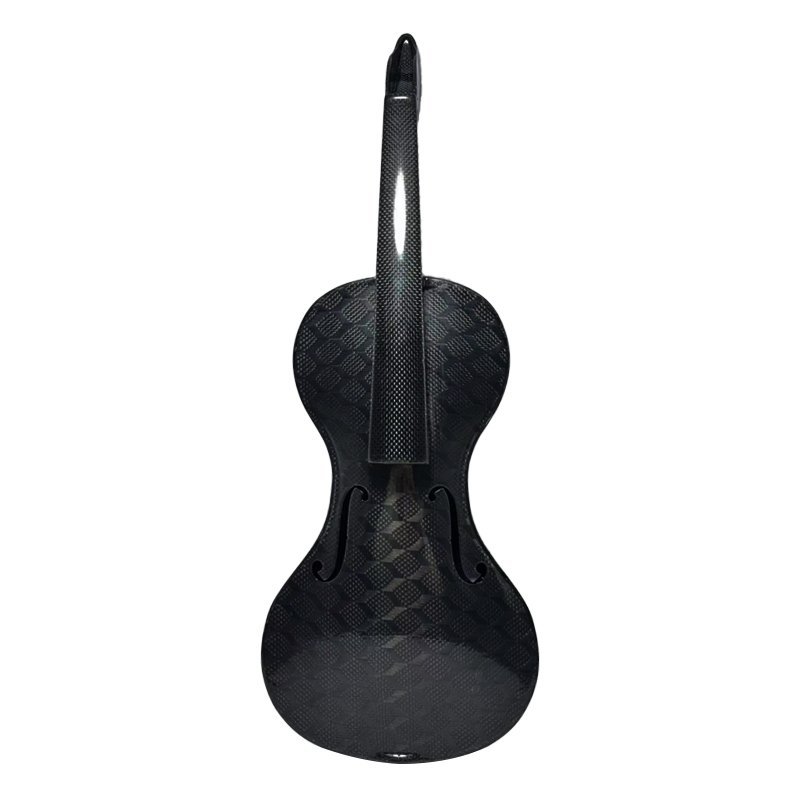
All eleven carbon parts in our catalogue, split by how they are built — contoured shells that take their shape from a mould, and flat laminate cut to a profile. The two need completely different processing, and it is the first thing we work out from your drawing.
Contoured shells and bodywork
Fenders, mudguards, screens, mirror housings and formed covers — parts that take their shape from a mould and are then trimmed, drilled and finished.
7 Teile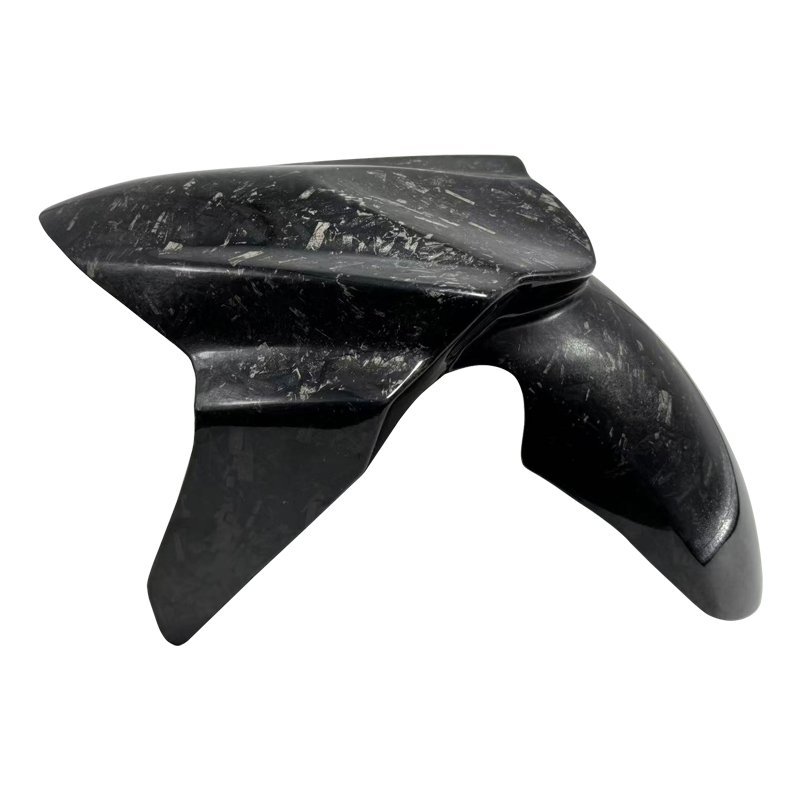


Flat plates and frames
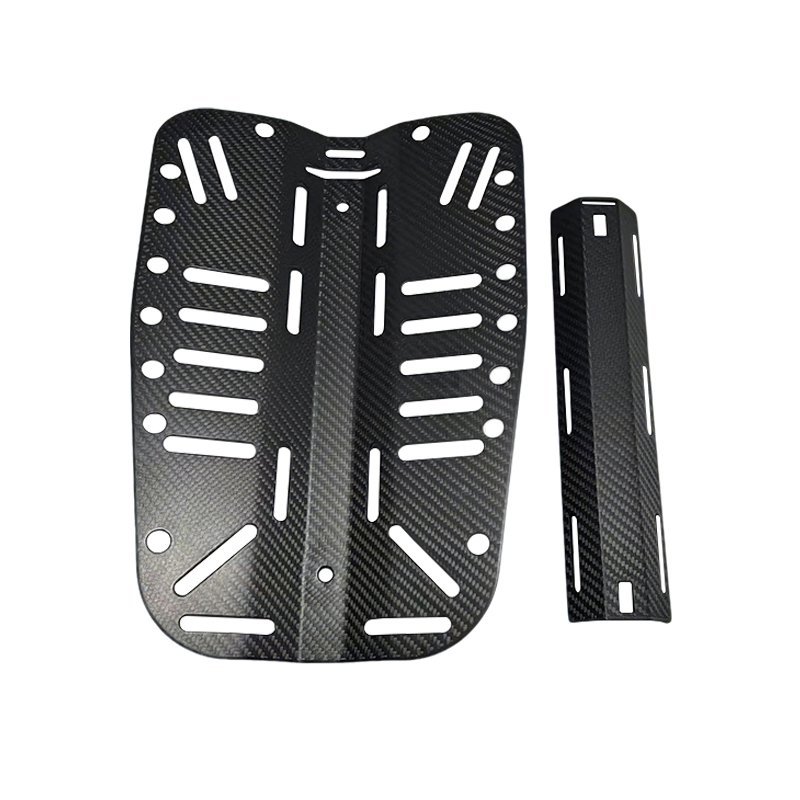
Backplates, frames, pedal plates and panels routed from solid laminate — parts defined by an outline, a hole pattern and an edge condition.
4 parts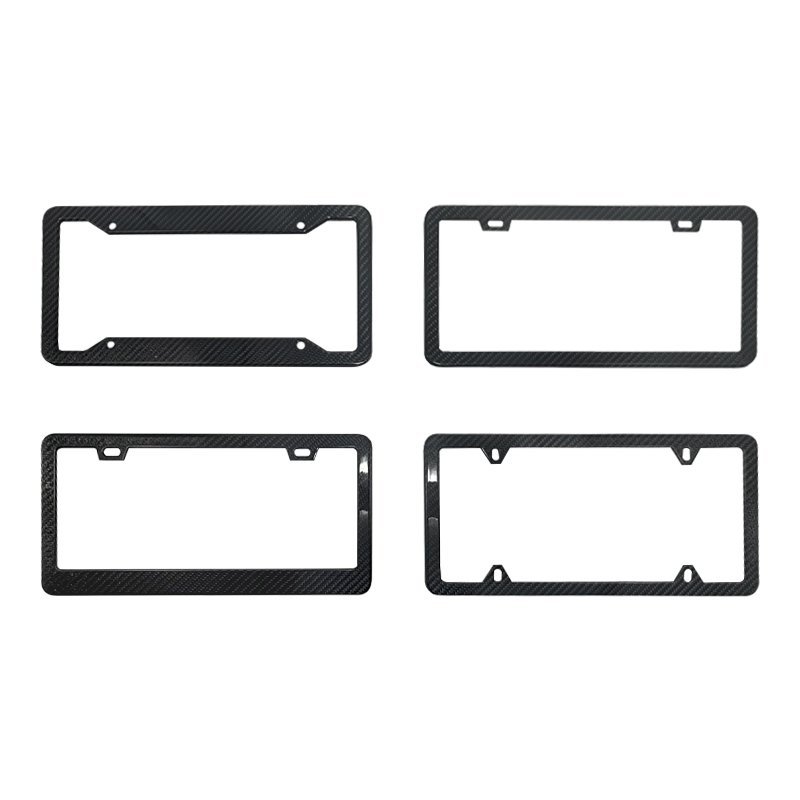


“Carbon fibre”
is not a specification.
Weave, resin, thickness and core decide almost all of the price, and none of them are visible in a 3D model. Two parts with the same outline can differ several times over in cost. These are the constructions we work with.
Längerer Artikel: Carbon fibre processing methods: profile cutting, routing, drilling and edge trimming
Carbon fibre is not hard
to cut. It is unforgiving.
Metal gives you a second attempt. A delaminated laminate does not — a lifted ply cannot be filled, sanded or polished back to strength. Five things drive every decision we make on a carbon part.
The fibres do the work, and cutting them ends it. A hole through a load path is a severed load path, however neat it looks. Tell us where the load runs and what the part is bolted to, and we will put holes and edges where they cost the least strength.
Delamination tritt beim Austritt auf. Wenn ein Bohrer die Rückseite durchdringt, hat die letzte Lage keinen Halt mehr und hebt sich ab, anstatt geschnitten zu werden. Das Abstützen der Austrittsseite, die Kontrolle des Vorschubs beim Durchbruch und die richtige Spitzengeometrie sind das, was ein sauberes Loch von Ausschuss unterscheidet.
Die Richtung ist wichtiger als die Geschwindigkeit. Das Material ist anisotrop — es verhält sich entlang des Gewebes anders als quer dazu. Das Fräsen in der falschen Richtung relativ zur äußeren Lage hebt die Oberfläche auf der sichtbaren Seite an. Gleichlauf- versus Gegenlauffräsen ist eine Entscheidung pro Kante, keine Maschineneinstellung.
Es zerstört Werkzeuge, und der Staub zerstört alles andere. Kohlenstoffstaub ist abrasiv und elektrisch leitfähig; er verschleißt Schneidwerkzeuge schnell und gelangt in alles mit Lagern oder Schaltkreisen. Kohlenstoff wird auf dedizierten Anlagen mit Absaugung verarbeitet, was ein Grund dafür ist, dass der Stückpreis nicht dem eines Kunststoffteils entspricht.
Optik ist eine Spezifikation, keine Präferenz. Glänzend oder matt, klarlackiert oder roh, Gewebe ausgerichtet oder frei — dies verändert den Prozess, nicht nur das Aussehen. Wenn eine Fläche am fertigen Produkt sichtbar ist, markieren Sie sie auf der Zeichnung, und wir planen den Aufbau und den Beschnitt entsprechend.
Vier Arbeitsgänge,
je nach Bauteil gewählt.
Jedes von uns angebotene Kohlenstoffprojekt lässt sich auf eine Kombination dieser Arbeitsgänge zurückführen. Welche davon zutreffen, ergibt sich aus der Kontur, dem Laminat und dem Anteil des Bauteils, der am fertigen Produkt sichtbar ist.
Processing operations
Was Sie uns mitteilen sollten
Bohrpositionen, Senkungen und Kantenzustände sind die Punkte, an denen die meisten Kohlenstoffteile gewonnen oder verloren werden. Unsere Spezifikationsbibliothek deckt ab, wie diese anzugeben sind.
Lesen Sie den Leitfaden →Was wir festhalten können
bei einem Kohlenstoffteil.
Auf der Seite veröffentlicht, damit Sie uns in dreißig Sekunden ein- oder ausschließen können. Verbundtoleranzen sind naturgemäß größer als bei Metall — wenn ein Merkmal auf Ihrer Zeichnung außerhalb dieses Bereichs liegt, weisen wir im Angebot darauf hin.
Bearbeitungsgrenzen
Toleranz und Oberflächenbeschaffenheit
Wir veröffentlichen, wie wir arbeiten
die Materialien, die wir zuschneiden.
Achtzig Artikel, verfasst von den Menschen, die die Teile herstellen. Diese sind die wichtigsten auf einer Verbundwerkstoffzeichnung.
Senden Sie die Zeichnung.
Sechs Dinge ermöglichen es uns, ein Kohlefaserteil ohne Rückfragen zu kalkulieren. Fehlt eines, fragen wir nach – doch die Kalkulation dauert dann einen Tag länger.
- 3D-Modell oder flache Kontur STEP / DXF
- Bemaßte Zeichnung PDF
- Dicke oder die erforderliche Steifigkeit entweder
- Stückzahl und Wiederholmenge erforderlich
- Gewebe und Finish falls sichtbar
- Welche Flächen kosmetisch relevant sind diese markieren