Медь и медные сплавы часто выбираются в тех случаях, когда для детали требуется нечто большее, чем просто базовая обрабатываемость. Во многих проектах по изготовлению деталей на заказ материал также должен обладать проводимостью, коррозионной стойкостью, износостойкостью, тепловыми характеристиками или определенной визуальной отделкой. Именно поэтому решения по обработке меди обычно начинаются с выбора марки стали, а не с настроек станка.
Для покупателей и инженерных групп, занимающихся изготовлением деталей на заказ, практический вопрос заключается не просто в том, следует ли изготавливать компонент из меди. Более важный вопрос – какой именно медьсодержащий материал подходит для геометрии детали, условий эксплуатации и производственного плана. Материал, обладающий хорошими электрическими характеристиками, может оказаться не самым простым вариантом для многократной обработки, в то время как материал, обрабатываемый более чисто, может быть выбран потому, что детали необходима прочность, качество резьбы или стабильность размеров, а не максимальная проводимость.
Почему выбор марки меди важен при обработке на станках с ЧПУ
Результаты обработки на станках с ЧПУ определяются как планированием процесса, так и свойствами материала. В случае деталей из меди выбор марки материала влияет на то, как он режется, как кромки реагируют на обработку, как образуются заусенцы, как резьба удерживает детали и как готовая деталь ведет себя в эксплуатации.
Это означает, что решение о выборе материалов влияет не только на окончательную спецификацию. Оно также может повлиять на:
- Износ инструмента и стабильность резания
- однородность качества поверхности
- Контроль заусенцев в отверстиях, на кромках и в пазах.
- Качество резьбы для точеных или нарезанных резьбовых элементов
- Приоритеты проверки герметизирующих поверхностей или контактных поверхностей.
- Насколько будет воспроизводима данная деталь от прототипа до серийного производства?
Если марка стали выбрана на раннем этапе и соответствует реальным требованиям к детали, план обработки становится более понятным, а ценовое предложение, как правило, более надежным.
Распространенные группы материалов на основе меди, используемые для обработки деталей.
Многие детали, изготовленные на станках с ЧПУ и описываемые как “медные детали”, на самом деле производятся из более широкого семейства медных сплавов. Правильная группа зависит от того, какие функции должна выполнять деталь после обработки.
Чистая медь
Чистая медь обычно используется, когда основными требованиями являются проводимость и теплопередача. Она подходит для проводящих элементов, компонентов электрических контактов, деталей системы теплоотвода и нестандартных деталей, функциональность которых зависит от свойств основного материала меди.
С точки зрения механической обработки, чистая медь требует тщательного контроля процесса, поскольку ее характеристики отличаются от характеристик сплавов, которые легче поддаются обработке. Поэтому покупателям следует убедиться, действительно ли максимальная проводимость необходима для данного применения, или же медный сплав может обеспечить более сбалансированный результат.
Латунь
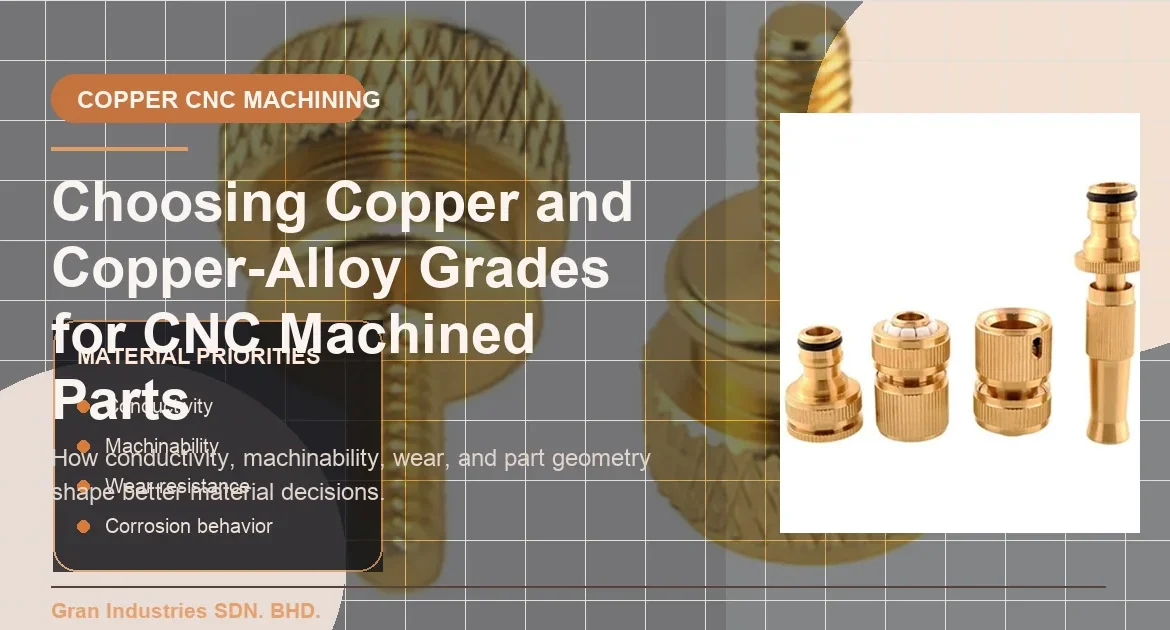
Латунь часто выбирают, когда в проекте требуется практичный баланс между обрабатываемостью, прочностью, коррозионной стойкостью и внешним видом готового изделия. Латунь обычно используется для фитингов, клапанов, резьбовых компонентов, патрубков, корпусов соединителей, вставок и общей фурнитуры, изготовленной на заказ с фрезерованными или точеными элементами.
Для многих проектов по обработке на станках с ЧПУ латунь привлекательна тем, что обеспечивает более чистый производственный процесс для изготовления деталей с отверстиями, резьбой, выступами, уплотнительными поверхностями и повторяющимися размерами.
Бронза
Бронзовые сплавы обычно выбирают, когда к требованиям проектирования относятся износостойкость, несущая способность или длительная механическая эксплуатация. Втулки, гильзы, кольца и некоторые промышленные изнашиваемые детали — примеры изделий, где бронза может быть более подходящим вариантом, чем чистая медь.
В таких случаях выбор материала определяется не столько проводимостью, сколько сочетанием механических свойств, ожидаемого срока службы и практичности обработки.
Как выбрать правильный сорт стали для обработанной детали
Выбор материалов должен соответствовать функциональным приоритетам детали. Полезный анализ обычно начинается с нескольких практических вопросов.
1. Является ли проводимость основным требованием?
Если деталь используется для передачи электроэнергии, теплопередачи или обеспечения контактных характеристик, то проводимость может быть определяющим фактором. Это может приблизить выбор материала к чистой меди или медному сплаву, выбранному с учетом его проводящих свойств.
Однако, если деталь также включает в себя мелкие резьбы, тонкие элементы, чувствительные к заусенцам кромки или требования к повторяющемуся производству, производственной команде может потребоваться найти баланс между проводимостью и эффективностью и стабильностью обработки.
2. Требуется ли для детали четкая детализация резьбы и элементов конструкции?
Для фитингов, соединителей, коллекторов, патрубков и точеных деталей с резьбовыми соединениями возможность обработки деталей на станке может быть столь же важна, как и свойства основного материала. Латунь и некоторые медные сплавы часто рассматриваются в тех случаях, когда конструкция детали зависит от стабильной работы при токарной обработке, сверлении, развертывании или нарезании резьбы.
Это особенно актуально, когда компонент включает в себя несколько обработанных поверхностей, которые должны чисто соединяться с другими деталями.
3. Что важнее: износостойкость или механическая прочность, или проводимость?
В некоторых проектах с использованием медных сплавов решающее значение имеют условия эксплуатации, а не проводимость. Для втулок, гильз, опорных колец и других изнашиваемых компонентов может быть целесообразно использовать бронзу или другой сплав, лучше подходящий для конкретного применения.
В таких случаях правильный анализ материалов должен быть сосредоточен на нагрузке, перемещении, трении, окружающей среде и ожидаемом цикле замены, а не на выборе меди по умолчанию только потому, что деталь относится к семейству медных сплавов.
4. Будет ли эта деталь выпускаться только в количестве прототипа или перейдет в серийное производство?
При изготовлении прототипов часто допускается больший объем ручной обработки, но для серийного производства требуется большая стабильность процесса. Если производство детали планируется в больших объемах, выбранный сорт стали должен обеспечивать более предсказуемый поток обработки, контроля и финишной обработки с течением времени.
Это одна из причин, почему заблаговременное уточнение материалов улучшает этап составления сметы. Оно сокращает количество последующих изменений в оснастке, планировании цикла и ожиданиях относительно контроля качества, когда работа уже запущена.
Характеристики детали, которые следует проверить перед обработкой меди.
Даже если семейство материалов уже известно, окончательный выбор марки все равно следует проверить на соответствие геометрии детали. Сложность элементов может изменить возможности многократной обработки.
Важные моменты, которые следует учитывать при проверке, часто включают:
- Тонкая резьба или многократно нарезанные резьбовые отверстия
- Тонкие стенки или узкие ребра
- Герметизирующие поверхности и контактные поверхности
- Поперечные отверстия, порты или внутренние каналы
- Внешние поверхности, чувствительные к внешнему виду
- Жесткие габариты отдельных элементов
Эти детали помогают определить, обеспечит ли выбранный материал требуемое качество отделки и контроль размеров без создания ненужных производственных трудностей.
Как выбор сорта влияет на составление смет и планирование производства.
Выбор материала является одним из первых факторов, влияющих на точность ценообразования. После того, как марка меди четко определена, поставщик может более точно оценить подход к резке, контроль заусенцев, время цикла, потребности в финишной обработке и объем контроля качества.
Это похоже на роль, которая Проверка чертежей перед началом работ на станках с ЧПУ и составление смет на производство.. Чем четче определены требования к деталям на начальном этапе, тем меньше предположений необходимо сделать на этапе планирования.
В случае обработки меди и медных сплавов, предварительный анализ также помогает отделить элементы, требующие более тщательного контроля, от тех, которые можно изготовить с помощью более стандартной механической обработки. Это способствует более практичному балансу между функциональностью детали, стоимостью и сроками выполнения заказа.
Почему выбор материалов должен быть привязан к конкретному применению.
Легко описать медные материалы в общих чертах, но эффективные производственные решения принимаются путем сопоставления материала с реальной задачей. Проводящая деталь, фитинг, связанный с клапаном, обработанный коллектор и бронзовая втулка могут относиться к одной и той же категории применения медных сплавов, но при этом требовать совершенно разных материалов.
Именно поэтому обзор должен основываться на реальном использовании компонента:
- Какую функцию выполняет эта деталь?
- Какие характеристики являются критически важными после механической обработки?
- В каких условиях будет работать данная деталь?
- В каком аспекте проекта приоритет отдается проводимости, износостойкости, внешнему виду, коррозионной стойкости или эффективности обработки?
- Будет ли этот заказ оставаться пробной партией или перерастет в серийное производство?
Эти вопросы обеспечивают более надежную основу для выбора материала, чем выбор меди, латуни или бронзы по привычке.
Выбор марки медного сплава с учетом производственных потребностей.
В области обработки на станках с ЧПУ оптимальным выбором материала обычно является тот, который подходит как для конкретного применения, так и для технологического процесса производства. Это не всегда означает выбор наиболее проводящего материала или самого прочного сплава. Речь идет о выборе марки стали, которая обеспечивает детали необходимые характеристики, одновременно гарантируя стабильную обработку, практичный контроль качества и повторяемость результатов.
Для команд, занимающихся закупкой деталей из меди, заблаговременное обсуждение марки материала, геометрии детали, количества и ожидаемых характеристик отделки может предотвратить ненужные доработки в дальнейшем. Это также создает более прочную основу для анализа прототипов и планирования будущего производства.
Если ваш проект включает в себя детали из обработанной меди, латуни или бронзы, компания Gran Industries может ознакомиться с чертежами, деталями исполнения, требованиями к материалам и количеству перед составлением коммерческого предложения. Вы также можете изучить наши Услуги по обработке меди и медных сплавов на станках с ЧПУ. страница с описанием области применения процесса или отправьте детали для проверки когда вы будете готовы.
Похожие страницы для проектов по обработке меди
Эти внутренние связи объединяют выбор марки меди с объемом работ, планированием процесса и подготовкой коммерческого предложения.