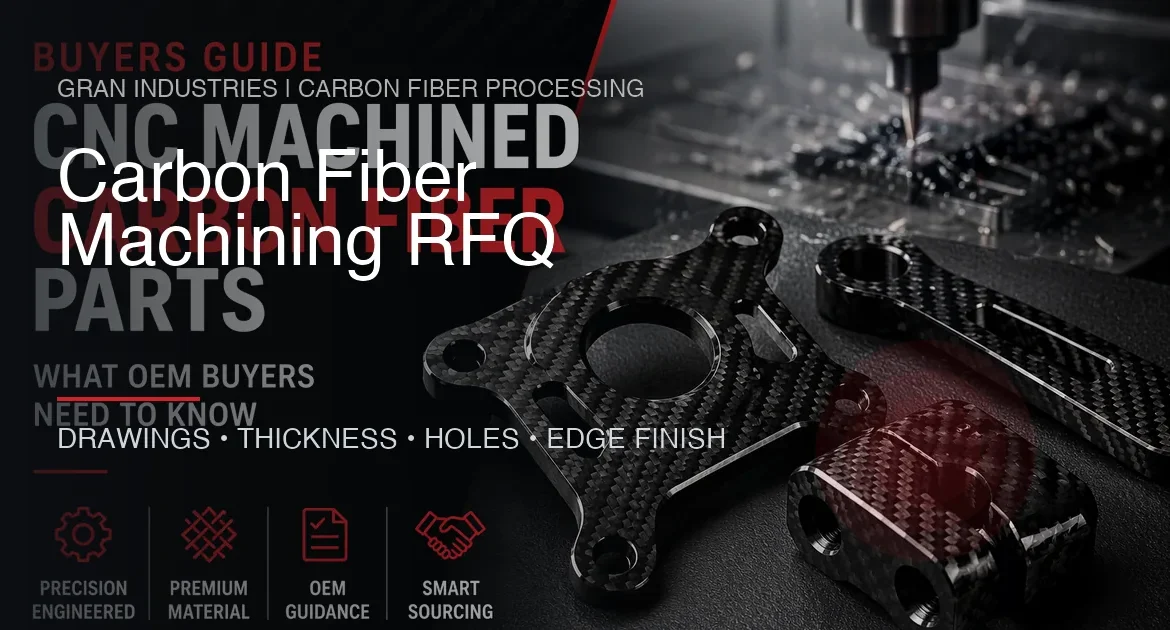
Las piezas de fibra de carbono se solicitan con frecuencia porque un proyecto requiere reducción de peso, una geometría externa limpia y un control dimensional fiable en una estructura ligera. Sin embargo, en la práctica, obtener presupuestos de fibra de carbono se complica cuando la solicitud de presupuesto solo indica "pieza de fibra de carbono" sin especificar el grosor de la pieza, los detalles de los orificios, las especificaciones de los bordes ni si el proyecto se encuentra aún en fase de prototipo. Un proveedor puede ofrecer un presupuesto rápidamente, pero este será mucho más útil si la información del proyecto es clara desde el principio.
Esto es especialmente cierto para paneles, placas, marcos, cubiertas, elementos de soporte, componentes de drones y piezas OEM personalizadas, donde el fresado, el taladrado, el avellanado, el mecanizado de ranuras o el recorte de bordes deben coincidir con la estructura del laminado y el acabado final. El procesamiento de la fibra de carbono no se limita a cortar un contorno. La revisión del presupuesto suele depender de cómo se mecanizará, inspeccionará, manipulará y preparará la pieza para la producción en serie.
En Gran Industries, este tipo de revisión forma parte del proceso previo a la cotización. El objetivo no es complicar innecesariamente la solicitud de cotización, sino asegurar que la pieza pueda evaluarse de manera que se obtenga un precio razonable, un proceso de producción realista y se requieran menos revisiones posteriores.
Por qué una solicitud de cotización de fibra de carbono más sólida conduce a una mejor cotización
Una solicitud de cotización poco clara suele generar idas y venidas innecesarias. El proveedor podría necesitar hacer preguntas adicionales sobre el grosor de la pieza, los avellanados, el aspecto de los bordes o si la cantidad es para muestras o para producción en serie. Esto ralentiza el proceso de cotización y también puede generar incertidumbre sobre el método de fabricación final.
Una solicitud de cotización más sólida ayuda a aclarar:
- Ya sea que la pieza sea principalmente un perfil fresado, un panel perforado o un componente de fibra de carbono con detalles mixtos.
- ¿Qué espesor de laminado o dirección de la masa se espera?
- ¿Cuántos agujeros, ranuras, avellanados o características críticas de los bordes necesitan un control más preciso?
- Ya sea que la pieza sea sensible a la apariencia o principalmente funcional.
- Ya sea que se trate de una prueba de validación de prototipo o de un pedido de producción repetitivo.
- ¿Qué prioridades de inspección y manipulación son importantes antes de la entrega?
Esta es una de las razones revisión de planos antes del presupuesto Esto es fundamental para las piezas compuestas. Cuanto más claramente explique la solicitud de presupuesto el proceso de fabricación de la fibra de carbono, más fácil será recomendar una ruta de procesamiento práctica.
Qué incluir en una solicitud de cotización para el mecanizado de fibra de carbono.
No todas las solicitudes requieren un extenso informe técnico, pero varios detalles hacen que el proceso de cotización sea más preciso y útil.
1. Dibujo 2D y modelo 3D cuando estén disponibles.
El dibujo debe mostrar el contorno, el espesor, el patrón de orificios, las ranuras, los avellanados, los radios y cualquier dimensión que afecte directamente al ajuste. Si se dispone de un archivo 3D, este ayuda al proveedor a analizar la complejidad de la forma y las relaciones entre las características de forma más eficiente. Incluso para piezas relativamente planas, el modelo 3D puede reducir las interpretaciones erróneas durante la cotización.
En el caso de los componentes de fibra de carbono, los planos más útiles suelen facilitar la identificación de los puntos donde la calidad de los bordes, la ubicación de los orificios y el grosor de la capa son más importantes.
2. Información sobre el espesor del laminado o la composición del material.
Las solicitudes de cotización de fibra de carbono no deben dejar el espesor del material sin especificar, a menos que el proyecto aún esté explorando opciones. El espesor afecta la rigidez, el comportamiento de perforación, la profundidad del avellanado, el estado de los bordes y la seguridad con la que se pueden mecanizar características estrechas. Si la pieza requiere una estructura de laminado, un espesor de placa o un material especificado por el cliente, esto debe indicarse desde el principio.
Si el proyecto aún está en revisión, sigue siendo útil proporcionar el rango de espesor deseado o la razón por la que el espesor es importante en el uso. Esto orienta mejor el proceso de cotización que una simple "placa de carbono".“
3. Detalles de agujeros, avellanados y ranuras
Muchas piezas de fibra de carbono no presentan dificultades debido únicamente a su forma exterior. La complejidad suele radicar en la combinación de orificios perforados, ranuras estrechas, asientos de fijación avellanados y espaciado entre elementos cerca de los bordes. Estos detalles influyen en la selección de herramientas, la estabilidad del proceso y el resultado visual final en la zona mecanizada.
Una solicitud de cotización más sólida debería identificar:
- Diámetros y tolerancias de los orificios donde el ajuste es importante
- Tipo de avellanado y si se requiere un asiento de fijación al ras.
- Ancho de ranura, forma de esquina y cualquier límite de característica estrecha
- Características cercanas a los bordes o secciones delgadas que pueden requerir una revisión más detallada.
Estos detalles también se relacionan con las decisiones analizadas en nuestro artículo sobre elegir el proceso de mecanizado de fibra de carbono adecuado. Cuanto más claramente se defina el conjunto de características, más fácil será elegir el método adecuado de enrutamiento, perforación y recorte.
4. Expectativas sobre el acabado y la apariencia de los bordes.
Algunas piezas de fibra de carbono son principalmente funcionales. Otras requieren un borde visible más nítido, una superficie más uniforme o un mejor acabado estético tras el mecanizado. El presupuesto puede variar según si el cliente solo requiere el desbaste del contorno o un acabado de bordes más preciso y una revisión estética completa.
Las notas útiles en la solicitud de cotización pueden incluir si la pieza estará a la vista del cliente, si los bordes expuestos son importantes desde el punto de vista visual y si se requiere la reducción de rebabas o un tratamiento más limpio de los bordes antes del envío.
5. Cantidad para prototipos y producción en serie.
Los proyectos de fibra de carbono suelen comenzar con muestras, pero los proveedores necesitan saber si el presupuesto es solo para los primeros prototipos o si es probable que se produzcan lotes repetidos tras la validación. Una pieza cuyo presupuesto se fija para dos prototipos se evalúa de forma diferente a una pieza que podría pasar a la producción en serie tras el primer ciclo de aprobación.
Esto está estrechamente relacionado con la cuestión más amplia de Mecanizado CNC de prototipos frente a producción. Las cantidades influyen en la eficiencia de la programación, el método de fijación, la disciplina de inspección y en si el presupuesto debe reflejar un trabajo de validación único o un proceso más repetible.
6. Función de ensamblaje y áreas críticas para el ajuste
Aunque la geometría de la pieza sea sencilla, su función puede no serlo. Un panel de carbono que solo requiere un corte de contorno general es muy diferente de una placa de carbono que debe alinearse con herrajes metálicos, apilarse contra otro componente o ubicar sujetadores en un ensamblaje ajustado. Si alguna dimensión influye en el ajuste del ensamblaje, dichas dimensiones deben especificarse en la solicitud de cotización.
Esto puede incluir la alineación de los orificios de montaje, el asentamiento de los componentes, la posición de la superficie de acoplamiento, el ancho de la ranura de la interfaz o la geometría del soporte que afecta a la forma en que se instala la pieza.
7. Prioridades de inspección y criterios de aceptación
No todas las dimensiones requieren el mismo nivel de inspección. Una solicitud de cotización (RFQ) bien elaborada indica qué dimensiones son cruciales para el funcionamiento y qué áreas son principalmente características visuales o de referencia general. Esto ayuda a evitar suposiciones innecesarias y permite elaborar una cotización que refleje los requisitos de calidad reales de la pieza.
Esta es también la razón control de calidad en el mecanizado CNC sigue siendo importante para el trabajo con fibra de carbono. Las piezas compuestas aún requieren una lógica de aceptación clara cuando la posición del orificio, el estado del borde o el ajuste del ensamblaje son importantes.
Problemas comunes en las solicitudes de cotización que ralentizan las cotizaciones de fibra de carbono.
En las solicitudes de presupuesto para fibra de carbono suelen aparecer varios detalles faltantes que tienden a generar retrasos.
- No se ha confirmado el espesor de la pieza ni se ha especificado un rango de espesor objetivo.
- Las características del orificio se muestran visualmente, pero no se han acotado completamente.
- No hay ninguna nota sobre los avellanados ni las expectativas sobre el asiento del sujetador.
- No hay información sobre si el acabado de los bordes es funcional o sensible a la apariencia.
- No hay división de cantidad entre prototipo y producción repetida.
- No se explica qué dimensiones son realmente críticas.
- No hay contexto de uso parcial, lo que dificulta la revisión de la practicidad.
Cuando faltan estos datos, el proveedor normalmente tiene que basar suposiciones en el presupuesto o plantear más cuestiones técnicas antes de poder ofrecer un presupuesto definitivo.
Cómo un comprador puede hacer que la solicitud de cotización sea más útil sin complicarla demasiado.
Las mejores solicitudes de cotización no siempre son las más largas. Son aquellas que explican claramente la pieza y los puntos de decisión relacionados con ella.
Para muchos proyectos de fibra de carbono, un buen paquete de solicitud de cotización puede ser tan simple como:
- Dibujo 2D y archivo 3D
- Información sobre el espesor o laminado requerido
- Cantidad objetivo para muestras y producción repetida
- Notas sobre agujeros, ranuras o avellanados críticos
- Comentarios sobre bordes o superficies que puedan resultar sensibles a la apariencia.
- Lugar de entrega y plazo previsto
Esto hace que la revisión de presupuestos sea mucho más productiva, ya que el análisis del mecanizado se centra en la pieza en sí, en lugar de en suposiciones generales sobre el procesamiento de la fibra de carbono.
Cuándo discutir la página del servicio antes de enviar la solicitud de cotización
Si el equipo del proyecto aún está decidiendo si la pieza es principalmente un contorno fresado, una placa perforada o un componente de carbono con detalles mixtos, puede ser útil revisar el panorama general. Página del servicio de procesamiento de fibra de carbono En primer lugar, esa página proporciona información sobre las categorías típicas de piezas de fibra de carbono, los tipos de características comunes y cómo se revisa el proceso de fabricación antes de la producción.
También puede ser útil revisar Nuestro proceso desde la consulta hasta la entrega De esta forma, la solicitud de presupuesto se ajusta a la manera en que el proyecto avanzará realmente a través de las fases de revisión, producción, inspección y envío.
Solicitud de presupuesto para el mecanizado de fibra de carbono más resistente
Una solicitud de cotización (RFQ) más precisa para el mecanizado de fibra de carbono debería ayudar al proveedor a comprender la pieza, el espesor del laminado, las características requeridas, el aspecto final y la etapa de producción. Cuando la RFQ es clara, la cotización suele ser más rápida, práctica y se ajusta mejor al proceso de mecanizado necesario.
Si necesita paneles, cubiertas, marcos, placas de soporte, componentes para drones u otras piezas personalizadas ligeras de fibra de carbono, Gran Industries puede revisar el dibujo, el grosor, los detalles de las características, la cantidad y las expectativas de los bordes antes de cotizar. También puede consultar más en nuestra blog de fabricación o Enviar planos para revisión de la solicitud de cotización de fibra de carbono cuando estés preparado.