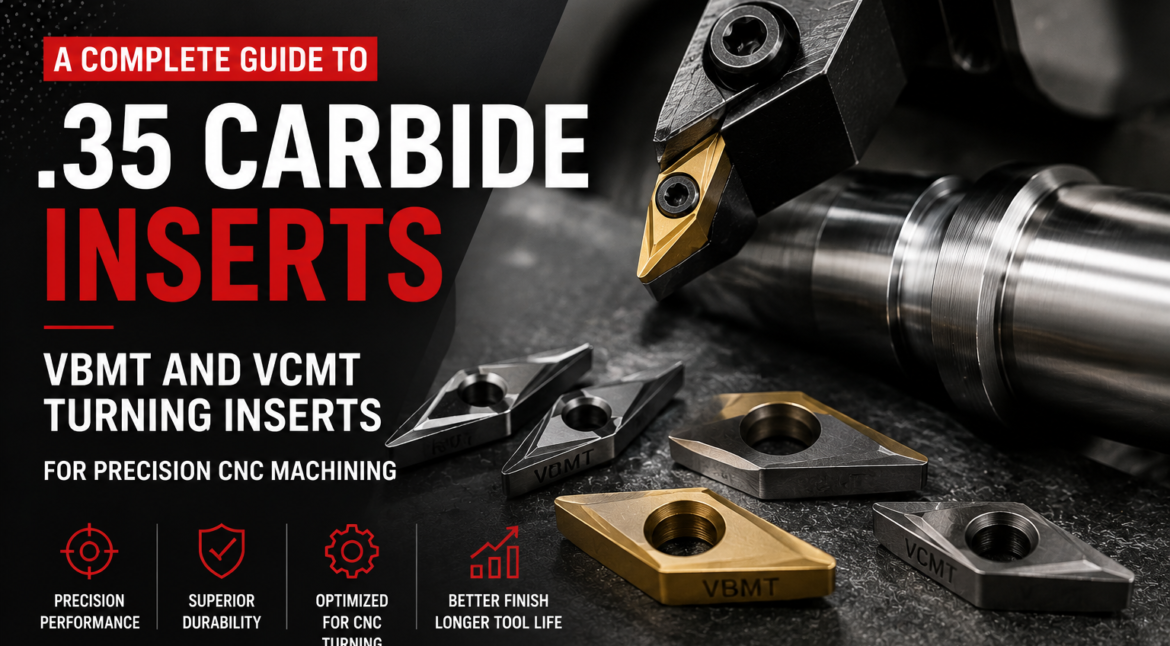
Guida completa agli inserti in carburo a 35°: inserti di tornitura VBMT e VCMT per la lavorazione CNC di precisione
Nella tornitura CNC di precisione, l’inserto da taglio è il punto in cui l’utensile entra in contatto con il metallo. Una scelta errata dell’inserto comporta una finitura superficiale scadente, una durata ridotta dell’utensile e costosi tempi di fermo macchina. Una scelta corretta trasforma ogni passata in un risultato prevedibile e ripetibile.
Per gli operatori e gli ingegneri di produzione che lavorano con acciaio, acciaio inossidabile e ghisa, gli inserti in metallo duro a 35° offrono una soluzione versatile per le operazioni di profilatura, finitura e semifinitura. Noi di GRAN INDUSTRIES SDN. BHD. forniamo una gamma completa di inserti in metallo duro VBMT e VCMT, che comprende diverse qualità e rompitrucioli per soddisfare un’ampia gamma di applicazioni di tornitura.
In questa guida imparerete a distinguere tra le geometrie degli inserti VBMT e VCMT, come scegliere la qualità e il rompitruciolo più adatti al vostro materiale e perché GRAN è un fornitore affidabile di inserti in metallo duro sia in Malesia che a livello internazionale.
Cosa sono gli inserti in carburo da 35° e perché sono importanti nella tornitura CNC
Un inserto in carburo a 35° è un utensile da taglio a forma di rombo con un angolo incluso di 35 gradi, progettato per operazioni di tornitura che richiedono l’accesso a contorni stretti, sottosquadri e dettagli di profilo. L'angolo acuto consente all'utensile di raggiungere aree che gli inserti con angolo più ampio — come quelli a 55° (DNMG) o 80° (CNMG) — semplicemente non riescono a raggiungere.
Questi inserti presentano in genere un angolo di spoglia positivo, il che significa che tagliano con forze di taglio inferiori, vibrazioni ridotte e una migliore finitura superficiale — aspetto particolarmente importante nella lavorazione di parti a pareti sottili o di pezzi lunghi e slanciati.
- angolo acuto di 35° — raggiunge i contorni stretti e i sottosquadri
- Geometria del rake positiva — forze di taglio inferiori, finiture più lisce
- Due taglienti per inserto — capovolgi e riutilizza, raddoppiando il valore
- Struttura in carburo — è in grado di lavorare materiali difficili da lavorare, tra cui l’acciaio laminato a freddo
VBMT vs VCMT: Capire le sigle relative agli inserti
Il sistema di designazione degli inserti ISO fornisce tutte le informazioni relative alla geometria, alla tolleranza e al metodo di serraggio. Ecco come si articolano le sigle VBMT e VCMT:
| Lettera | Significato | VBMT | VCMT |
|---|---|---|---|
| V | Inserisci forma | Diamante a 35° | Diamante a 35° |
| B / C | Angolo di uscita | 5° (B) | 7 °C |
| M | Classe di tolleranza | Classe M | Classe M |
| T | Bloccaggio / rompitruciolo | Foro cilindrico, su un solo lato | Foro cilindrico, su un solo lato |
La differenza fondamentale è la angolo di uscita: Il modello VBMT presenta un gioco di 5°, mentre il modello VCMT offre un gioco di 7°. Il gioco maggiore di 7° del modello VCMT riduce l'attrito contro il pezzo in lavorazione, il che può risultare vantaggioso per i materiali più morbidi o per le applicazioni in cui è fondamentale ridurre al minimo l'usura dei fianchi.
Spiegazione dei gradi di inserimento: HP1020, HP1050, HM2035 e HK3115
La qualità dell'inserto in carburo è il fattore più importante sia per la durata dell'utensile che per la qualità della superficie. Ogni qualità rappresenta una combinazione specifica di substrato in carburo e rivestimento, ottimizzata per particolari materiali dei pezzi da lavorare e condizioni di taglio.
| Voto | Tipo di rivestimento | Ideale per | Applicazioni |
|---|---|---|---|
| HP1020 | PVD (a base di TiAlN) | Finitura dell'acciaio | Finitura ad alta velocità su acciai al carbonio e legati; eccellente resistenza all'usura a velocità elevate |
| HP1050 | PVD (multistrato avanzato) | Finitura dell'acciaio a velocità più elevate | Ottimizzato per acciai più duri e velocità di taglio più elevate; maggiore stabilità termica |
| HM2035 | CVD (MT-TiCN/Al₂O₃) | Acciaio inossidabile e ghisa | Da semifinitura a sgrossatura media; equilibrio tra tenacità e resistenza all’usura per i materiali ISO M e K |
| HK3115 | CVD (arricchito con Al₂O₃) | Ghisa | Tipo di ghisa specifico con elevata durezza a caldo; resistente all’usura abrasiva nella ghisa grigia e nella ghisa sferoidale |
Regola generale: Scegliere le qualità con rivestimento PVD (HP1020, HP1050) per ottenere spigoli di taglio affilati nella finitura dell'acciaio. Scegliere le qualità con rivestimento CVD (HM2035, HK3115) quando la resistenza al calore e una maggiore durata dell'utensile sull'acciaio inossidabile o sulla ghisa sono prioritarie.
Selezione dei rompichip: JHQ, MVL, SH, FML, SL1 e STF
La geometria del rompitruciolo determina il modo in cui il materiale si arriccia, si spezza e viene espulso dalla zona di taglio. Il rompitruciolo giusto trasforma i trucioli filamentosi e pericolosi in frammenti piccoli e maneggevoli.
| Rompichip | Tipo di inserimento | Migliore applicazione | Campo di taglio |
|---|---|---|---|
| JHQ | VBMT | Finitura dell'acciaio | Profondità di taglio ridotte, velocità di avanzamento medio-alte |
| MVL | VBMT | Tornitura generale dell'acciaio | Profondità da leggere a medie, ampio intervallo di alimentazione |
| SH | VBMT | Acciaio per impieghi gravosi | Profondità medio-elevate, maggiore capacità di avanzamento |
| Che schifo! | VCMT | Semilavorazione dell'acciaio | Profondità da leggere a medie, gamma di alimentazione versatile |
| SL1 | VCMT | Semilavorazione dell'acciaio e dell'acciaio inossidabile | Profondità medie, controllo equilibrato dei trucioli su materiali misti |
| STF | VCMT | Tornitura generale dell'acciaio | Ampia gamma di applicazioni, buona evacuazione dei trucioli |
Consiglio per la scelta: Per la finitura pura dell'acciaio, iniziare con JHQ o HP1020. Per la semifinitura su materiali misti, compreso l'acciaio inossidabile, la combinazione di SL1 e HM2035 rappresenta un punto di partenza affidabile.
Compatibilità dei materiali: quali materiali possono essere lavorati con questi inserti in carburo
I nostri inserti in carburo da 35° sono compatibili con un'ampia gamma di materiali dei pezzi da lavorare, il che li rende un'aggiunta versatile a qualsiasi magazzino utensili:
- Acciai al carbonio e acciai legati — Tutti i modelli garantiscono prestazioni affidabili. I modelli HP1020 e HP1050 si distinguono per la qualità delle finiture.
- Acciai inossidabili — L’HM2035 è il grado ideale, con rompi-trucioli SL1 o FML per la semifinitura.
- Ghisa (grigia e sferoidale) — L’HK3115 è stato appositamente progettato per questo materiale abrasivo e resiste all’usura dei fianchi alle alte velocità di taglio.
- Acciaio laminato a freddo — Gli inserti in carburo gestiscono bene questo materiale difficile da lavorare, garantendo una buona finitura superficiale laddove gli utensili in acciaio rapido (HSS) non riescono a dare risultati soddisfacenti.
- Alluminio, ottone e acciai al piombo — Sebbene il carburo duri praticamente per sempre su questi materiali morbidi, sono comunque gli utensili HSS più affilati a garantire la finitura a specchio perfetta. Per volumi di produzione in cui la durata dell’utensile è più importante della finitura estetica, il carburo rappresenta la scelta più oculata.
Perché scegliere GRAN per la fornitura di inserti in carburo
GRAN INDUSTRIES SDN. BHD. non è semplicemente un rivenditore. Siamo un’azienda produttrice le cui origini risalgono al 2008 a Shenzhen, che dal 2020 ha ampliato la propria capacità produttiva nel Sichuan e che nel 2025 ha istituito una piattaforma di servizi internazionale con sede in Malesia. Ciò comporta tre vantaggi per gli acquirenti di inserti in carburo:
- Profondità di lavorazione — Conosciamo bene gli utensili da taglio perché li utilizziamo quotidianamente nelle nostre operazioni di lavorazione CNC. I nostri consigli nascono dall’esperienza pratica, non dalle descrizioni dei cataloghi.
- Prezzi competitivi — Gli inserti in carburo partono da 1,57 RM al pezzo, confezionati in scatole da 10. A questi prezzi, anche le aziende che realizzano prototipi e piccoli lotti possono permettersi utensili di qualità.
- Fornitura internazionale strutturata — Che vi troviate in Malesia, nel Sud-Est asiatico o altrove, il nostro team con sede a Kuala Lumpur garantisce una comunicazione chiara, preventivi rapidi e un follow-up affidabile degli ordini.
Panoramica della gamma di prodotti: gli inserti in metallo duro VBMT e VCMT in sintesi
| Prodotto | Tipo | Rompichip | Voti | Applicazione | Prezzo (RM) |
|---|---|---|---|---|---|
| Quartier generale della VBMT | Positivo | JHQ | HP1020, HP1050 | Finitura dell'acciaio | 1.64 |
| VBMT MVL | Positivo | MVL | HP1020, HP1050 | General Steel | 1.57 |
| VBMT SH | Positivo | SH | HP1020, HP1050 | Acciaio per impieghi gravosi | 2.80 |
| VCMT FML | Positivo | Che schifo! | HP1020, HP1050, HM2035, HK3115 | Semilavorazione dell'acciaio | 1.57 |
| VCMT SL1 | Positivo | SL1 | HP1020, HP1050, HM2035, HK3115 | Semilavorazione dell'acciaio e dell'acciaio inossidabile | 1.64 |
| VCMT STF | Positivo | STF | HP1020, HP1050, HM2035, HK3115 | General Steel | 2.45 |
Carburo contro acciaio rapido: quando è opportuno utilizzare l'uno o l'altro
Una domanda che ricorre spesso nelle officine meccaniche: per questo lavoro è meglio usare il carburo o l’acciaio rapido (HSS)? La risposta sincera è Dipende dal materiale e dall'obiettivo.
- Il carburo dà il meglio di sé sui materiali duri: Acciaio laminato a freddo, acciai legati, acciaio inossidabile e ghisa. Mantiene il filo più a lungo, consente velocità di taglio più elevate e gestisce meglio i tagli interrotti rispetto all’HSS.
- HSS eccelle sui materiali teneri quando la finitura è fondamentale: Su alluminio, ottone e acciai al piombo, un utensile HSS appena affilato è in grado di ottenere una finitura superficiale che gli utensili in carburo faticano a eguagliare. Il compromesso riguarda la durata dell’utensile: nei volumi di produzione, la maggiore durata del carburo di solito si rivela vantaggiosa.
- Gli inserti in carburo eliminano i tempi di fermo dovuti all'affilatura: Quando un tagliente si consuma, basta allineare o sostituire l’inserto e continuare a tagliare. Non occorre affilare né reimpostare gli offset dell’utensile. Nel corso di un turno, questa differenza si traduce in un concreto aumento della produttività.
Come ordinare inserti in carburo da GRAN
Ordinare è semplicissimo. Visita il nostro pagina della categoria "inserti in carburo", seleziona la combinazione di geometria dell'inserto, grado e rompitruciolo più adatta alla tua applicazione e aggiungila al carrello. Tutti gli inserti sono confezionati in scatole da 10 pezzi.
Se hai bisogno di aiuto per scegliere l'inserto giusto — o se hai un progetto di lavorazione CNC su misura che richiede una consulenza specialistica sugli utensili — il nostro team di ingegneri è a tua disposizione all'indirizzo info@gran.my oppure per telefono al numero +60 10-881 2868.
Conclusione
La scelta dell'inserto in carburo più adatto è una decisione che influisce su ogni pezzo che esce dal vostro tornio CNC. Gli inserti VBMT e VCMT a 35° offrono la geometria necessaria per raggiungere le caratteristiche più complesse, le opzioni di qualità adatte al materiale del vostro pezzo e la varietà di rompitrucioli per controllare il processo di taglio.
- Abbinare il grado al materiale: HP1020/HP1050 (PVD) per la finitura dell'acciaio; HM2035 (CVD) per l'acciaio inossidabile e i materiali misti; HK3115 (CVD) per la ghisa.
- Scegliere il rompichip in base alla profondità di taglio: JHQ e FML per tagli di finitura leggera; SL1 e STF per semifinitura media; SH per asportazione di materiale più consistente.
- Scegliere tra VBMT e VCMT in base alle esigenze di spazio libero: VBMT (gioco di 5°) per lavorazioni generiche; VCMT (gioco di 7°) quando è preferibile ridurre al minimo il contatto sul fianco.
Noi di GRAN INDUSTRIES SDN. BHD. uniamo l'esperienza nella produzione maturata dal 2008 a una piattaforma di servizi internazionale con sede in Malesia per fornire inserti in carburo su cui potete contare — dalle singole confezioni per prove di lavorazione agli ordini all'ingrosso per la produzione. Scopri qui la nostra gamma completa.
Domande frequenti
D: Qual è la differenza tra gli inserti in carburo VBMT e VCMT?
A: La differenza principale è l’angolo di sfioro. Il VBMT ha un angolo di sfioro di 5°, mentre il VCMT ne ha uno di 7°. L'angolo di sfioro maggiore del VCMT riduce l'attrito contro il pezzo in lavorazione ed è spesso preferito per i materiali più morbidi o quando la gestione dell'usura del fianco è fondamentale. Entrambi sono inserti a forma di rombo a 35°, con angolo di spoglia positivo, monofacciali e con tolleranze di classe M.
D: Quanti bordi taglienti ha un inserto in carburo a 35°?
R: Un inserto a forma di rombo con angolo di 35° presenta due taglienti utilizzabili, uno per ciascun angolo acuto. Quando un tagliente si consuma, è sufficiente ruotare l’inserto di 180° per utilizzare il secondo tagliente. Ciò raddoppia di fatto la durata dell’utensile per ogni inserto ed elimina la necessità di riaffilatura.
D: Quale tipo di carburo dovrei usare per la tornitura dell'acciaio inossidabile?
R: Per l’acciaio inossidabile, consigliamo l’HM2035, un tipo di inserto con rivestimento CVD che offre un buon equilibrio tra tenacità e resistenza all’usura alle temperature elevate tipiche della lavorazione dell’acciaio inossidabile. Abbinalo al rompitruciolo SL1 o FML per applicazioni di semifinitura.
D: Qual è l'inserto in carburo più adatto alla lavorazione della ghisa?
R: L’HK3115 è la qualità dedicata alla ghisa presente nella nostra gamma. Il suo rivestimento CVD, con un contenuto potenziato di Al₂O₃, garantisce un’elevata durezza a caldo e un’eccellente resistenza all’usura abrasiva causata dalla ghisa (sia grigia che sferoidale). Utilizzarlo con inserti VCMT per operazioni di semifinitura.
D: Quanto costano gli inserti in carburo GRAN?
R: I nostri inserti in carburo a 35° hanno un prezzo compreso tra 1,57 RM e 2,80 RM al pezzo e sono venduti in confezioni da 10. Si tratta di un prezzo competitivo per il mercato malese e del Sud-Est asiatico. Per ordini all’ingrosso o accordi di fornitura OEM, contattateci all’indirizzo info@gran.my per ricevere un preventivo personalizzato.
D: È possibile utilizzare inserti in carburo sull'alluminio?
R: Sì, gli inserti in carburo sono efficaci su alluminio, ottone e acciai al piombo e su questi materiali durano praticamente per sempre. Tuttavia, la finitura superficiale migliore in assoluto sui materiali teneri si ottiene ancora con un utensile HSS affilato e ben rettificato. Negli ambienti di produzione in cui la durata costante dell’utensile è più importante di una finitura a specchio puramente estetica, il carburo rappresenta la scelta economicamente più vantaggiosa.