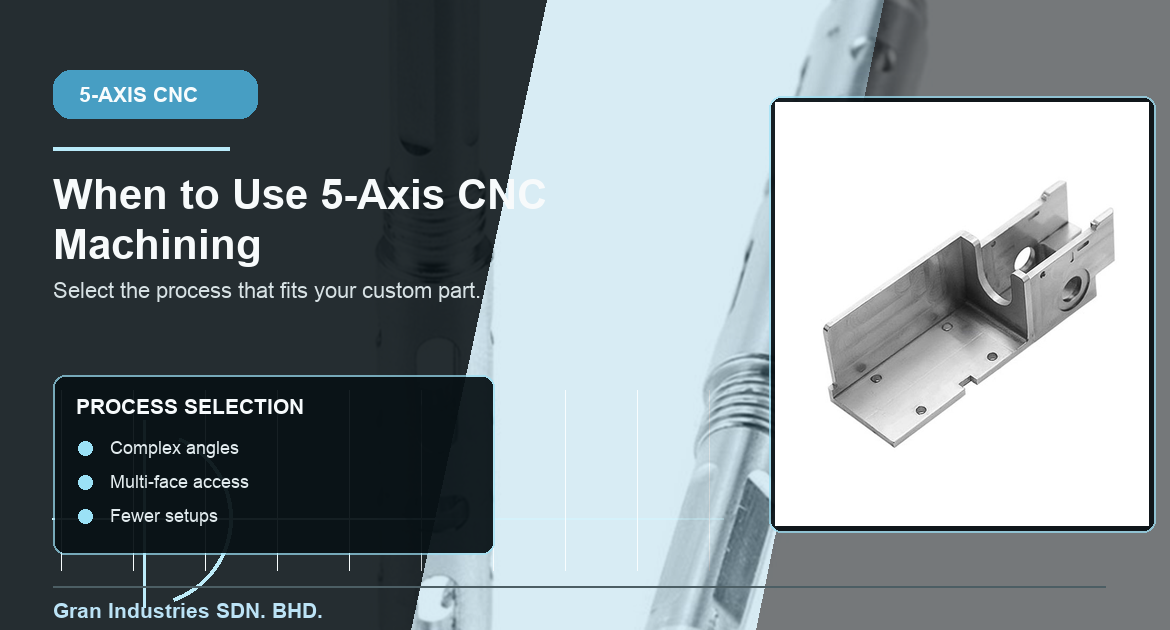
La lavorazione CNC a 5 assi è spesso discussa come la soluzione per parti complesse, ma non è automaticamente il processo migliore per ogni componente. Il suo valore deriva da ciò che può cambiare nel piano di produzione: come si accede a una parte, quante volte deve essere riposizionata in morsa, quali caratteristiche angolate possono essere lavorate in un'unica orientazione e con quanta coerenza le relazioni critiche possono essere mantenute da un'operazione alla successiva.
Per una parte personalizzata, la domanda utile non è semplicemente se la lavorazione a 5 assi sia disponibile. È se la geometria del pezzo, i requisiti di tolleranza, il materiale, la quantità e il piano di ispezione rendano utile il movimento aggiuntivo e la programmazione. Un componente prismatico semplice può essere prodotto in modo efficiente con fresatura a 3 assi e configurazioni ben pianificate. Una parte con angoli composti, caratteristiche angolate profonde o superfici strettamente correlate su più lati può trarre beneficio da un approccio a 5 assi.
Presso Gran Industries, valutiamo il disegno e la funzione prevista prima di selezionare il percorso di lavorazione. L'obiettivo è scegliere un processo pratico che supporti i requisiti del pezzo senza aggiungere complessità o costi non necessari.
Cosa cambia la lavorazione CNC a 5 assi
Un processo di lavorazione a 5 assi aggiunge movimento rotazionale ai consueti assi lineari X, Y e Z. Ciò offre al team di lavorazione più modi per presentare una caratteristica all'utensile da taglio. A seconda della macchina e della strategia, il pezzo o l'utensile possono essere orientati in modo che superfici angolate, caratteristiche composte e più facce siano raggiunte con meno passaggi di riposizionamento manuale.
Questa libertà aggiuntiva può essere utile quando una parte presenta:
- Fori angolati, superfici inclinate o caratteristiche che non si allineano con una semplice configurazione superiore, frontale o laterale
- Più facce funzionali le cui posizioni devono rimanere strettamente correlate
- Contorni complessi che traggono beneficio da un impegno utensile più coerente
- Caratteristiche profonde o difficili da raggiungere dove altrimenti la lunghezza dell'utensile diventerebbe eccessiva
- Geometrie del pezzo che richiederebbero più fissaggi o ripetuti recuperi dei riferimenti in un processo a 3 assi
L'approccio esatto può essere posizionamento indicizzato 3+2 o movimento simultaneo, a seconda della caratteristica e del piano di processo. Il cliente non deve prescrivere il movimento della macchina nella richiesta di preventivo; ciò che conta è rendere chiare la geometria funzionale e i requisiti di accettazione affinché l'officina possa determinare il percorso appropriato.
Angoli complessi e caratteristiche su più facce sono motivi comuni per considerarlo
La lavorazione a 5 assi diventa particolarmente rilevante quando caratteristiche importanti si trovano ad angoli diversi attorno al pezzo. Ad esempio, un alloggiamento può avere porte che entrano da più direzioni, una piastra di fissaggio può combinare superfici di montaggio inclinate con fori di precisione, oppure un componente può avere una superficie sagomata che deve relazionarsi strettamente con caratteristiche di riferimento altrove sul pezzo.
Con meno riorientamenti, il processo può ridurre il numero di volte in cui un pezzo viene rimosso e ristabilito. Ciò può facilitare la preservazione delle relazioni tra superfici, ma non elimina la necessità di una buona definizione dei riferimenti. Il disegno dovrebbe comunque identificare le caratteristiche che stabiliscono il sistema di riferimento funzionale. La guida di Gran su caratteristiche di riferimento e punti di riferimento spiega perché tale informazione è importante prima di iniziare la programmazione.
Ridurre le configurazioni può aiutare, ma non è una garanzia
Ogni configurazione aggiuntiva introduce una possibilità di variazione nel serraggio, nel recupero dei riferimenti e nell'orientamento del pezzo. Quando un processo a 5 assi consente di lavorare caratteristiche correlate da un'unica configurazione stabile, può ridurre queste fonti di variazione. Può anche ridurre il rischio di tempi di consegna associato alla costruzione e alla verifica di più fissaggi dedicati.
Tuttavia, meno configurazioni non significano automaticamente costi inferiori. Una macchina a 5 assi, lo sforzo di programmazione, la verifica, la strategia degli utensili e l'attenzione dell'operatore possono essere più sostanziosi per un lavoro semplice rispetto a un approccio convenzionale. I risparmi diventano significativi quando sostituiscono fissaggi difficili, riducono la movimentazione ripetuta, migliorano l'accesso o proteggono una relazione che altrimenti sarebbe difficile da mantenere.
Lo stesso principio si applica a tolleranze strette, costi e tempi di consegna: applicare un controllo di processo aggiuntivo dove protegge la reale funzione del pezzo, piuttosto che trattarlo come una caratteristica predefinita di una macchina premium.
L'accesso agli utensili e la rigidezza del pezzo influenzano la decisione
L'accesso agli utensili è uno dei motivi pratici per utilizzare il posizionamento a 5 assi. Se una superficie angolata può essere avvicinata al mandrino, il processo può utilizzare un utensile più corto e più rigido rispetto a quanto richiederebbe una configurazione a orientamento fisso. Ciò può essere utile per cavità più profonde, pareti inclinate e dettagli sagomati dove un utensile lungo aumenterebbe la deflessione o renderebbe più difficile il controllo della qualità della finitura.
La rigidezza del pezzo è altrettanto importante. Pareti sottili, sezioni lunghe e snelle, tasche aperte e materiali a bassa rigidezza possono rispondere alle forze di taglio indipendentemente dal numero di assi della macchina. La configurazione deve supportare adeguatamente il pezzo e la strategia di taglio deve evitare di forzare una caratteristica flessibile a sopportare più carico di quanto possa tollerare. Una macchina a 5 assi capace non può compensare un pezzo instabile o un requisito di tolleranza poco chiaro.
La lavorazione a 5 assi può supportare caratteristiche controllate in orientamento
Caratteristiche come fori angolati, superfici di tenuta inclinate e interfacce di montaggio composte possono richiedere che il loro orientamento sia controllato rispetto a un riferimento. In questi casi, poter lavorare la caratteristica ad un angolo pratico può rendere il processo più diretto. Il progetto deve comunque dichiarare cosa è controllato e perché. Un angolo nominale da solo potrebbe non comunicare il requisito di assemblaggio.
Per parti con controlli di orientamento, rivedere la specifica insieme al piano di lavorazione e al metodo di ispezione. Gli articoli su planarità angolare, perpendicolarità, e tolleranze di profilo coprono decisioni di disegno correlate. Il punto importante è che la configurazione di lavorazione e la strategia di misurazione devono riflettere la stessa logica di riferimento del disegno.
Quando la lavorazione a 3 assi può essere la scelta migliore
La lavorazione a 3 assi rimane un'opzione efficiente e accurata per molte parti personalizzate. È spesso la scelta migliore quando il componente è principalmente prismatico, le caratteristiche sono accessibili da un numero limitato di facce e le tolleranze richieste possono essere mantenute con un semplice bloccaggio. Una staffa semplice, una piastra, un blocco o un contenitore non acquisisce valore semplicemente perché può essere posizionato su una macchina a 5 assi.
Una revisione pratica del preventivo confronta il processo completo piuttosto che l'etichetta della macchina. Il team dovrebbe considerare il numero di configurazioni, i requisiti di fissaggio, l'accesso agli utensili, la complessità di programmazione, l'approccio di ispezione, la rimozione del materiale e la quantità prevista. Per i prototipi, il percorso più rapido può differire dal percorso più efficiente per la produzione ripetuta. La guida di Gran su prototipo contro produzione con lavorazione CNC spiega perché la quantità e la fase di apprendimento dovrebbero far parte di tale decisione.
Come preparare un disegno per la revisione del preventivo a 5 assi
Per valutare se la lavorazione CNC a 5 assi sia appropriata, fornire un modello 3D insieme a un disegno quotato quando possibile. Il disegno dovrebbe identificare il materiale, le dimensioni critiche, le caratteristiche di riferimento, le zone di tolleranza, i requisiti di finitura, la quantità e qualsiasi area in cui l'accesso agli utensili o la funzione di assemblaggio sia particolarmente importante.
È inoltre utile includere:
- Note chiare su caratteristiche angolate, sagomate o su più facce che guidano il progetto
- Contesto del pezzo accoppiato o dell'assemblaggio quando le relazioni tra caratteristiche sono funzionali
- Requisiti dopo finitura, rivestimento o trattamento termico quando pertinenti
- Qualsiasi documentazione prevista per il primo articolo, le ispezioni in processo o finali
- Una nota sull'intento prototipale o sulla quantità di produzione prevista
Questi dettagli consentono all'officina di valutare il problema di produzione reale piuttosto che fare supposizioni basate solo su un modello. Per una panoramica del processo, la spiegazione sulla lavorazione a 5 assi di Autodesk spiegazione della lavorazione a 5 assi è un utile riferimento esterno sulle capacità di base e sui concetti di movimento.
Domande frequenti sulla lavorazione CNC a 5 assi
La lavorazione CNC a 5 assi è sempre più accurata della lavorazione a 3 assi?
No. L'accuratezza dipende dalle condizioni della macchina, dal bloccaggio, dalla strategia degli utensili, dalla definizione dei riferimenti, dal comportamento del materiale e dal metodo di ispezione. La capacità a 5 assi può ridurre alcuni rischi legati alla configurazione, ma non sostituisce la pianificazione del processo.
Un processo a 5 assi riduce sempre i costi?
No. Può ridurre i costi quando evita fissaggi difficili, configurazioni ripetute o utensili a lungo raggio. Per parti semplici, un percorso a 3 assi può essere più efficiente. Il confronto corretto è il costo totale del processo per la qualità richiesta del pezzo.
La lavorazione a 5 assi può essere utilizzata per i prototipi?
Sì. Può essere utile quando un prototipo presenta una geometria complessa su più facce o caratteristiche angolari difficili. Il processo dovrebbe comunque essere selezionato in base al disegno, al materiale, alla quantità e agli obiettivi di apprendimento del prototipo.
Quali informazioni dovrebbero essere incluse in una richiesta di preventivo (RFQ) per lavorazione CNC a 5 assi?
Includere un modello 3D, un disegno 2D, il materiale, la quantità, le tolleranze, i requisiti di finitura, le relazioni critiche tra i riferimenti (datum) e le aspettative di ispezione. Il contesto di assemblaggio è prezioso quando spiega perché una caratteristica è importante.
Scegliere il processo adatto al componente
La lavorazione CNC a 5 assi è più vantaggiosa quando risolve un vincolo produttivo reale: accesso difficile, orientamento complesso, più facce correlate, sbraccio utensile lungo o una sequenza di setup che altrimenti creerebbe variazioni evitabili. Per componenti più semplici, un processo a 3 assi ben pianificato può essere la soluzione più pratica.
Se il vostro componente personalizzato include angoli composti, contorni complessi, caratteristiche profonde o geometrie multi-faccia strettamente correlate, invia a Gran il tuo disegno e i dettagli del progetto. possiamo esaminare l'approccio di produzione prima del preventivo e raccomandare un processo adatto al componente.